
Guide · Drain lines
AC drain line clogs: why they happen and what to do
Why AC drain lines clog in South Florida, including the Zoogloea slime that grows inside them, what a float switch does, and what is safe to try first.
Key takeaways
- Your AC pulls water out of the air as it cools. In Broward's humidity that's a steady stream for most of the year, and all of it leaves through one condensate drain.
- The slime that clogs these lines is usually a mix. A bacterial biofilm called Zoogloea is one important part of it, along with algae, mold and dust that got past the filter.
- When water backs up, a float switch (where one is installed) shuts the system off before the pan overflows. The switch isn't the problem. The clog behind it is.
- With the system off, you can clear the drain's access point and flush the line with diluted vinegar or a PVC-safe cleaner.
- Water near electrical parts, a stained or sagging ceiling, or a clog that keeps coming back means it's time for a technician.
Where the water goes
Every drop the coil pulls out of the air follows this path. A clog anywhere along it backs water up toward the air handler.
The short answer
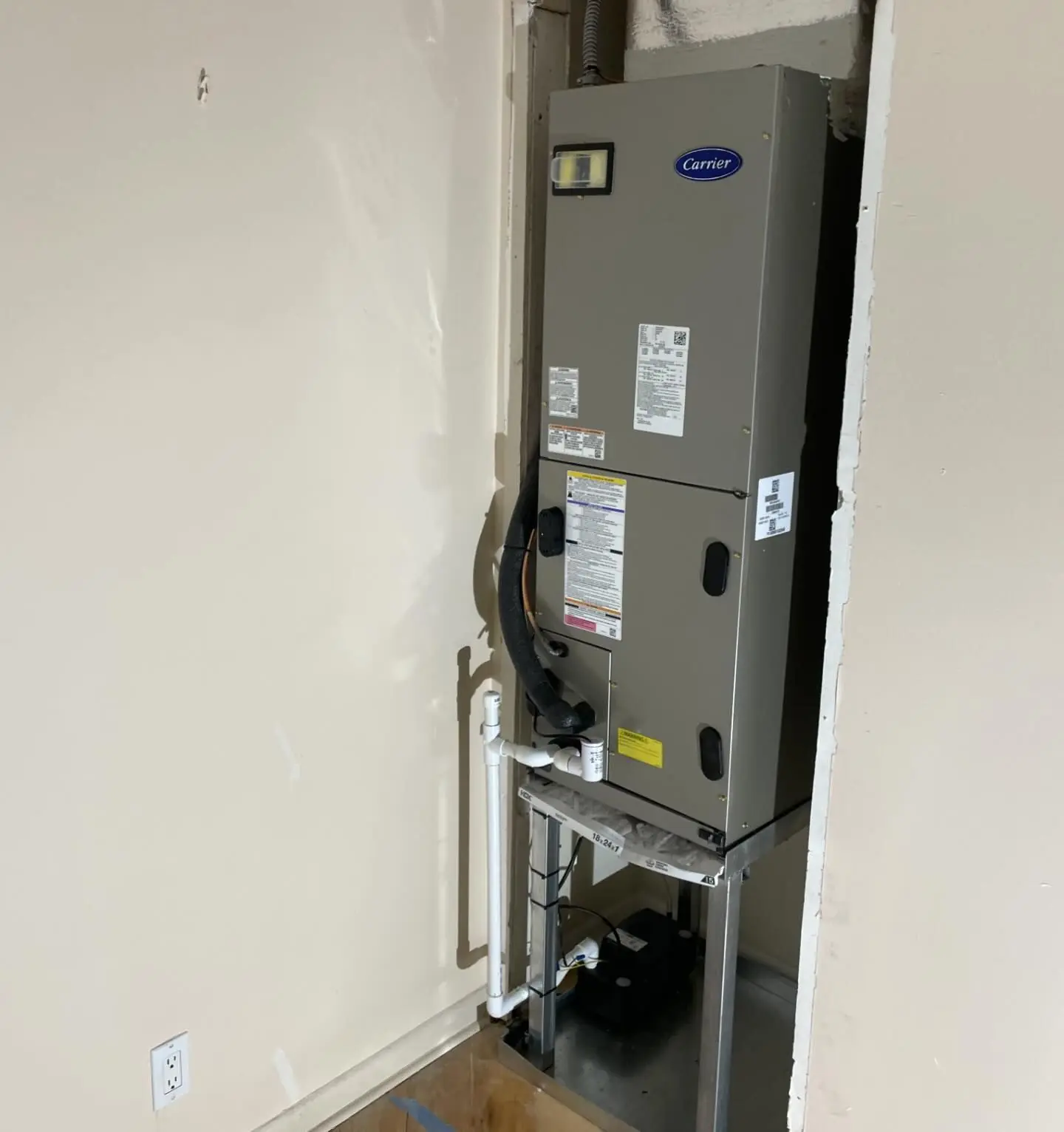
A clogged condensate drain is one of the most common problems we see on South Florida air conditioners. The drain carries away the water your AC pulls out of the air, and because it stays wet nearly all year, slime builds up inside it. When the line blocks, water backs up into the pan. Then one of two things happens: the pan overflows into a closet, garage or ceiling, or a float switch shuts the system off to prevent that.
There are a few safe things you can do before calling. Turn the system off, clear the drain's access point and flush the line. If water is near electrical parts, the ceiling is stained or sagging, or the clog keeps coming back, it's a job for a technician.
Why drains clog here
As warm, humid air crosses the cold indoor coil, moisture condenses on it, the same way water beads on a glass of iced tea. That water drips into a pan under the coil and leaves through a plastic drain line, usually to the outside or into a household drain.
In a Broward summer a system may run for most of the day, and it keeps running through much of the winter. The pan, the trap and the line are rarely dry. Anything that grows in standing water has time to grow, and anything that gets past the filter has somewhere to stick. Over weeks and months the line narrows until the water can't keep up. Trane describes the same pattern, with growth forming in the standing water of the drain pan, and ENERGY STAR notes that a plugged drain can cause water damage in the house and affect indoor humidity.
Zoogloea: the slime in the line
When we clear a clogged drain here, what comes out is usually slime: gray, tan or brown, sometimes in soft, jelly-like clumps. A good part of it is biofilm, a layer of bacteria living on the wet inside of the pipe. One of the bacteria behind it is Zoogloea. In a drain that stays warm and wet, it forms a slimy film that clings to the pipe walls and the trap and catches whatever else washes past.
South Florida gives it what it needs. Long cooling hours produce a lot of condensate, and a lot of condensate means the line never dries out. The film builds a little at a time, which is why a drain that was cleared in the spring can be backing up again by late summer.
Zoogloea is one important contributor to that slime. It isn't the only cause of clogs, and most of the drains we clear have more than one thing going on:
- Dust and debris that got past a dirty or loose filter and settled in the pan and trap.
- Algae and mold growing in the pan and along the line.
- Poor slope. A line that runs flat or sags holds water and sludge instead of draining.
- A missing or wrong trap. Without the right trap, the blower can pull air back up the drain and hold water in the pan.
- Venting problems that keep water from moving freely down the line.
- Pipe damage, such as a crushed, cracked or disconnected section.
The biology and the plumbing work together. Slime grows fastest where water sits, so a line with a sag or a bad trap keeps clogging no matter how often it's flushed.
What maintenance does about it
A line that's wet every day won't stay perfectly clean, but the buildup can be kept from turning into a clog. On a maintenance visit, the technician:
- flushes the drain line,
- treats the drain to slow new growth,
- inspects the pan for standing water, rust and cracks,
- checks the float switch, and the condensate pump where there is one.
If the same drain keeps clogging between visits, tell us. That usually points to the slope, the trap or the venting rather than to how often the line gets cleaned.
What a float switch does
Florida's mechanical code requires extra protection wherever an overflow could damage the building, such as an air handler in an attic or above a finished ceiling. Depending on the installation, that means a secondary drain pan with its own drain, a separate overflow line, or a water-level switch that shuts the equipment off before the water overflows.
That last device is the float switch. When it trips, the system stops cooling. It looks like a breakdown, but the switch is doing its job, and the clog behind it is the real problem.
Signs of a clog
- No water dripping from the drain outlet outside on a hot, humid afternoon while the system runs.
- Standing water in the drain pan, or water in the secondary pan under the air handler.
- The system stopped cooling and the thermostat shows it's calling for cooling. See AC not draining.
- Water on the closet or garage floor, or a stain on the ceiling below the air handler. See AC leaking water.
- A musty smell near the air handler or from the vents. See AC smells.
What you can safely do
These steps follow what manufacturers such as Lennox and Trane tell owners, adapted for a typical Broward system:
- Turn the system off at the thermostat before you start.
- Find the access point. Many drain lines have a capped vent or cleanout near the air handler, often a short pipe with a removable cap. Take the cap off and look for standing water or buildup.
- Clear the line. A small brush works at the access point. Many homeowners also use a wet/dry vacuum at the outdoor end of the line to pull the clog out.
- Flush it. Pour in diluted vinegar, or a cleaner approved for PVC, let it sit for 30 minutes or longer, then flush with water. If you're not sure how, ask your technician to show you on the next visit.
- Check the outlet outside. Make sure the end of the line isn't buried in mulch or soil and that water drips freely once the system runs again.
- Repeat every few months, especially through the summer.
Flushing slows the buildup. It won't fix a line with a sag, a bad trap or a crushed section. Manufacturers also warn that apart from filter changes and general drain-pan care, leak problems should be handled by a professional, and if your equipment's instructions differ from these steps, follow them.
When to call a technician
- The clog comes back within weeks of clearing it.
- You can't find an access point, or the line runs inside a wall or ceiling.
- The drain pan is rusted or cracked, or the secondary pan has water in it.
- A condensate pump is part of the system and isn't running.
- The float switch keeps tripping after the line is clear.
- There's water damage, or you see or smell mold. EPA advises drying water-damaged areas within 24 to 48 hours to prevent mold growth, and not running a system you suspect is contaminated with mold.
How it's fixed properly
Clearing a line fixes today's clog. A proper repair also looks at why it clogged and whether the drain is built so it can be maintained:
- Slope. Florida's mechanical code calls for condensate drains to slope at least an eighth of an inch per foot. A sag holds water and sludge.
- Cleanouts. The code requires drains to be arranged so blockages can be cleared without cutting the line.
- The trap and venting, so water leaves instead of sitting in the pan.
- Secondary protection that works: an auxiliary pan, an overflow line, or a float switch in the right place for that equipment.
- Condensate pumps. In attics, the code requires the equipment to shut off if the pump fails.
- The pan itself. A rusted or cracked pan leaks no matter how clean the line is.
About this guide
- Written by
- Service Shield Air Conditioning
- Published
- Oct 2026
- Last updated
- Oct 2026
Sources
- Trane: AC Condensate Drain Line Clogged?
- Lennox: What To Do When You Have a Clogged AC Drain Line
- Lennox: Why Is Your Air Conditioner Leaking Water?
- Florida Building Code, Mechanical, 8th Ed. (2023), Chapter 3: §307 condensate disposal (UpCodes)
- DOE: Air Conditioner Maintenance (archived Energy Saver page)
- ENERGY STAR: Maintenance Checklist
- EPA: A Brief Guide to Mold, Moisture and Your Home
- CDC: Safety Guidelines for Reentering Your Flooded Home (electrical safety around water)
Drain line questions
Why did my AC shut off with water in the pan?
Most likely a float switch turned it off. That switch is a safety device. When the drain line clogs and water rises, it stops the system before the pan overflows. Clearing the clog lets the water drain and the system restart, but repeat shutoffs mean the line's slope, trap or pump needs a proper look.
Can I pour vinegar down my AC drain line?
Yes, with the system turned off. Vinegar helps keep slime and algae down between maintenance visits, though it won't open a line that's already blocked. Lennox suggests pouring diluted vinegar or a cleaner approved for PVC into the drain line and letting it sit for at least 30 minutes, then flushing it, every few months. Trane suggests asking your technician to show you where your line's access point is and how to do it.
Related services and problems
Water where it shouldn't be?
Tell us what you're seeing. Clearing the line fixes today's clog, and finding out why it clogged keeps it from coming back.
Florida license CAC1821225