24/7 AC service

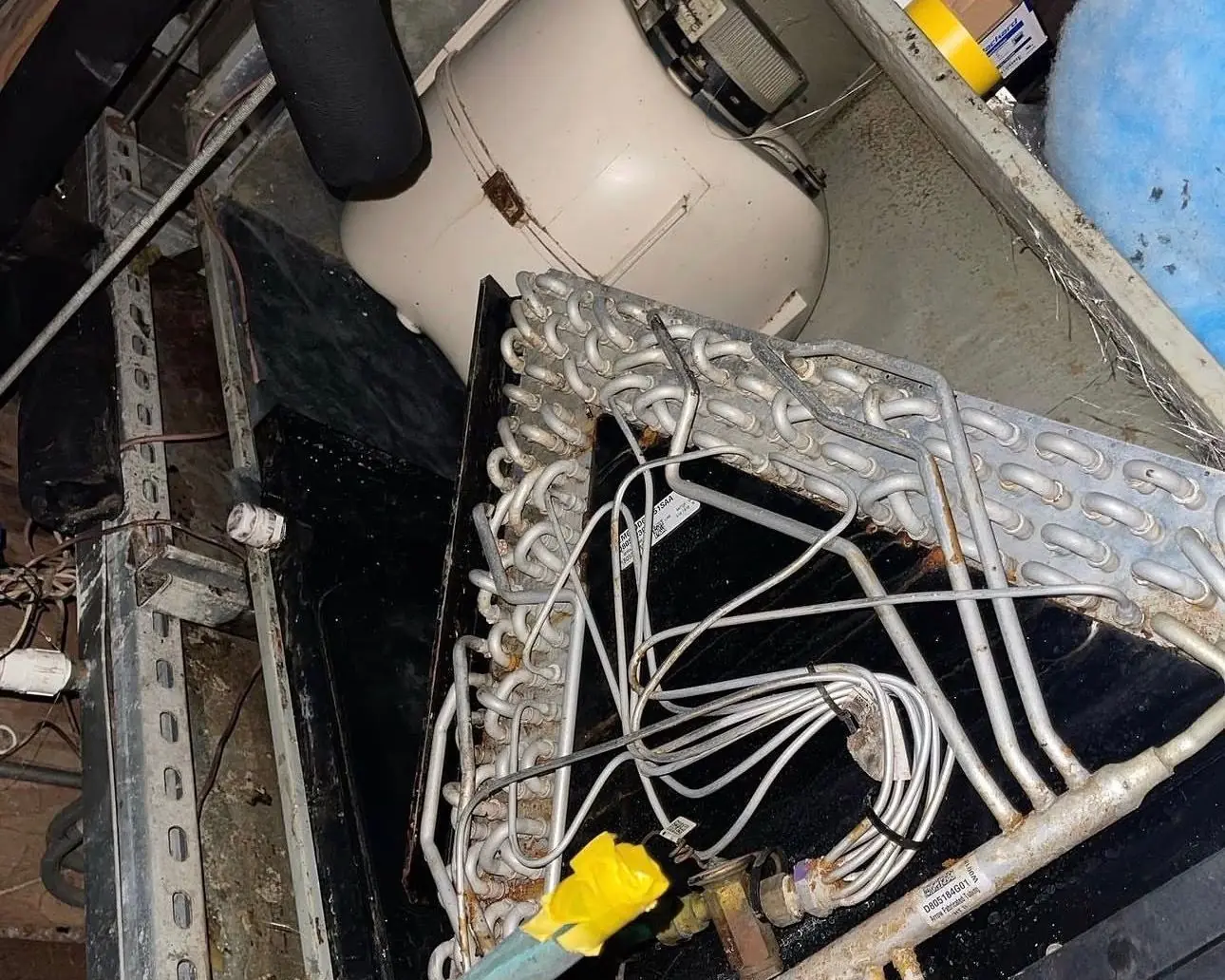
Evaporator coil exposed inside an opened indoor air handler cabinet

Schedule soon

Ice on your AC lines or coil

Ice on the refrigerant lines or the indoor coil means the coil is running below freezing. Almost always, too little air is moving across it (a dirty filter, blocked returns, a failing blower) or the system is low on refrigerant from a leak. Switch cooling off and run the fan only so the ice melts, then check the filter. If it freezes again, the cause needs a technician.

Before you do anything else

Turn the system off and call a technician if:

  • The outdoor unit keeps running with ice on the large copper line. Switch cooling off to protect the compressor.
  • Meltwater is overflowing the drain pan toward wiring, a ceiling or the floor.
  • Don't chip or scrape ice off the coil. The fins and tubing puncture easily.

Thaw it the right way

Melting the ice usually takes a few hours. Done this way it protects the compressor and sends the meltwater down the drain instead of onto the floor.

  1. Set the thermostat to Off for cooling and the fan to On.

    Moving air thaws the coil faster, usually within a few hours.

  2. Replace the air filter.

    The most common cause, and the easiest to fix.

  3. Open supply registers and clear anything blocking return grilles.

    The coil needs air from the whole house.

  4. Once it has thawed, check that the drain is carrying the meltwater away, then restart cooling and look for ice again after an hour or two.

    Ice that comes back means the cause is still there.

Why the coil got that cold

Ice is the symptom, and one of these is the cause. Pick one to see who can deal with it.

Choose a likely cause

Common

You can check this

Restricted airflow from a dirty filter or blocked returns

The coil needs a steady flow of warm house air to stay above freezing. A clogged filter, furniture over a return grille or closed-off rooms starve it, and moisture on the coil turns to ice.
Air filtration

Common

Technician fix

Low refrigerant from a leak

When refrigerant is low, pressure in the indoor coil drops, and its temperature falls below freezing with it. Ice often shows first on the larger, insulated copper line outside. The leak has to be found before the charge is corrected.

Common

Technician fix

Dirty evaporator coil

Dust and biological growth on the coil fins insulate it and block air, which has the same effect as a dirty filter. Coils in humid climates collect growth faster.

AC Maintenance

Occasional

Technician fix

Blower motor or blower capacitor problem

A blower running slowly, or not at all while the outdoor unit keeps running, lets the coil freeze quickly. Weak capacitors and failing motors are common culprits.

Occasional

Technician fix

Collapsed or undersized return ductwork

If the return side can't bring enough air back to the air handler, the coil sees too little airflow even with a clean filter. Crushed return flex in the attic is a frequent cause.

Airflow & duct design

Where the ice forms, and where it goes

Follow the system from the coil that froze to the drain that has to carry it all away.

How a split air-conditioning system worksSchematic: inside the house, an air handler with an evaporator coil and blower cools indoor air; a thermostat on the wall controls it; a condensate drain carries water away from the coil. Two copper refrigerant lines, the line set, run through the wall to the outdoor condenser, where the compressor and condenser coil release the heat outside.INSIDEOUTSIDEAIR HANDLERCONDENSER23456
Parts of the diagram

The coil is meant to run cold enough to pull water out of the air but above freezing. Too little warm air across it from a clogged filter, a dirty coil or a slow blower lets it drop below, and the water on it turns to ice.

More on air handler and coil

Ice often shows first on the larger insulated line, at the air handler or outside. It tells you the coil is too cold, not why.

A refrigerant leak anywhere in the system lowers the pressure in the indoor coil, and the coil's temperature drops with it. The leak has to be found before the charge is corrected.

More on line set

Keep cooling off while the ice melts. Running the compressor against a frozen coil is hard on it, and nothing gets cooler anyway.

When the ice melts, hours of water arrive at once. A drain that coped day to day can overflow now, so watch the pan while it thaws.

More on condensate drain

See the diagnosis

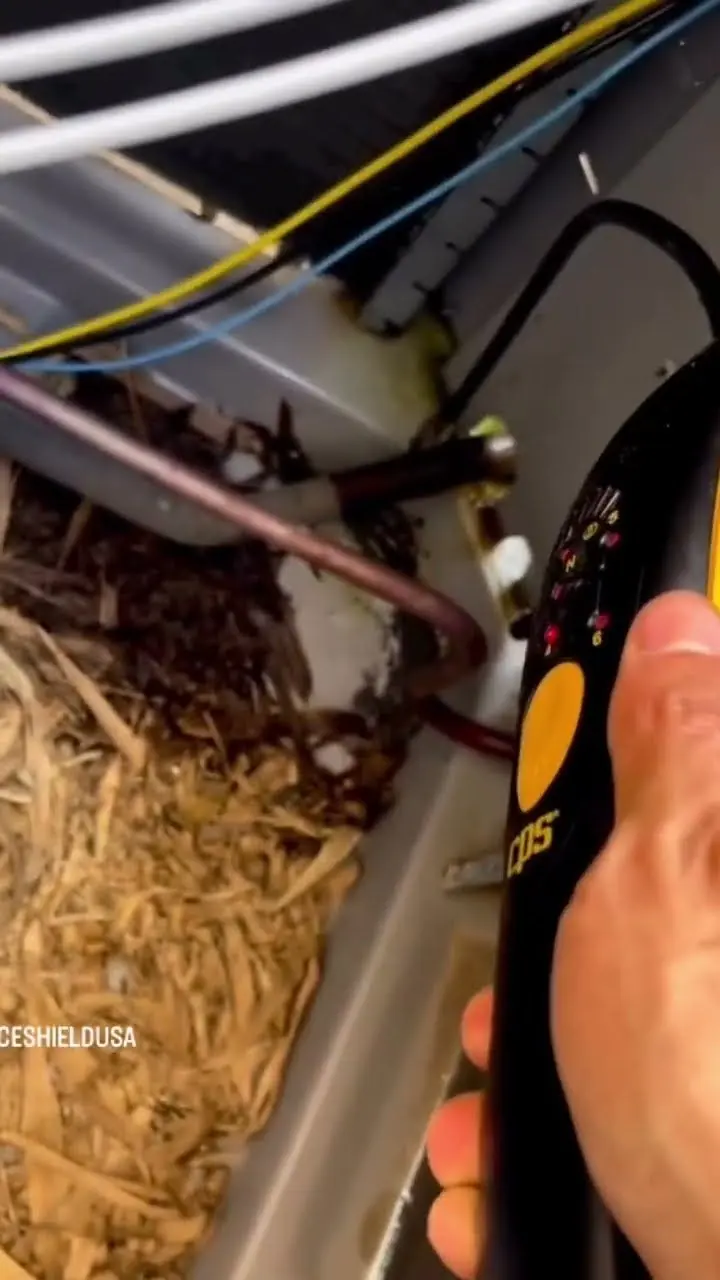
Field clip · 0:18

Hunting a refrigerant leak with a detector

Field clip: an electronic leak detector is run along the copper tubing inside an outdoor unit to find where refrigerant is escaping.

Watch page & transcript

Why a thawed coil freezes again

Turning cooling off and running the fan melts the ice in a few hours, and the system often cools normally again. That's why a frozen coil so often seems to fix itself overnight, then freezes again the next afternoon when the house is hot and the system runs for hours at a time.

Nothing about thawing changed the reason the coil got too cold. If the filter was the cause, a new one usually ends it. If ice comes back with a clean filter and open returns, either the coil is still short of air or the system is short of refrigerant from a leak. A dirty coil, a slow blower and crushed return ductwork are the usual airflow culprits. Each of those needs a measurement rather than another thaw, and running a system that keeps icing over is hard on the compressor.

What gets measured once it has thawed

A frozen coil gives false readings, so the ice has to be gone first. Then the cause usually shows up in one of these.

Static pressure

in. w.c.

High resistance on the return or supply side means too little air across the coil. It's compared with the maximum on the air handler's rating plate.

Blower operation

speed setting / µF

A blower on too low a speed, or with a weak capacitor, moves too little air even with a clean filter.

Superheat or subcooling

°F

Separates a low refrigerant charge from an airflow problem. From the outside, the two look alike.

Coil condition

Dust and biological growth on the fins insulate the coil and block air; in humid climates coils collect growth faster.

What our visit looks like

A technician makes sure the coil is fully thawed, then measures airflow (static pressure and blower operation) and the refrigerant charge using superheat and subcooling. If refrigerant is low, the leak is located before the charge is adjusted, and a dirty coil is cleaned. Free service call with repair.

Questions

Can't you just add refrigerant to stop the freezing?

Not responsibly. If refrigerant is low, there's a leak, and topping it up without finding the leak means the coil freezes again later. And if the real cause is airflow, adding refrigerant makes things worse.

How long does a frozen AC coil take to thaw?

Usually a few hours with cooling off and the fan set to On, and longer if the ice is thick. Keep an eye on the drain while it melts, because a lot of water arrives at once. Don't try to speed it up by chipping at the ice.

Membership

Service Shield Protection Plan

  • Two full maintenance visits a year, the same complete checklist each time
  • Discounted diagnostic fee for members
  • Up to 15% off repairs

Talk to Service Shield

Florida license CAC1821225

CallText a TechSchedule