24/7 AC service

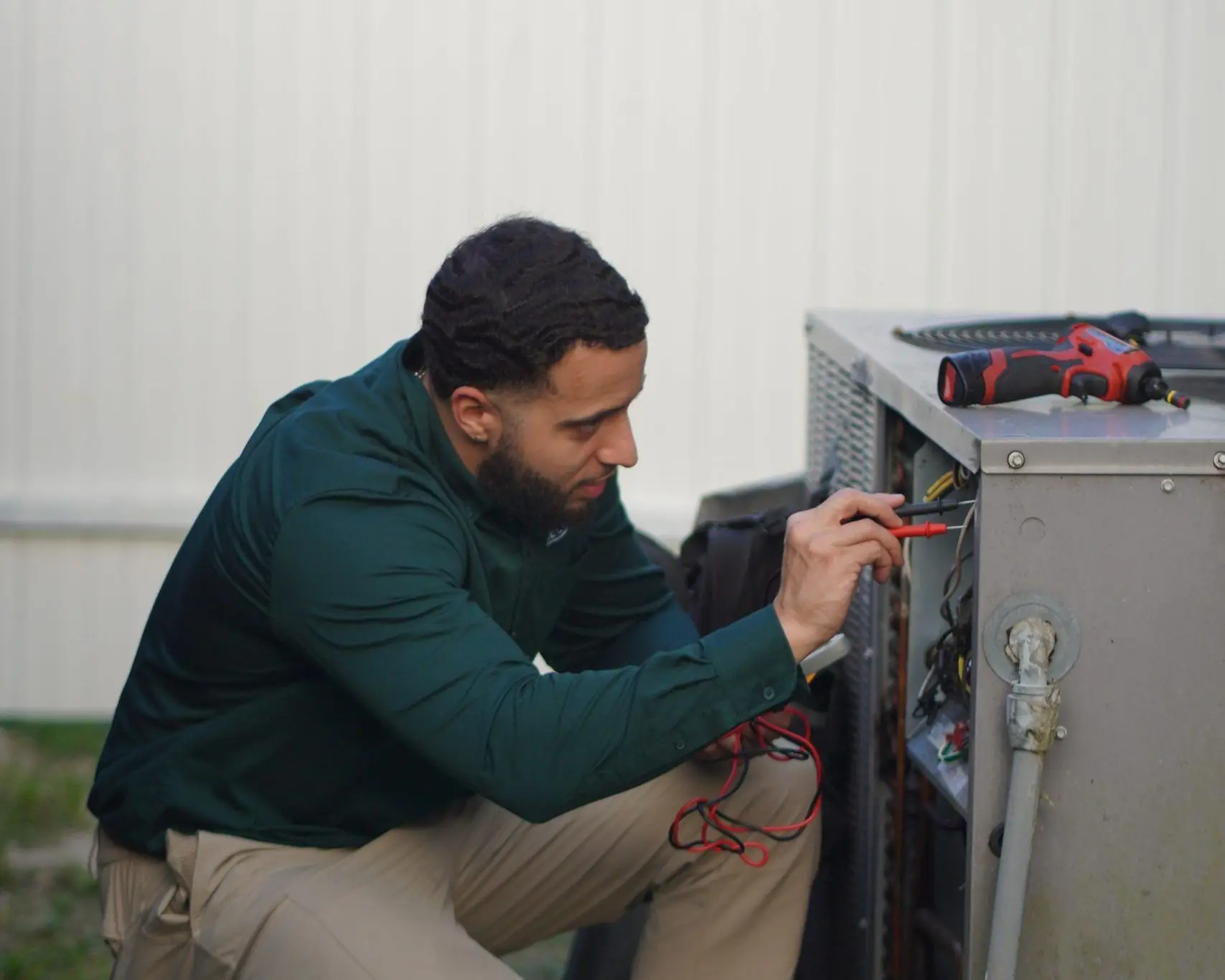
Service Shield technician testing the wiring in an outdoor unit's electrical panel

Schedule soon

AC making buzzing, grinding or clicking noises

The type of noise points to the cause. Buzzing or humming at the outdoor unit usually means an electrical start problem such as a failing capacitor or contactor; grinding or squealing points to worn motor bearings; rattling is often a loose panel or debris; and repeated clicking without starting is a control or start problem. Switch the system off if anything grinds, screeches or smells hot.

Where the sound is coming from

Where you hear it narrows the cause before anyone opens a panel.

How a split air-conditioning system worksSchematic: inside the house, an air handler with an evaporator coil and blower cools indoor air; a thermostat on the wall controls it; a condensate drain carries water away from the coil. Two copper refrigerant lines, the line set, run through the wall to the outdoor condenser, where the compressor and condenser coil release the heat outside.INSIDEOUTSIDEAIR HANDLERCONDENSER12456
Parts of the diagram

A buzz or hum at startup is often a weak capacitor or a worn contactor. Grinding or squealing points to fan-motor bearings, rattling to a loose panel or debris in the fan, and clanking or knocking to something loose inside, sometimes the compressor itself.

More on outdoor unit

Squealing or grinding indoors usually comes from the blower motor or a blower wheel rubbing its housing. A rattle can be as simple as an access panel that isn't seated.

A steady hiss or a gurgle along the copper lines can mean refrigerant escaping. Of all the noises here, it's the one worth switching the system off for and calling about promptly.

Lines touching a wall, a stud or each other can carry the outdoor unit's vibration into a room as a low hum that seems to come from inside the wall.

One click at the thermostat when cooling starts or stops is normal. Repeated clicking with nothing starting is a different problem.

More on thermostat

Sound by sound, most common first

Pick the sound you hear to see how likely it is, who can deal with it, and what it means.

Choose a likely cause

Common

Technician fix

Buzzing or humming from a failing capacitor or contactor

A contactor with pitted contacts or a capacitor that can no longer start the motor makes the outdoor unit buzz or hum while the fan sits still. Left alone, the compressor can overheat.

Common

You can check this

Rattling from loose panels or debris

Sticks, leaves and seed pods drop through the top grille of the outdoor unit and hit the fan blade. Loose screws and panels vibrate as the unit runs.

Occasional

Technician fix

Grinding or squealing from worn motor bearings

Outdoor fan motors and indoor blower motors run for thousands of hours a year here. Dry or worn bearings grind or squeal before the motor fails.

Occasional

You can check this

Whistling or rushing air at the vents

Air forced through closed registers, a clogged filter or undersized ductwork whistles. It's a sign the system is fighting high static pressure.

Airflow & duct design

Occasional

Technician fix

Clanking or knocking from the compressor

A loose internal part or a compressor struggling against high pressure can clank at startup or while running. It needs testing before it causes a bigger failure.

Rare

Technician fix

Hissing or gurgling at the refrigerant lines

A hiss can be refrigerant escaping from a leak. Some gurgling is normal at startup, but a constant hiss is not.

Turn it off if you hear…

Turn the system off and call a technician if:

  • Grinding, screeching or metal-on-metal sounds mean the system should be turned off.
  • Loud humming from the outdoor unit while its fan doesn't spin.
  • A constant hiss from the refrigerant lines.
  • A burning smell or smoke from the outdoor unit or air handler.

Checks you can safely do first

Switch the outdoor unit off at its disconnect before going near the fan.

Done all of these and it’s still not right?

That points to a part that needs a technician’s meter, not another reset.

How to describe the noise

A noise is hard to pass on secondhand, because "a weird sound outside" could be a dozen different parts. Three details narrow it down more than anything else:

  • When it happens. Only at startup (capacitors, contactors, a hard-starting compressor), the whole time it runs (fans, bearings, airflow), or right as it shuts off.
  • Where it is loudest. At the outdoor unit, at the air handler, at the vents, or along the copper lines and the wall they pass through.
  • What it sounds like. Buzzing or humming, rattling, grinding or squealing, whistling, clanking, or hissing.

A short phone video with the sound clearly audible is often more useful than any description. You can send it to us through Text a Tech so the technician knows what to listen for, though the diagnosis still happens at the equipment.

Air rushing or whistling at the vents is usually an airflow question rather than a failing part, and weak airflow covers it. A hum with the outdoor fan standing still belongs with the AC not turning on.

What our visit looks like

A technician listens at the source, tests the capacitor and contactor, measures motor current, checks bearings, fan blades and mounts, and inspects the refrigerant system if the noise points there. The technician explains what the noise means and what it will take to fix. Free service call with repair.

Questions

Why is my outdoor AC unit humming but the fan isn't spinning?

That usually means the motor or compressor is trying to start and can't, most often because of a failed capacitor. Turn the system off, because a compressor that keeps trying to start can overheat. It needs a technician to test the start components.

Membership

Service Shield Protection Plan

  • Two full maintenance visits a year, the same complete checklist each time
  • Discounted diagnostic fee for members
  • Up to 15% off repairs

Talk to Service Shield

Florida license CAC1821225

CallText a TechSchedule