
Guide · Hurricane season
Hurricane season and your AC: before, during and after a storm
How to protect your air conditioner through South Florida hurricane season, from storm prep and power outages to the checks before turning it back on.
Key takeaways
- The Atlantic hurricane season runs June 1 to November 30 and peaks around September 10, with most activity from mid-August to mid-October.
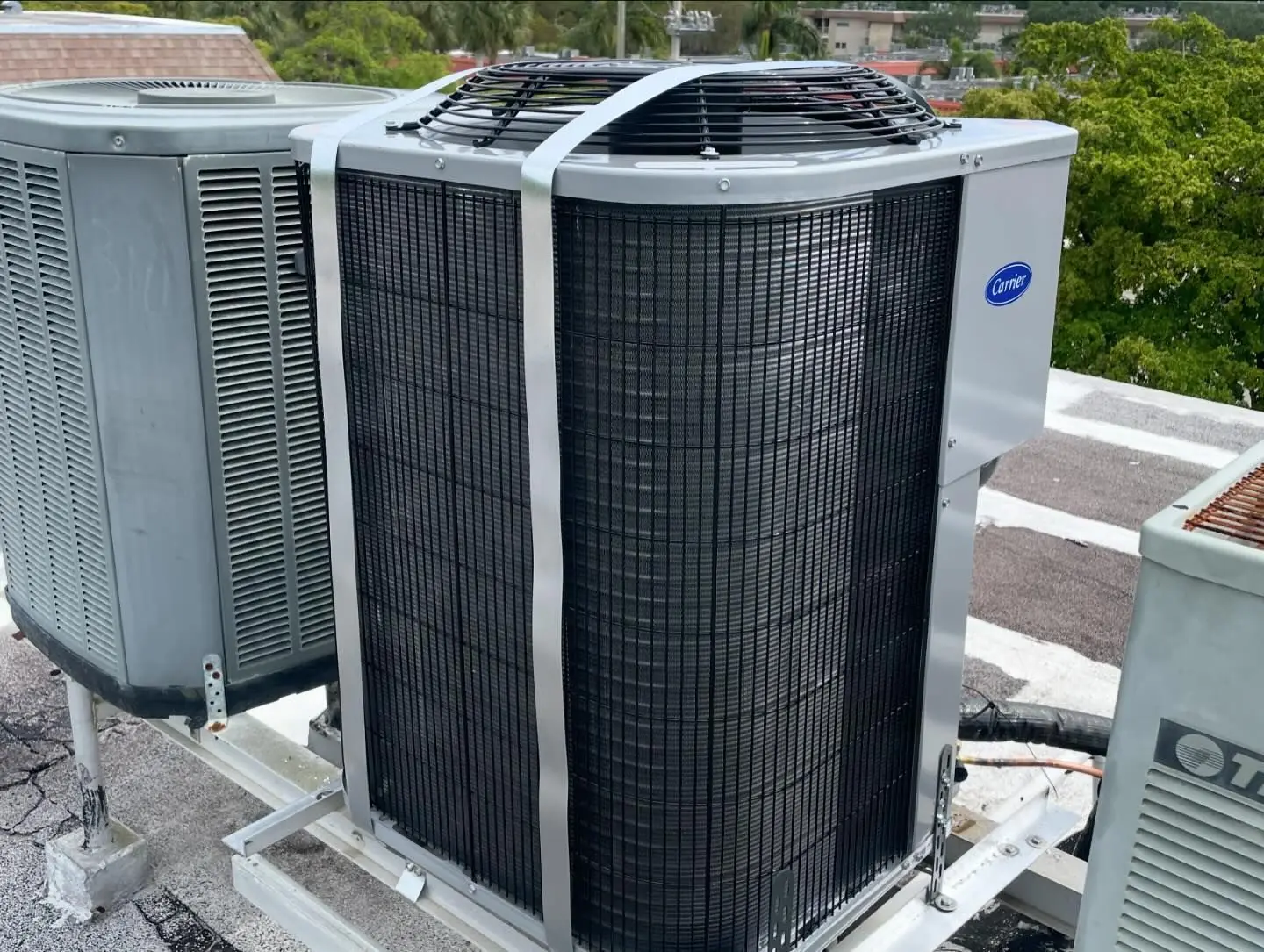
- In Broward, outdoor units are anchored to resist hurricane winds as part of a proper installation. Check that the tie-downs are intact before the season.
- Before a storm, turn the AC off at the thermostat and the breaker, and clear loose items from around the outdoor unit.
- Never run an air conditioner that was in floodwater until it has been inspected; flood-damaged equipment may need to be replaced.
- Run a generator outdoors, more than 20 feet from doors, windows and vents, and never connect one to house wiring without a transfer switch installed by an electrician.
After a storm, don't turn it back on if…
Turn the system off and call a technician if:
- The outdoor unit or the air handler was in floodwater, even if it has since dried out.
- The outdoor unit moved, tipped over or was hit by debris. The refrigerant lines or wiring may be damaged.
- You see damaged wiring, smell burning, or water is near the equipment's electrical parts.
- Your home was flooded and an electrician hasn't checked the electrical system yet.
A season checklist
All done.
Anything that looked wrong along the way is worth a technician’s visit.
The short answer
Hurricane season and air conditioning meet in three places: wind, power and water. Before the season, make sure the outdoor unit is properly anchored and the area around it is clear. When a storm is coming, turn the system off at the thermostat and the breaker. After the storm, don't turn it back on until you've checked it, and never run equipment that was in floodwater until it's been inspected.
The National Hurricane Center's official Atlantic season runs from June 1 to November 30, with activity sometimes before and after those dates. The season peaks around September 10, and most activity falls between mid-August and mid-October.
Before the season
Anchoring
Broward County is in the Florida Building Code's High-Velocity Hurricane Zone. Mechanical equipment exposed to the wind has to be designed and installed to resist wind pressures. Equipment fastened with rated stands, slabs or curbs installed to code is deemed to comply. In practice, the condenser or package unit should be fastened to its pad, stand or roof curb with approved anchors, not just resting on it.
Take a look at your outdoor unit before the season: are the brackets or straps in place and tight, is the pad level and intact, and is a rooftop unit's stand solid? Missing or rusted anchors are worth having checked well before a storm is in the forecast. If your system is due for replacement, anchoring is part of what the city inspects.
The yard
American Standard advises removing debris and small items from around the outdoor unit and cutting back overhanging branches well before a storm is imminent. Wind turns loose objects into projectiles, and the outdoor coil's thin fins are easy to damage.
Maintenance
A pre-season visit is a good time to catch a weak capacitor, a slow drain or a corroded connection. Those are the problems you don't want to discover when the power comes back on in the middle of a hot week after a storm. See the maintenance checklist.
When a storm is coming
- Turn it off at the thermostat and at the circuit breaker before you evacuate or ride out the storm. Trane gives the same advice for air conditioners and heat pumps.
- Clear the area around the outdoor unit.
- Don't wrap or cover the unit. A properly anchored unit doesn't need a cover, and Lennox warns that covers trap moisture, which leads to rust and corrosion.
- Plan for the outage. Ready.gov advises turning off or disconnecting appliances and electronics, because power may return with momentary surges or spikes.
During an outage
Generators keep people safe in a long outage, but they're also one of the biggest storm-related dangers.
- Outdoors only. The CDC says never to use a generator inside a home or garage, even with doors and windows open, and to run it outside, more than 20 feet from windows, doors and vents.
- CO alarms. The CPSC recommends battery-operated CO alarms, or alarms with battery backup, outside sleeping areas and on each floor, tested monthly. The National Weather Service notes that carbon monoxide poisoning is one of the leading causes of death after storms when areas are without power.
- No backfeeding. FPL warns never to wire a generator directly into a breaker or fuse box, because power can flow back into the utility lines. A licensed electrician should connect a generator through a transfer switch, and the generator's rated wattage should never be exceeded.
Whether a particular generator can run your central air conditioner depends on the equipment and the installation. That's a question for an electrician and an HVAC technician together, not a rule of thumb.
After the storm: before you turn it back on
Walk around the outdoor unit and look before restoring power:
- Is it still level and anchored? Did it shift, tip or get hit by debris?
- Are the refrigerant lines and their insulation intact where they enter the house?
- Is the coil packed with leaves and debris, or are the fins badly bent?
- Is there standing water around the unit or the air handler?
Trane advises checking for damage before you turn your air conditioning back on. If the unit moved or was struck, Goodman notes the refrigerant system may have been breached. That needs a technician, not a restart.
If there was flooding
Air conditioning equipment isn't designed to operate in or under water. Goodman advises against starting a flooded system before a qualified HVAC technician performs a full inspection, and notes that replacing flooded equipment may be the better choice. Trane advises turning the system off at the breaker if water starts entering the home and not using it after a flood until it's been inspected.
The CDC adds two important points for flooded homes:
- Have an electrician check the house's electrical system before turning the power back on, and never switch power on or off while standing in water.
- Have the HVAC system checked and cleaned by a professional experienced in mold cleanup before turning it on. Running a flood-contaminated system can spread mold through the house. EPA advises drying water-damaged areas and items within 24 to 48 hours to prevent mold growth.
Getting back to normal
Once the power is stable and the equipment checks out, a technician can restart and test the system: electrical connections, refrigerant charge, the drain, and the outdoor coil. If the storm left the house humid and damp, getting the AC running properly is the first step in drying it out and keeping mold from getting a start. See AC repair if the system won't start or isn't cooling.
About this guide
- Written by
- Service Shield Air Conditioning
- Published
- Oct 2026
- Last updated
- Oct 2026
Sources
- NOAA National Hurricane Center: Tropical Cyclone Climatology
- Ready.gov: Hurricanes
- Ready.gov: Power Outages
- CDC: Safety Guidelines for Reentering Your Flooded Home
- CDC: Carbon Monoxide Poisoning Basics
- CPSC: What to Know About Generators and Carbon Monoxide (2022)
- FPL: Generator Safety
- Trane: 8 Ways to Prepare Your AC for Storms
- Trane: How to Protect Your HVAC System from Flood Damage
- Goodman: Flood Recovery, A Guide for Home Heating and Cooling Systems
- American Standard: Preparing Your HVAC System for Extreme Weather
- Lennox: Should I Cover My AC Unit in the Winter?
- Florida Building Code, Mechanical, 8th Ed. (2023), Chapter 3, §301.15 wind resistance (UpCodes)
- Florida Building Code, Broward County Amendments, Chapter 1, §107 submittal documents (Municode)
- EPA: A Brief Guide to Mold, Moisture and Your Home
Storm questions
Should I cover my outdoor unit before a hurricane?
We don't recommend it. We found no federal or manufacturer guidance that recommends covering an outdoor unit for a hurricane, and Lennox warns that covers trap moisture and lead to rust and corrosion. What protects the unit is proper anchoring, a clear area around it, and turning it off before the storm.
My AC unit was in floodwater. Can I turn it on once it dries?
No. Have it inspected first. Air conditioning equipment isn't designed to operate in or under water, and manufacturers advise a full inspection by a qualified technician before a flooded system runs again. The CDC also advises having the system checked and cleaned by a professional experienced in mold cleanup, and having an electrician check the home's wiring first if the house flooded.
Related services
Storm damage or a system that won't restart?
Tell us what happened and what you're seeing. We'll check the equipment before it runs again.
Florida license CAC1821225