24/7 AC service

AC replacement · Package units

Package unit replacement for homes and small buildings

The compressor, both coils and the blower all live in one cabinet outdoors. The replacement is mostly about the connections, the access and the anchoring.

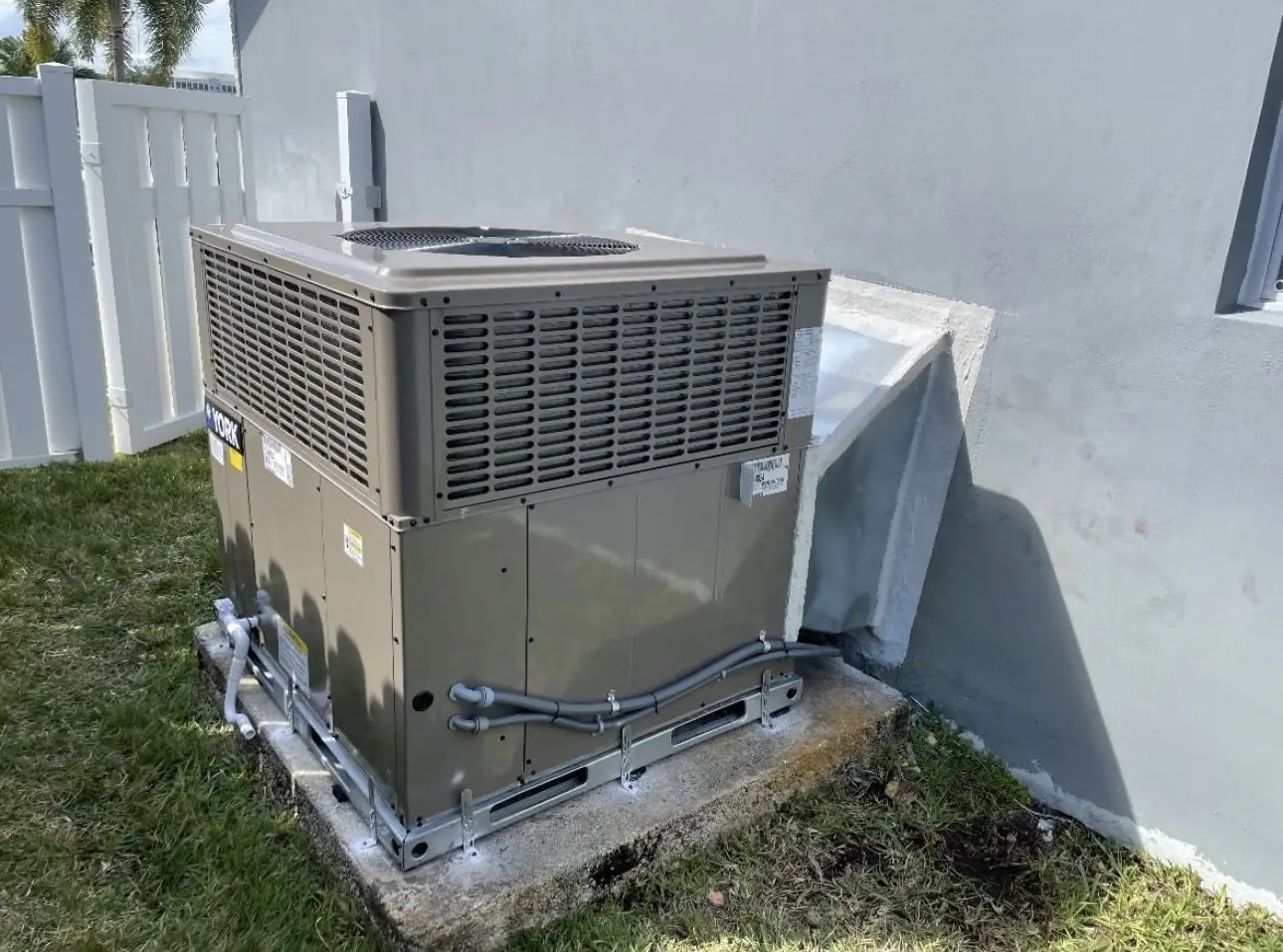
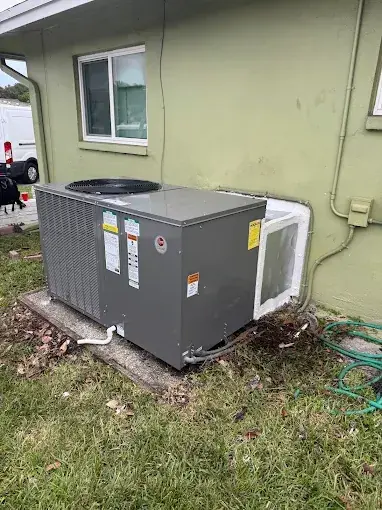
New packaged air conditioning unit on a pad beside a house

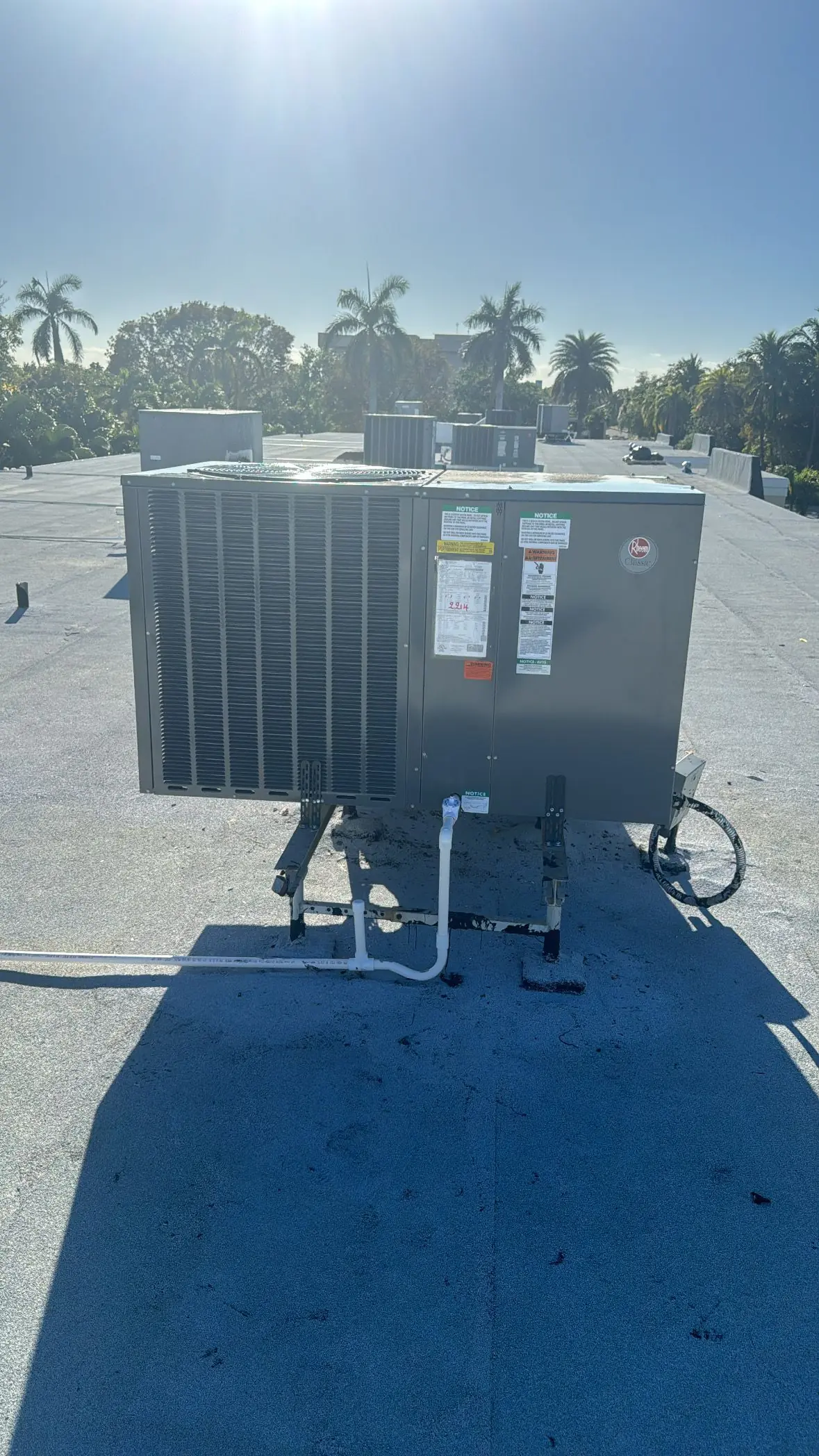
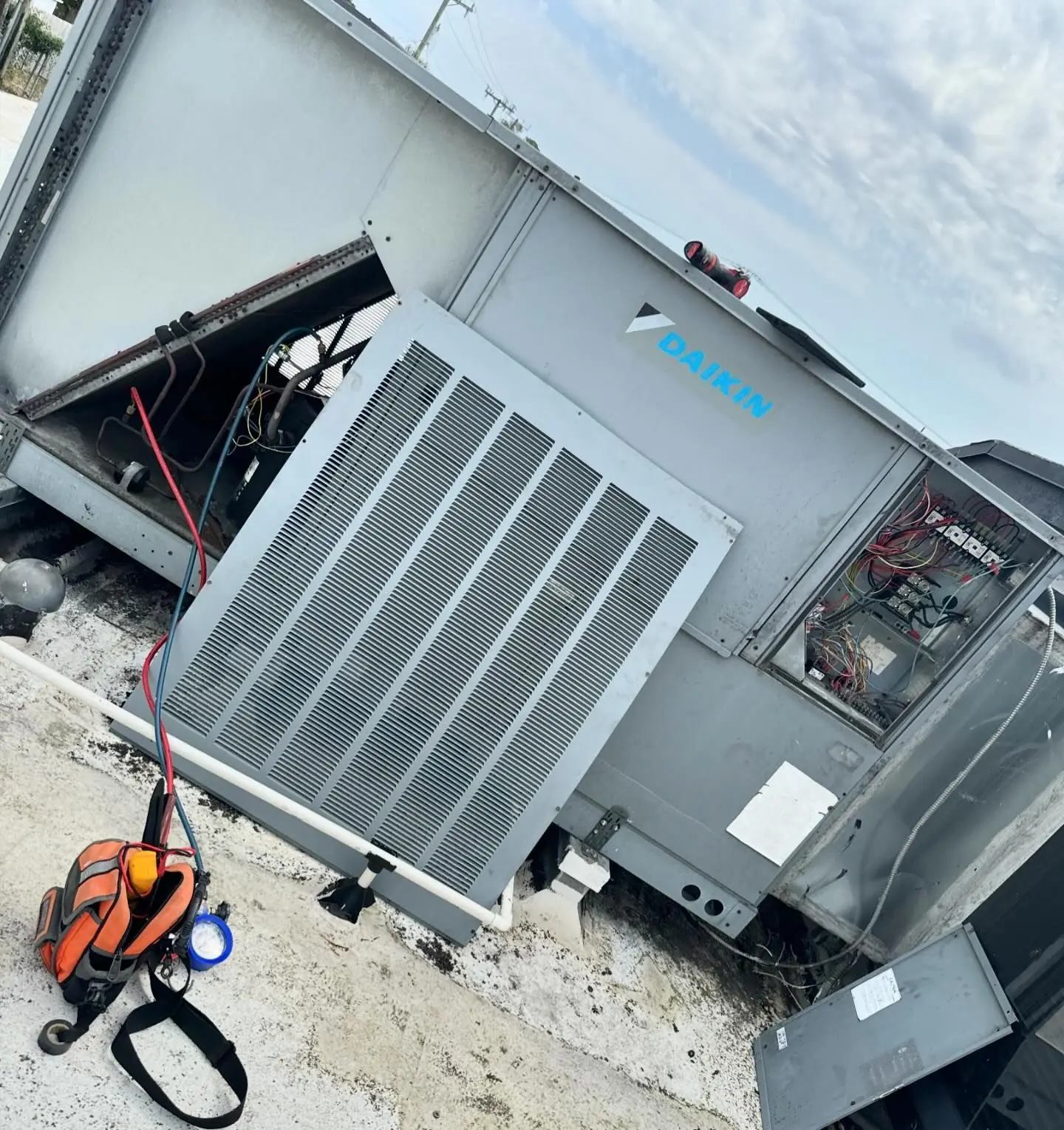
A package unit puts the whole air conditioner in one cabinet: the compressor, the outdoor coil, the indoor coil, the blower and the controls. It sits outside on a concrete pad, a wall stand or the roof, and the supply and return ducts run from the cabinet into the house or building.

You'll find them where there's no good place for an indoor air handler: older homes built without an equipment closet, manufactured homes, additions, and many small commercial buildings with flat roofs. Some package units are cooling-only with electric heat strips; others are heat pumps.

The upside is simplicity. Nothing about the system lives inside, so there's no closet drain pan to overflow into a hallway and every component can be reached without entering the house. The trade-off is exposure. The entire system, including the parts a split system keeps indoors, sits in the sun, rain and wind, and near the coast it takes salt air too. That's one reason package units tend to need replacement sooner than the indoor half of a split system.

Most of a package-unit replacement is about connections. The new cabinet rarely matches the old one's footprint or duct openings exactly, so the transitions to the existing supply and return need to be built and sealed properly; a leaky transition outdoors pulls in hot, humid air and wastes the efficiency you just paid for. On a roof, the curb and flashing are part of the job. Everywhere in Broward, the unit has to be anchored to an approved tie-down detail, because the county sits in the High-Velocity Hurricane Zone.

Can a package unit be swapped for a split system instead? Sometimes, if there's a place for an air handler indoors and the ducts can be re-routed to it. It's worth asking about when the existing ductwork is in poor shape anyway, but it's a bigger project than a like-for-like replacement, and it doesn't make sense just for the sake of change. If the ducts themselves are the problem, start with duct replacement.

Package unit or split system?

Focus on one option
ConsiderationPackage unitSplit system
Where the equipment livesOne cabinet outside, on a pad, a wall stand or the roofAn outdoor condenser plus an indoor air handler in a closet, garage or attic
Indoor space neededNone for equipment, only the duct connectionsA closet or attic space with service clearance
How the ducts connectSupply and return run through an exterior wall, under the floor, or down through a roof curbAt the indoor air handler
Weather exposureThe whole system faces sun, rain, wind and salt airOnly the condenser is outside
Where you see them in BrowardHomes without an indoor equipment space, manufactured homes, small commercial roofsMost single-family homes and condos

Package unit

Where the equipment lives
One cabinet outside, on a pad, a wall stand or the roof
Indoor space needed
None for equipment, only the duct connections
How the ducts connect
Supply and return run through an exterior wall, under the floor, or down through a roof curb
Weather exposure
The whole system faces sun, rain, wind and salt air
Where you see them in Broward
Homes without an indoor equipment space, manufactured homes, small commercial roofs

Split system

Where the equipment lives
An outdoor condenser plus an indoor air handler in a closet, garage or attic
Indoor space needed
A closet or attic space with service clearance
How the ducts connect
At the indoor air handler
Weather exposure
Only the condenser is outside
Where you see them in Broward
Most single-family homes and condos

What to look at on a package unit

How a package unit swap works

  1. Measure the connections

    Supply and return openings, curb or stand dimensions and the electrical service are measured first, because a new cabinet rarely lines up exactly with the old one.

  2. Plan the access

    Ground units need a clear path; rooftop units may need a crane and coordination with the building's roofing.

  3. Recover, disconnect and remove

    Refrigerant is recovered from the old unit before it is disconnected and lifted out.

  4. Set, adapt and anchor

    The new unit is set with transitions to the existing ducts, sealed, and fastened to an approved hurricane tie-down detail.

  5. Drain, power, startup, inspection

    The condensate drain and electrical are connected to code, startup readings are recorded, and the city inspects the work.

Hurricane anchoring

  • Hurricane-zone anchoring

    Broward County is in the Florida Building Code's High-Velocity Hurricane Zone. A package unit is fastened to its pad, stand or curb with an approved tie-down detail.

Pricing a package unit replacement?

Answer a few easy questions, including where the unit sits, and see Premium, Enhanced and Basic ranges. It's a planning number, not a quote.

The on-site evaluation for a new system is free.

Package unit questions

Can a package unit be replaced with a split system?

Sometimes. It needs an indoor place for an air handler, such as a closet, garage or attic, and ductwork that can be connected to it. It's a bigger project than a like-for-like swap, so it mostly makes sense when the existing ducts need major work anyway.

Why does a package unit need tie-downs?

Broward County is in the Florida Building Code's High-Velocity Hurricane Zone, so outdoor equipment has to be fastened to its pad, stand or roof curb with an approved tie-down detail. The anchoring is checked when the city inspects the replacement.

Replacing a package unit?

Tell us where it sits (ground, wall or roof) and roughly how old it is. That shapes the estimate visit.

The on-site evaluation for a new system is free.

Florida license CAC1821225

CallText a TechEstimate