24/7 AC service

Schedule soon

AC not draining, or shut off by the float switch

If water is standing in the drain pan, the system shut itself off, or nothing drips from the drain outlet outside on a humid day, the condensate drain line is probably blocked. In South Florida, slime and algae grow inside these lines, and a float switch shuts the AC off to prevent an overflow. Clearing the line restores drainage, but repeat clogs point to a slope, trap or venting problem.

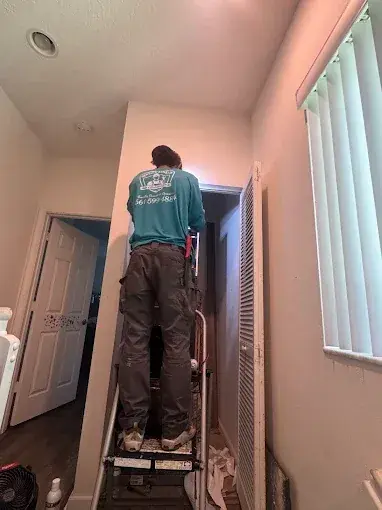
Service Shield technician on a ladder working at the top of an air handler closet

Likely causes, most common first

Pick one to see how likely it is, who can deal with it, and what it means.

Choose a likely cause

Common

You can check this

Slime and algae in the drain line

Warm, wet and dark, the condensate line is ideal for biological growth. Much of the slime we clear out is a bacterial film, and Zoogloea, a type of bacteria that clumps into a jelly-like mat in standing or slow-moving water, is one of the common contributors. Along with algae and dust, it narrows the line until water backs up into the pan. It's the most common drain problem in Broward homes, and it keeps coming back because the system keeps the line wet for most of the year. More on how drain lines clog.

AC Maintenance

Occasional

You can check this

Blocked drain outlet outside

Mulch, soil, grass or insects can plug the end of the line where it discharges outdoors.

Occasional

Technician fix

Clogged, missing or dry trap

Most air handler drains need a trap so the blower doesn't pull air back up the line. A clogged trap blocks flow; a missing or dry one lets the pan hold water.

Occasional

Technician fix

Sagging, crushed or badly sloped line

A drain line has to fall steadily toward its outlet. A sag holds water and sludge; a crushed section restricts it.

Occasional

Technician fix

Failed condensate pump

Air handlers that can't drain by gravity use a small pump. When it fails, water backs up and the float switch shuts the system off.

Occasional

Technician fix

Rusted or cracked primary pan

A leaking primary pan sends water into the secondary pan below, which trips its own float switch.

Air handlers

When to stop and call

Turn the system off and call a technician if:

  • Water is overflowing the pan toward wiring or onto the floor.
  • The secondary pan under an attic or closet unit is holding water, which means the primary drain has failed.
  • There is a stain or drip in the ceiling below the air handler.

How the drain is supposed to work

Follow the water from the coil to the outlet. A blockage anywhere along this path backs water up into the pan.

Where the water from an air conditioner goesSchematic: water condenses on the cold evaporator coil inside the air handler and drips into the primary drain pan. It leaves through a trap and the condensate drain line, which slopes down to an outlet outside. A float switch in the line or pan shuts the system off if the water backs up, and a secondary pan under the unit catches overflow.AIR HANDLEROUTSIDESLOPES DOWN →123456
Parts of the diagram

The source of the water. On a summer day a typical system pulls gallons out of humid air.

Should hold only a thin film of water while the system runs. A full pan means the water isn't leaving.

Sludge settles here first. A clogged trap stops drainage even when the rest of the line is clear.

Lifts when water backs up and cuts power to the system, which is why a clogged drain often looks like an AC that won't turn on.

More on float switch

Must slope down the whole way. Slime and algae narrow it from the inside, and mulch or soil can block the outlet outside.

More on drain line and outlet

The backup. If it's holding water, the primary drain has already failed and needs attention.

Checks you can safely do first

Tick them off as you go. None of them need tools or opening a panel.

Done all of these and it’s still not right?

That points to a part that needs a technician’s meter, not another reset.

What our visit looks like

A technician clears the line from the cleanout to the outlet, checks the trap, slope and venting, confirms the float switch shuts the system off as it should, and checks the drain pan for rust or cracks. You'll get a plain recommendation for keeping the line clear between visits. Free service call with repair.

Questions

How often should the AC drain line be cleaned?

In South Florida it should be checked and cleared at every maintenance visit, and many homeowners add a vinegar treatment every month or two in summer. Lines that clog repeatedly despite that usually have a slope, trap or venting problem worth fixing.

Is vinegar safe to pour down my AC drain line?

Distilled white vinegar is the common recommendation for helping keep algae down in condensate lines, poured in at the cleanout near the air handler. Don't use bleach or harsh drain cleaners, which can damage pans, fittings and some coils. Vinegar helps prevent clogs; it won't clear a line that's already blocked solid.

Membership

Service Shield Protection Plan

  • Two full maintenance visits a year, the same complete checklist each time
  • Discounted diagnostic fee for members
  • Up to 15% off repairs

Talk to Service Shield

Florida license CAC1821225

CallText a TechSchedule