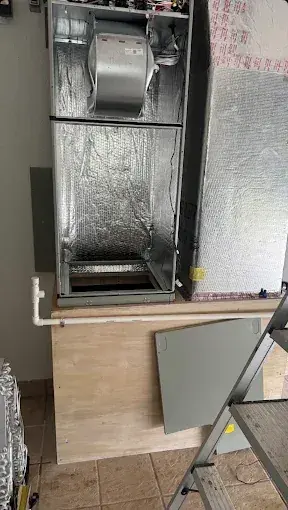
A duct system is the part of your air conditioning you almost never see. In most Broward homes the air handler sits in a closet, garage or attic, and the ductwork that carries its air to each room runs through an attic that can get far hotter than the rooms below. When that ductwork fails, the AC can be working perfectly and the house still won't cool evenly.
Replacement is the right call when the problems are spread across the system rather than concentrated in one run. Typical signs:
- Many runs are damaged. Runs crushed under storage, torn jackets, liners that have collapsed, or runs that have slipped off their collars in several places.
- The insulation has broken down. Duct jackets that crumble or split let the cold air inside the run pick up attic heat, and they let humid attic air condense on the cold surfaces. You see it as sweating vents and stained ceilings.
- Connections are failing everywhere. Tape that has dried out and let go at one joint has usually done the same at the others.
- Rooms never balanced. If some rooms were always warm, the issue may be the layout itself, and replacing the ducts is the moment to fix the design instead of copying it.
If only one or two runs are damaged, duct repair is usually the better use of money. The attic inspection tells you which situation you're in. We show you what we found, with photos when they help, and you decide.
What a proper replacement includes
A replacement is more than new flex in the same places. The supply and return runs are sized for the airflow each room needs, connected to sound plenums at the air handler, routed with gentle bends, and supported so they can't sag. Every connection is mechanically fastened and sealed with mastic rather than relying on tape alone. The boots behind the ceiling registers are sealed to the drywall and insulated, because that is where humid attic air most often finds a cold surface. Return air gets the same attention as supply: a system that can't pull enough air back to the air handler is loud, weak and inefficient no matter how good the supply side looks.
A proper replacement ends with measurements, not just a walk-through. Static pressure at the air handler and temperatures at the registers are checked against the readings taken before the work, so you can see what changed.
Doing it alongside an equipment replacement
When the outdoor unit and air handler are being replaced anyway, it is worth checking the ductwork at the same time. New equipment is rated for a certain amount of airflow, and old ducts that are undersized or leaking can keep it from delivering its rated capacity. If the ducts are sound, they stay. If they aren't, it's far easier to correct them while the system is already apart than to come back later. See AC replacement and installation.