
What it is
- Single-zone
- One outdoor unit paired with one indoor unit
- Multi-zone
- One outdoor unit running two or more indoor units
- Ducted mini-split
- A compact indoor unit hidden in a ceiling or closet, with short duct runs
AC installation · Ductless
A mini-split cools one space, or a few, without ductwork. That makes it the right tool for some rooms and the wrong one for others.
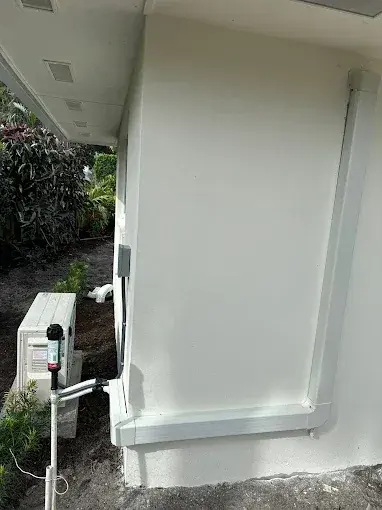
A ductless mini-split pairs an outdoor unit with one or more indoor units mounted in the rooms they cool. A small refrigerant line set, a control cable and a drain line connect them through a single hole in the wall. There's no ductwork, so nothing is lost to leaky attic runs, and each indoor unit has its own setting.
Most mini-splits use inverter-driven compressors, which slow down instead of switching off. In a humid climate that's an advantage: longer, gentler runs pull more moisture out of the air than a unit that blasts and stops.
They are a strong fit for spaces the main system can't reach well: additions, enclosed patios and sunrooms, garages converted into living space, and the bonus room at the end of a long duct run. They also work as a second system for one room that's always warmer than the rest of the house.
They're a weaker fit for replacing a working ducted system throughout a typical Broward house. Every room needs an indoor unit or a duct branch, the indoor units are visible on the walls, and the upkeep multiplies with each one. If a single room won't cool, it's worth checking the duct run to it before adding equipment. The fix may be airflow and duct design rather than a new system.
Installation quality shows up in two places. The first is drainage: each indoor unit makes water all summer, and a drain line that sags, kinks or loses its slope will eventually drip down the wall. The second is the refrigerant circuit: flare connections made and tightened correctly, a deep vacuum, and a charge checked against the manufacturer's instructions. Outdoors, the unit still sits in Broward's hurricane zone and gets anchored like any other condenser.
| Setup | What it is | Fits | Keep in mind |
|---|---|---|---|
| Single-zone | One outdoor unit paired with one indoor unit | An addition, garage conversion, sunroom or one stubborn room | Simplest layout; each room you add means another system |
| Multi-zone | One outdoor unit running two or more indoor units | Several rooms without ducts, each with its own setting | The outdoor unit is sized for the combined rooms; one fault can affect every zone |
| Ducted mini-split | A compact indoor unit hidden in a ceiling or closet, with short duct runs | A few connected rooms where wall units aren't wanted | Needs space for the unit and short ducts; still no full-house duct system |
Size each room
Every indoor unit is sized for the room it serves; one oversized head in a small bedroom short-cycles just like an oversized central system.
Place the indoor unit for airflow and drainage
High enough to throw air across the room, with a path for the condensate to drain by gravity, or a pump where gravity isn't possible.
Run the line set and drain
The refrigerant lines, control wire and drain pass through one sealed hole and run to the outdoor unit in a protective cover.
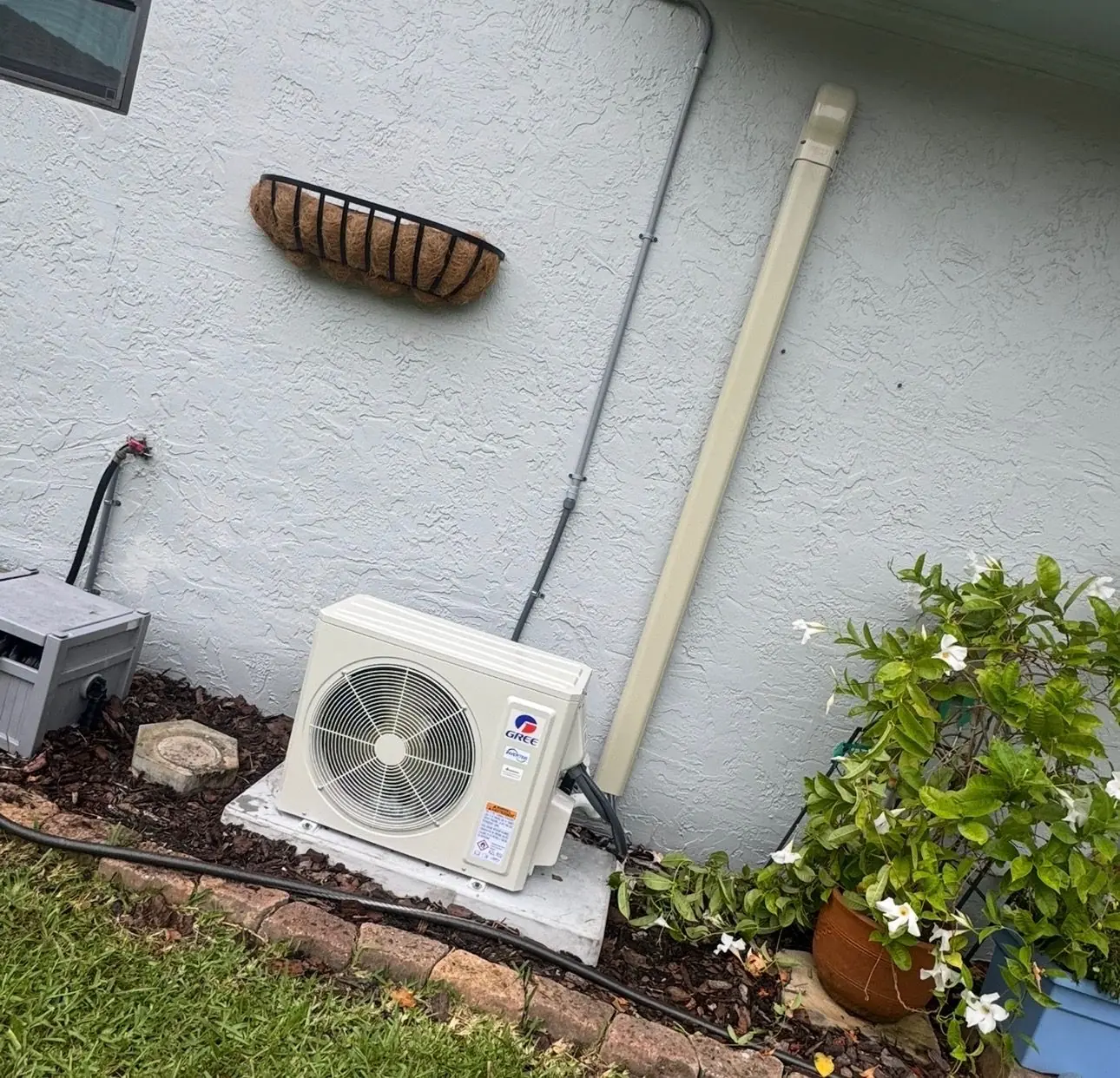
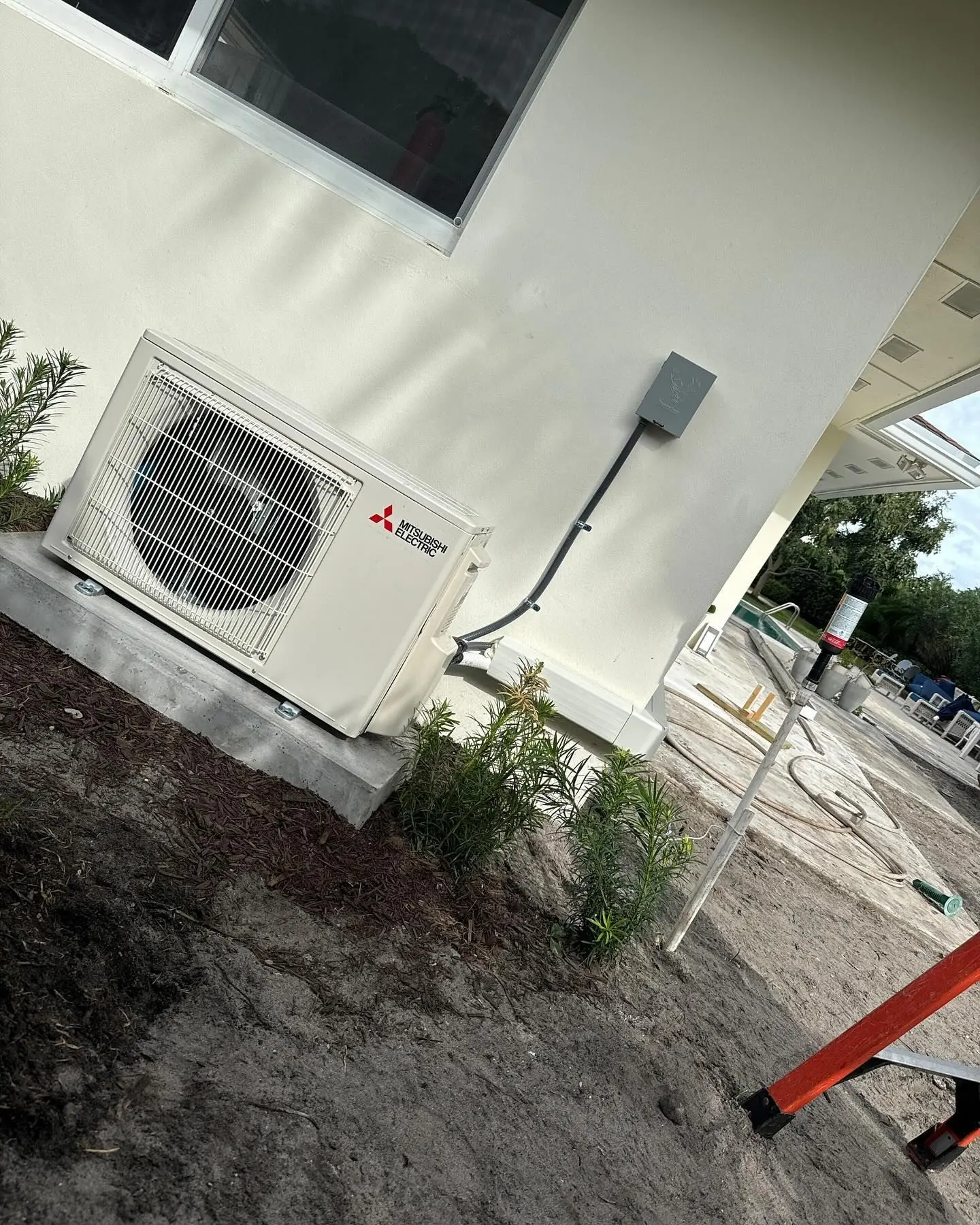
Set and anchor the outdoor unit
On a pad or wall bracket, clear of roof runoff, and fastened for Broward's hurricane-zone wind loads.
Vacuum, charge and test
The lines are evacuated and proven tight, the charge is checked, and each indoor unit's temperature drop and drainage are verified.
Check and rinse the washable filters about monthly when the unit runs every day, more often in dusty rooms. The coil and blower wheel inside the indoor unit also collect dirt and growth in a humid climate; dark spots on the vanes or a musty smell mean they need a proper cleaning.
They can, with a multi-zone system or several systems, but every room needs its own indoor unit or a short duct branch. In a typical ducted Broward home they work best as a supplement for an addition, a converted garage or one room the main system can't keep cool.
Tell us about the space and we'll come look at it. Sometimes the answer is a mini-split; sometimes it's fixing the duct run that already goes there. Mini-splits are priced on site, room by room.
Florida license CAC1821225