24/7 AC service

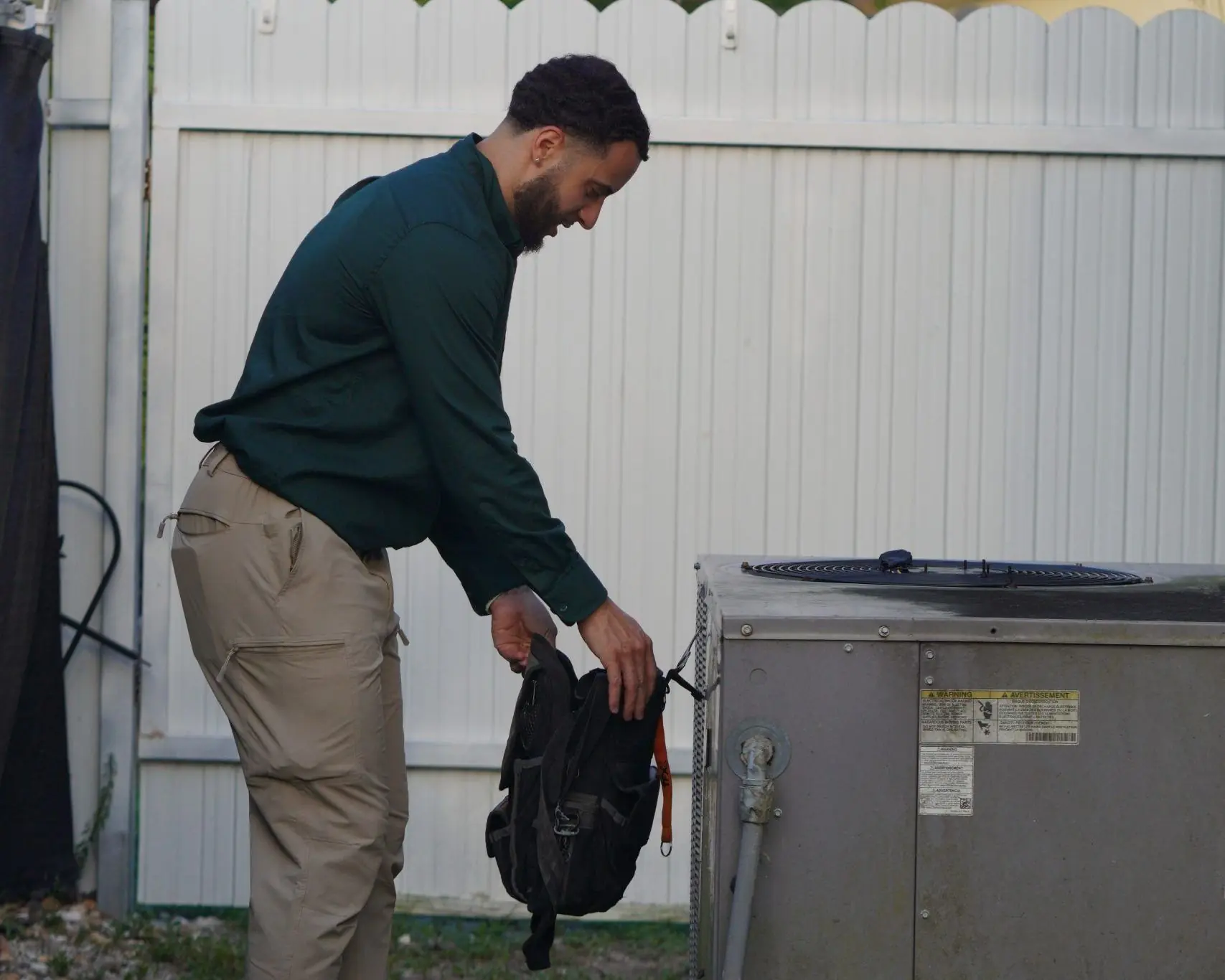
Service Shield technician carrying a tool bag across a backyard toward an outdoor AC condenser beside a white fence

Schedule soon

AC running but blowing warm air

If the indoor fan runs but the air isn't cold, check the thermostat and the air filter first. The most common causes after that are an outdoor unit that isn't starting (often a failed capacitor or contactor), a refrigerant leak, or a dirty or iced coil. Electrical and refrigerant problems need a technician.

Likely causes, most common first

Pick one to see how likely it is, who can deal with it, and what it means.

Choose a likely cause

Common

Technician fix

Outdoor unit not starting

A weak capacitor or a burnt contactor keeps the compressor and outdoor fan from running, so the indoor fan just moves warm air around the house. Summer heat finishes off parts that were already drifting out of spec.
Common

Technician fix

Refrigerant leak

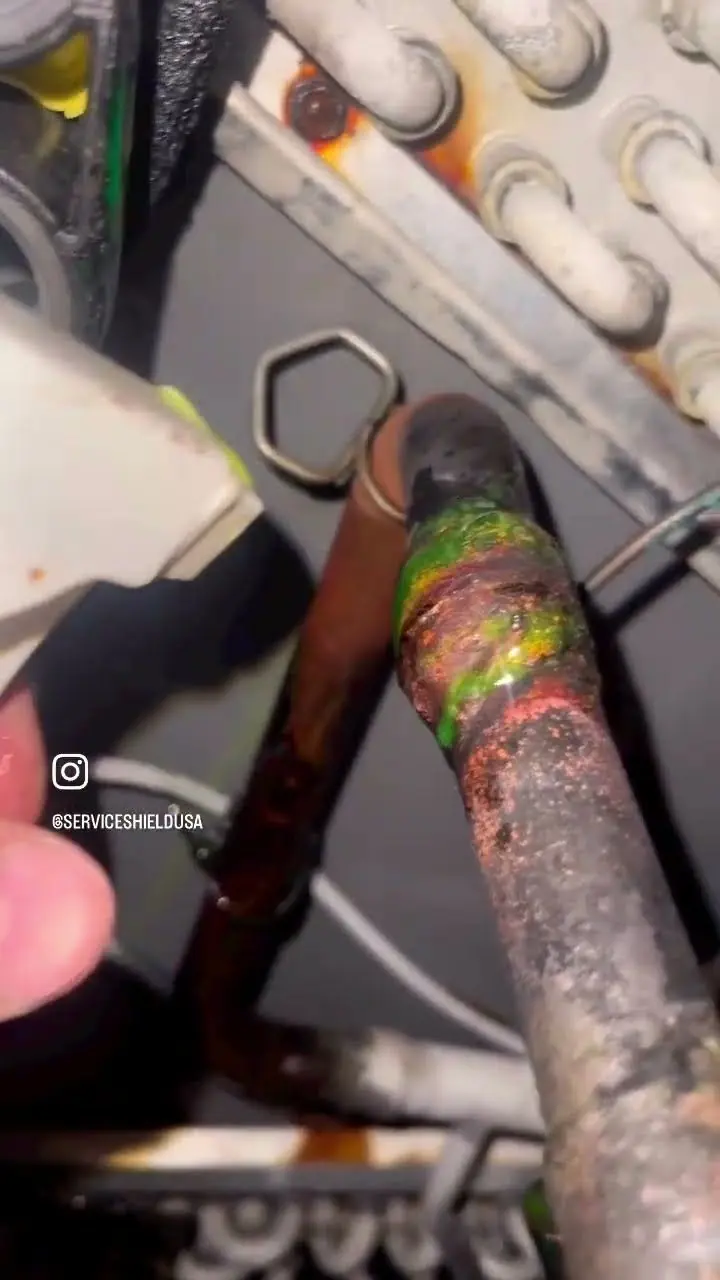
AC systems don't use up refrigerant. If it's low, there's a leak, often at corroded copper or a fitting. Adding refrigerant without finding the leak only delays the next failure.

Common

You can check this

Dirty filter or coil restricting airflow

Restricted airflow lowers cooling and can freeze the indoor coil. A clean filter is the first check; a dirty coil needs cleaning as part of maintenance.

AC Maintenance

Occasional

You can check this

Thermostat settings or wiring

The fan set to “On” instead of “Auto”, a schedule, or a smart thermostat behaving oddly can all look like a cooling failure.

Occasional

Technician fix

Control board fault

Variable-speed systems rely on control boards that report fault codes. A shorted or failed board can stop cooling entirely. If the thermostat or the unit is showing a code, a photo of it sent through Text a Tech helps the technician come prepared, but the code is a clue, not the whole diagnosis.

Where the cooling stops

Cold air at the vents needs every link in this loop working. Warm air means one of them has stopped.

How a split air-conditioning system worksSchematic: inside the house, an air handler with an evaporator coil and blower cools indoor air; a thermostat on the wall controls it; a condensate drain carries water away from the coil. Two copper refrigerant lines, the line set, run through the wall to the outdoor condenser, where the compressor and condenser coil release the heat outside.INSIDEOUTSIDEAIR HANDLERCONDENSER123456
Parts of the diagram

Its fan and compressor have to start for any heat to leave the house. When the indoor blower runs but this unit sits silent, or hums without its fan turning, a failed capacitor or contactor is the usual reason.

More on outdoor condenser

The blower pushes house air across the cold coil. A clogged filter or a dirty coil starves it of air until it ices over, and an iced coil stops cooling even though the fan keeps running.

More on air handler and coil

Refrigerant travels between the units through these copper lines. A slow leak, often a pinhole at a corroded joint, lets cooling fade over days or weeks until the air comes out warm.

With the system running, the larger insulated line should feel cool and sweat. A warm suction line, or ice forming on it, points to a refrigerant or airflow problem rather than a thermostat one.

Set to Cool, a few degrees below the room, with the fan on Auto. A Heat or Fan-only mode, or a schedule overriding the setpoint, looks exactly like a broken air conditioner.

More on thermostat

On many systems a float switch on this line stops cooling when the drain backs up, while the blower may keep moving room-temperature air.

More on condensate drain

When to stop and call

Turn the system off and call a technician if:

  • The outdoor unit hums loudly but its fan isn't spinning. Switch it off to protect the compressor.
  • You smell burning or see scorch marks at the outdoor unit or air handler.
  • The breaker trips again after one reset.
  • Ice is building on the refrigerant lines. Turn cooling off and let it thaw.

Checks you can safely do first

Tick them off as you go. None of them need tools or opening a panel.

Done all of these and it’s still not right?

That points to a part that needs a technician’s meter, not another reset.

See the diagnosis

Field clip · 0:16

Corroded copper at the coil: where leaks start

Field clip: heavy corrosion on a copper refrigerant line and joint just below the bends of an AC coil.

Watch page & transcript

What separates the causes

From the couch, a dead capacitor, a refrigerant leak and an iced coil all feel the same. These measurements tell them apart.

Temperature split

supply vs. return °F

There is no single "normal" number. The split is compared with a target worked out from the indoor humidity and airflow, and a small split with the outdoor unit running points toward refrigerant or airflow.

Superheat or subcooling

°F

Shows whether the refrigerant charge is right. A fixed orifice is checked by superheat and an expansion valve by subcooling, so the metering device decides which reading counts.

Capacitor and contactor

µF / volts

A weak capacitor or a pitted contactor keeps the outdoor fan and compressor from starting even though the indoor fan runs normally.

Static pressure

in. w.c.

If air can't get across the coil, it ices over and stops cooling. The reading is compared with the maximum on the air handler's rating plate.

A low charge means a leak somewhere. Topping it up without finding the leak only delays the next warm afternoon.

What our visit looks like

A technician checks the outdoor unit's electrical components under load, measures refrigerant pressures and the temperature split across the indoor coil, and inspects the coil and airflow. The technician then explains the cause and the repair options. Free service call with repair.

Questions

Should I keep running my AC if it's blowing warm air?

Not for long. If the outdoor unit is humming without its fan spinning, or the refrigerant lines are icing, keep running it and you risk damaging the compressor, the most expensive part of the system. Switch cooling off (you can leave the fan on to help thaw ice) and have it checked.

Membership

Service Shield Protection Plan

  • Two full maintenance visits a year, the same complete checklist each time
  • Discounted diagnostic fee for members
  • Up to 15% off repairs

Talk to Service Shield

Florida license CAC1821225

CallText a TechSchedule