24/7 AC service

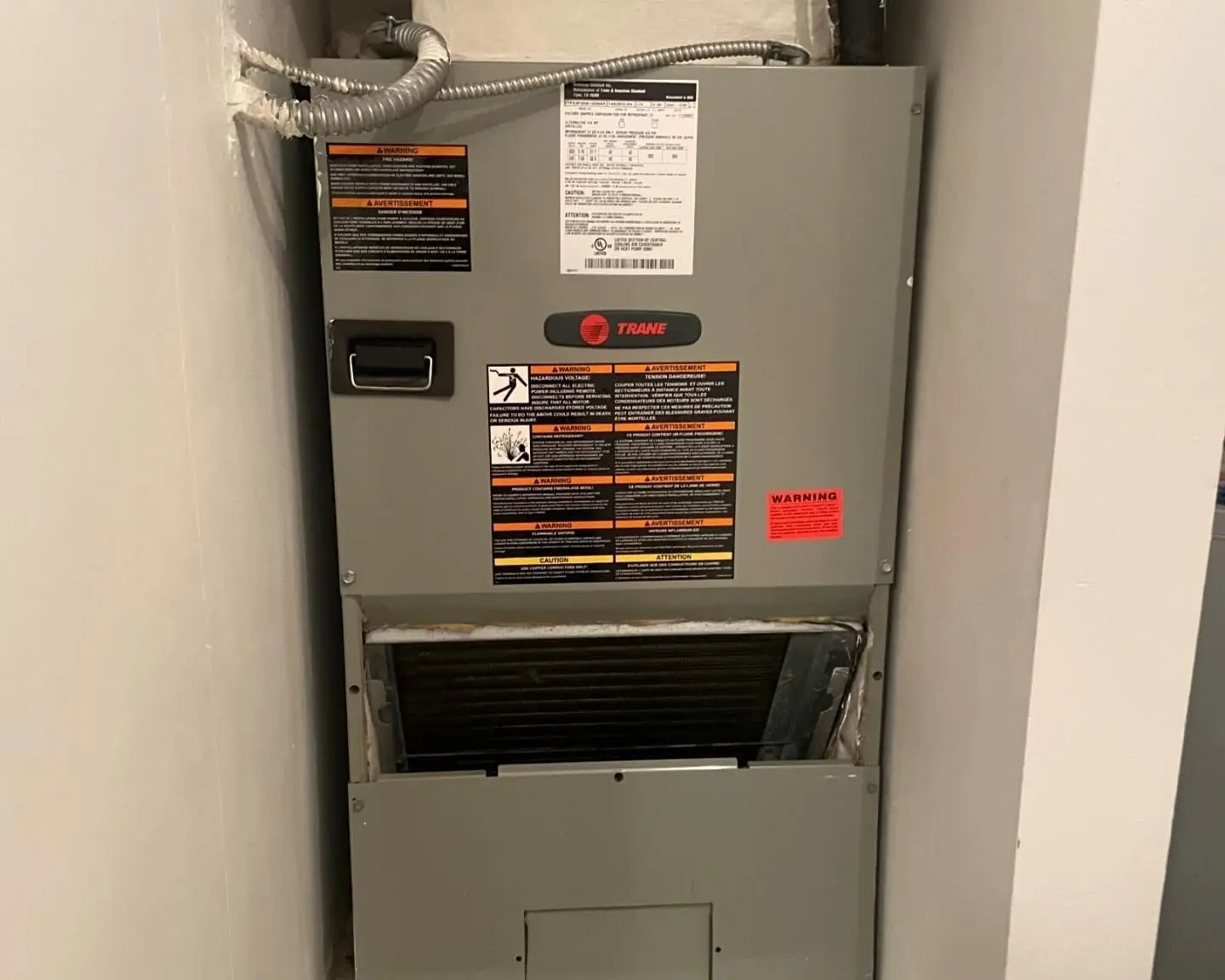
Trane air handler installed in a wall closet, with the filter access door open below the cabinet

Schedule soon

Musty or burning smell from the AC

A musty or mildew smell usually comes from moisture sitting where it shouldn't, such as a dirty evaporator coil, a slow-draining pan, damp ductwork or a wet filter. A burning or electrical smell is different. It can mean an overheating motor or wiring, so turn the system off and call. A rotten-egg smell isn't the AC at all. Leave the house and call the gas utility.

Some smells mean turn it off now

Turn the system off and call a technician if:

  • You smell burning, hot plastic or anything electrical. Turn the system off at the thermostat and breaker.
  • Smoke from a vent, the air handler or the outdoor unit.
  • A rotten-egg smell isn't the AC. Leave the house and call your gas utility or 911 from outside.
  • There's visible mold on the air handler or around the vents. Avoid disturbing it yourself.

Likely causes, most common first

Musty smells are far more common than burning ones. Pick a cause to see who can deal with it.

Choose a likely cause

Common

Technician fix

Biological growth on a damp coil or drain pan

The indoor coil is wet whenever the AC runs. In a humid climate, dust on that wet surface becomes a home for mold and bacteria, and the system blows the smell through the house, often strongest at startup.

AC Maintenance

Common

You can check this

Slow or clogged condensate drain

Water that sits in the drain pan instead of draining away goes stagnant. A partly clogged line is common here because algae grows inside it.

AC Maintenance

Common

You can check this

Dirty or damp air filter

A filter loaded with dust that gets damp can smell musty on its own. It's the cheapest thing to rule out.

Air filtration

Occasional

Technician fix

Return leaks pulling in attic or wall-cavity air

If the return side of the duct system leaks, it pulls in air from the attic, a wall cavity or the garage, and their smells come with it.

Duct repair

Occasional

Technician fix

Overheating motor or electrical part

A burning, hot-plastic or electrical smell can come from a blower motor overheating, a failing capacitor, or wiring that's overheating at a loose connection.

Where a musty smell starts

Musty odors almost always come from somewhere water sits. In an air handler, that's this path.

Where the water from an air conditioner goesSchematic: water condenses on the cold evaporator coil inside the air handler and drips into the primary drain pan. It leaves through a trap and the condensate drain line, which slopes down to an outlet outside. A float switch in the line or pan shuts the system off if the water backs up, and a secondary pan under the unit catches overflow.AIR HANDLEROUTSIDESLOPES DOWN →1256
Parts of the diagram

Wet for months at a time, its fins catch dust that biological growth feeds on. The blower carries the odor straight into the house, often strongest in the first minutes after the system starts.

More on evaporator coil

A pan that drains slowly holds standing water, and growth in that water is a common source of the smell.

A partly clogged line keeps water in the pan longer. Clearing it is often the first fix for a musty smell.

More on drain line

Water sitting in the overflow pan means the primary drain has already failed, and it gives growth another place to start.

More on secondary pan

Checks you can safely do first

For a musty smell only. For a burning or electrical smell, skip these and turn the system off.

Done all of these and it’s still not right?

That points to a part that needs a technician’s meter, not another reset.

Why filters and sprays don't fix it

A musty smell from the vents is a moisture problem, so it lasts as long as the moisture does. A stronger filter, a scented insert or a can of spray in the return can mask it for a few days, but EPA is blunt about the limits: portable air cleaners and HVAC filters "do not address the cause of mold and musty odors," and if the conditions that caused growth aren't corrected, "mold growth will recur."

The lasting fix is to keep the drip pan clean and the drain line flowing, then clean what has already grown. It's the same advice EPA gives for any building. In South Florida that usually means the drain line, the pan and the coil, and sometimes return leaks that pull damp attic or wall-cavity air into the system.

If you can see mold on the air handler or around the vents, don't scrub it yourself. EPA's guidance is not to run a system you know or suspect is contaminated with mold, because it can spread through the house. Have it looked at first.

What our visit looks like

A technician inspects the coil, drain pan and drain line, the blower and the first sections of supply and return duct. For a burning smell, the electrical components are checked for heat damage first. The technician explains the cleaning or repair needed and whether air-quality measures make sense. Free service call with repair.

Questions

Why does my AC smell musty only when it first turns on?

That pattern usually points to growth on the indoor coil or standing water in the drain pan. When the system sits off, the damp surfaces build up odor, and the first blast of air carries it out. Cleaning the coil and making sure the pan drains usually solves it.

Membership

Service Shield Protection Plan

  • Two full maintenance visits a year, the same complete checklist each time
  • Discounted diagnostic fee for members
  • Up to 15% off repairs

Talk to Service Shield

Florida license CAC1821225

CallText a TechSchedule