
How it runs
- Single-stage
- Full capacity or off
- Two-stage
- A lower stage most of the time, full capacity on the hottest afternoons
- Variable-speed (inverter)
- Adjusts capacity continuously to match the load
AC replacement · Split systems
A split system is two machines working as one. Replacing it well means matching both halves, sizing them to the house, and getting the line set, drain and wiring right.
A replacement touches every numbered part, which is why the parts have to be chosen together.
Most Broward homes cool with a split system: an outdoor condenser, an indoor air handler with the evaporator coil, and two copper refrigerant lines running between them. The outdoor half pumps heat out of the house. The indoor half moves air across the cold coil and drains away the water it pulls from the air.
Because the two halves work as one machine, they are replaced as one. Efficiency ratings are certified for specific pairings, and newer outdoor units use refrigerants such as R-454B or R-32 that an older indoor coil was never built for. A quote that replaces only the outdoor unit on an older system deserves a hard look.
Size matters as much as the match. Capacity should come from a load calculation that looks at the house itself (insulation, windows, which way the rooms face, how much air leaks in) rather than a rule of thumb about square feet. In South Florida an oversized system is the more common mistake. It shows up as a house that feels cold and damp at the same time, because short cycles never give the coil long enough to dry the air.
The rest of the quality lives in details you can't see from the driveway: a line set sized and protected for the new equipment, a drain with a proper trap and an overflow shutoff, wiring and a breaker that match the nameplate, a deep vacuum before the refrigerant is released, and startup readings written down. If the ductwork is undersized or leaking, a new system inherits that problem, so it's worth checking before the equipment is chosen. See airflow and duct design.
Age alone doesn't decide it. The questions are whether a major component has failed, whether the system still uses R-22 (no longer produced), how often it has needed repairs, and whether it ever kept the house comfortable. Sometimes the honest answer is to repair what you have, and sometimes replacement is the better use of the money. We explain what we found, lay out both paths with their pros and cons, and you decide.
On a humid day, the compressor type changes how the system behaves more than the brand on the cabinet does.
| Compressor type | How it runs | Humidity control | Trade-offs |
|---|---|---|---|
| Single-stage | Full capacity or off | Fine when sized correctly, weak when oversized | Simplest to diagnose and repair, with more temperature swing between cycles |
| Two-stage | A lower stage most of the time, full capacity on the hottest afternoons | Better, thanks to longer and gentler cycles | Some added cost and complexity |
| Variable-speed (inverter) | Adjusts capacity continuously to match the load | Best, because it can run long and slow to pull moisture out | Highest efficiency ratings, but more electronics, so repairs need more specialized diagnosis and parts |
General behavior. Real results depend on sizing, ductwork and setup.
For the same cooling, seasonal electricity use goes down as the SEER2 rating goes up. Slide to compare against the minimum.
Recover the old refrigerant
Refrigerant is pumped out of the old system with recovery equipment. Federal rules prohibit venting it.
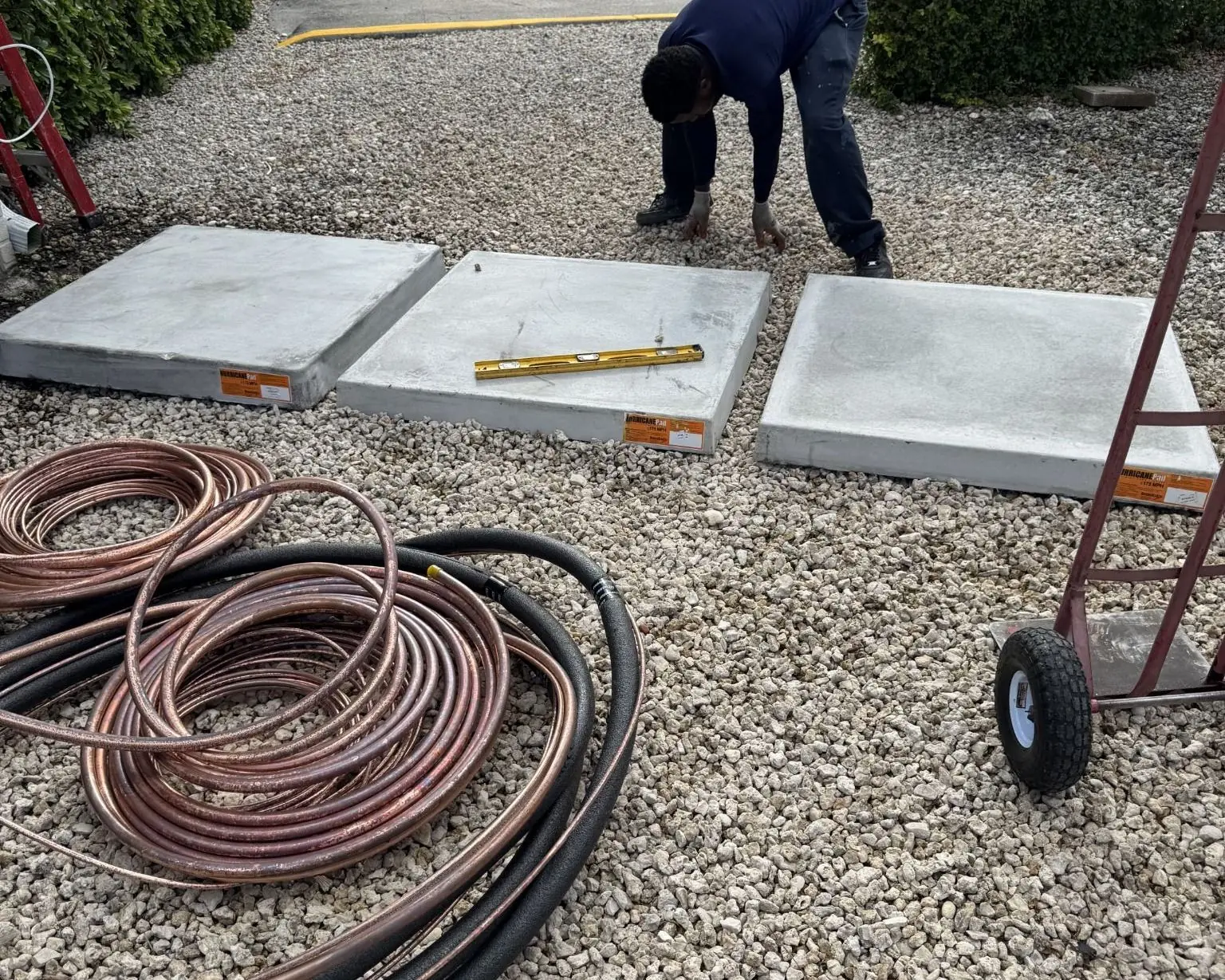
Set and anchor the outdoor unit
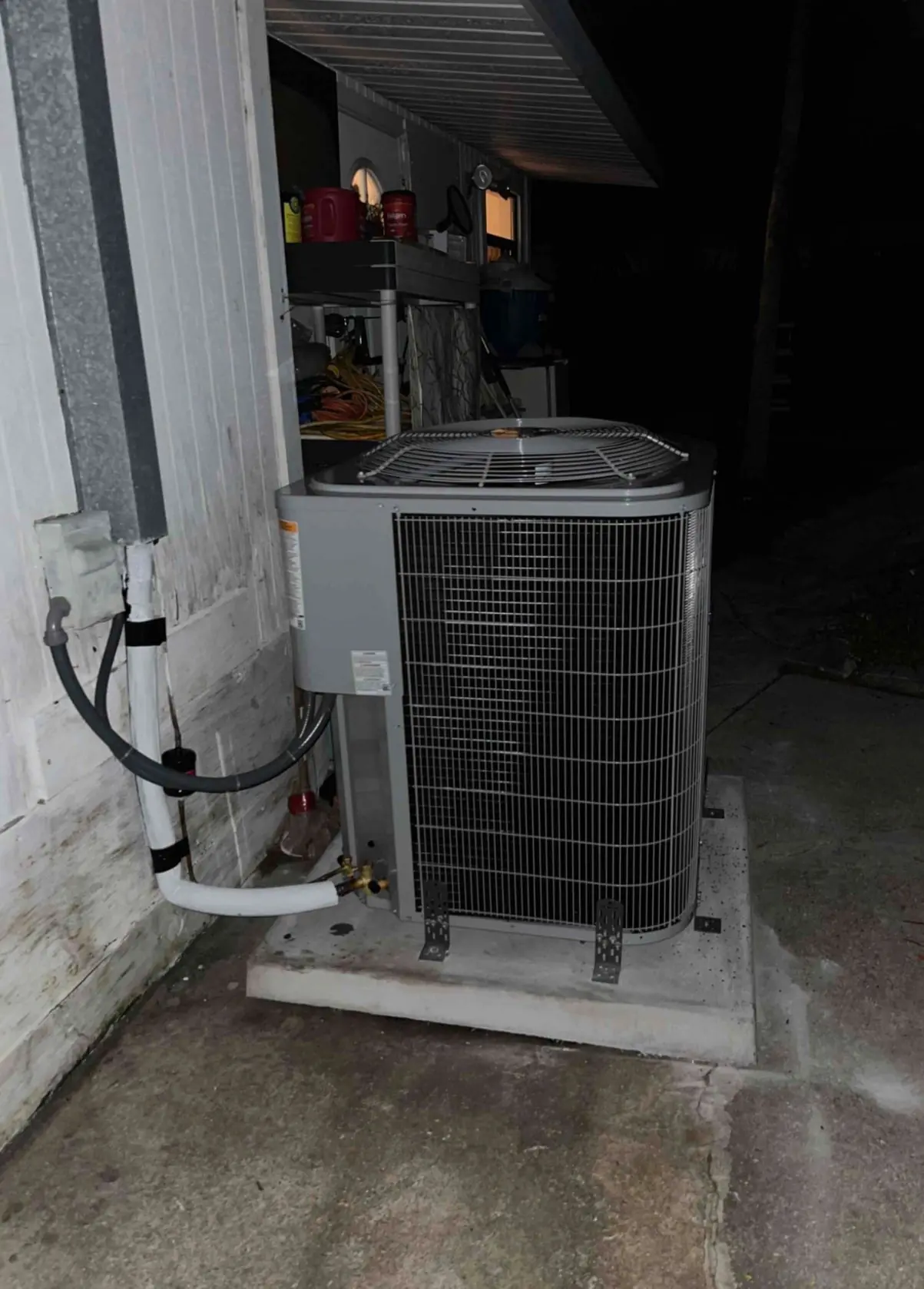
The new condenser goes on a level pad or stand and is fastened to an approved hurricane tie-down detail.
Indoor unit, coil and drain
The air handler or coil is installed with its drain trap, overflow protection and filter access.
Line set and electrical
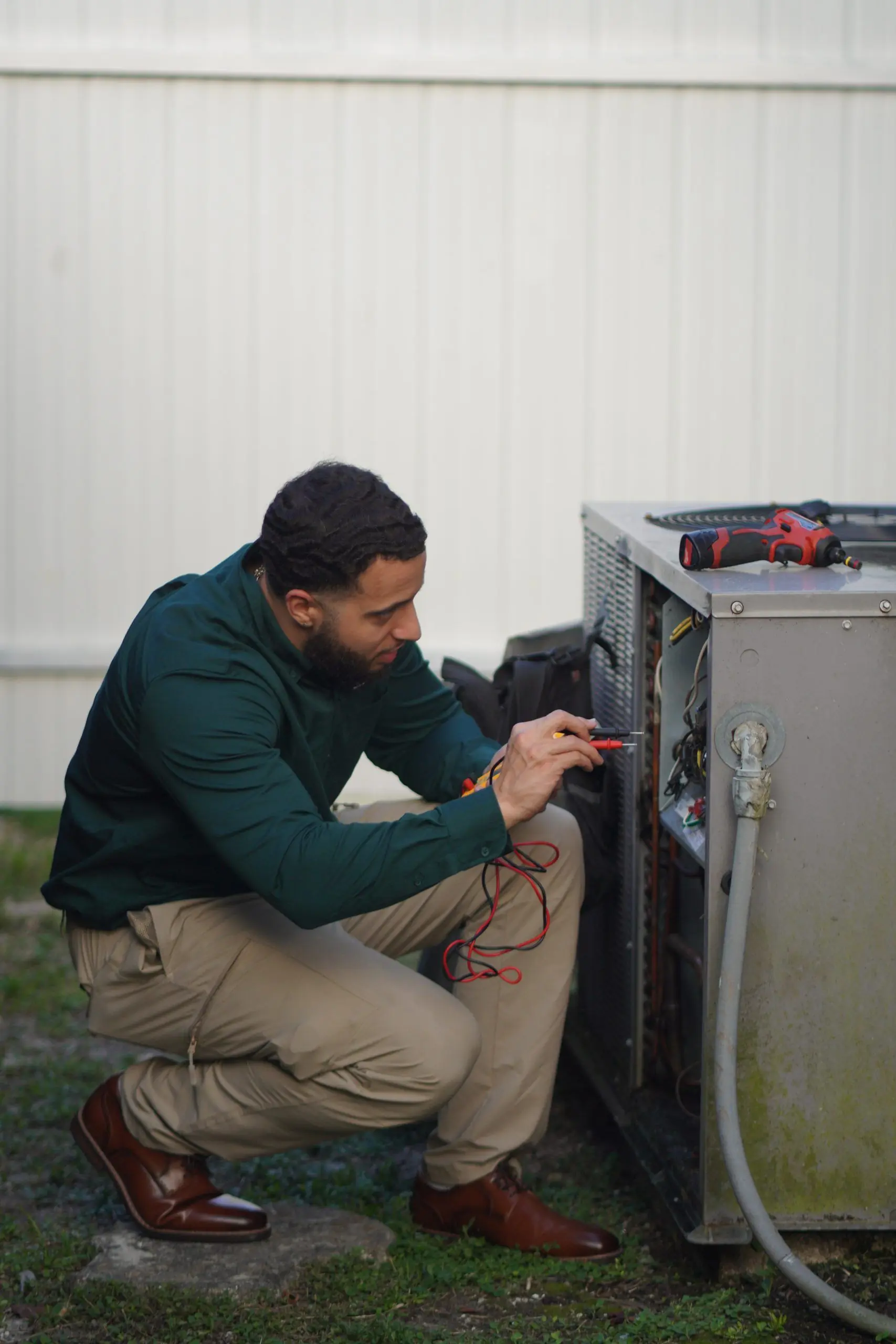
Lines are brazed or connected by the manufacturer's method, and the disconnect, breaker and wire are checked against the nameplate.
Vacuum, charge and startup
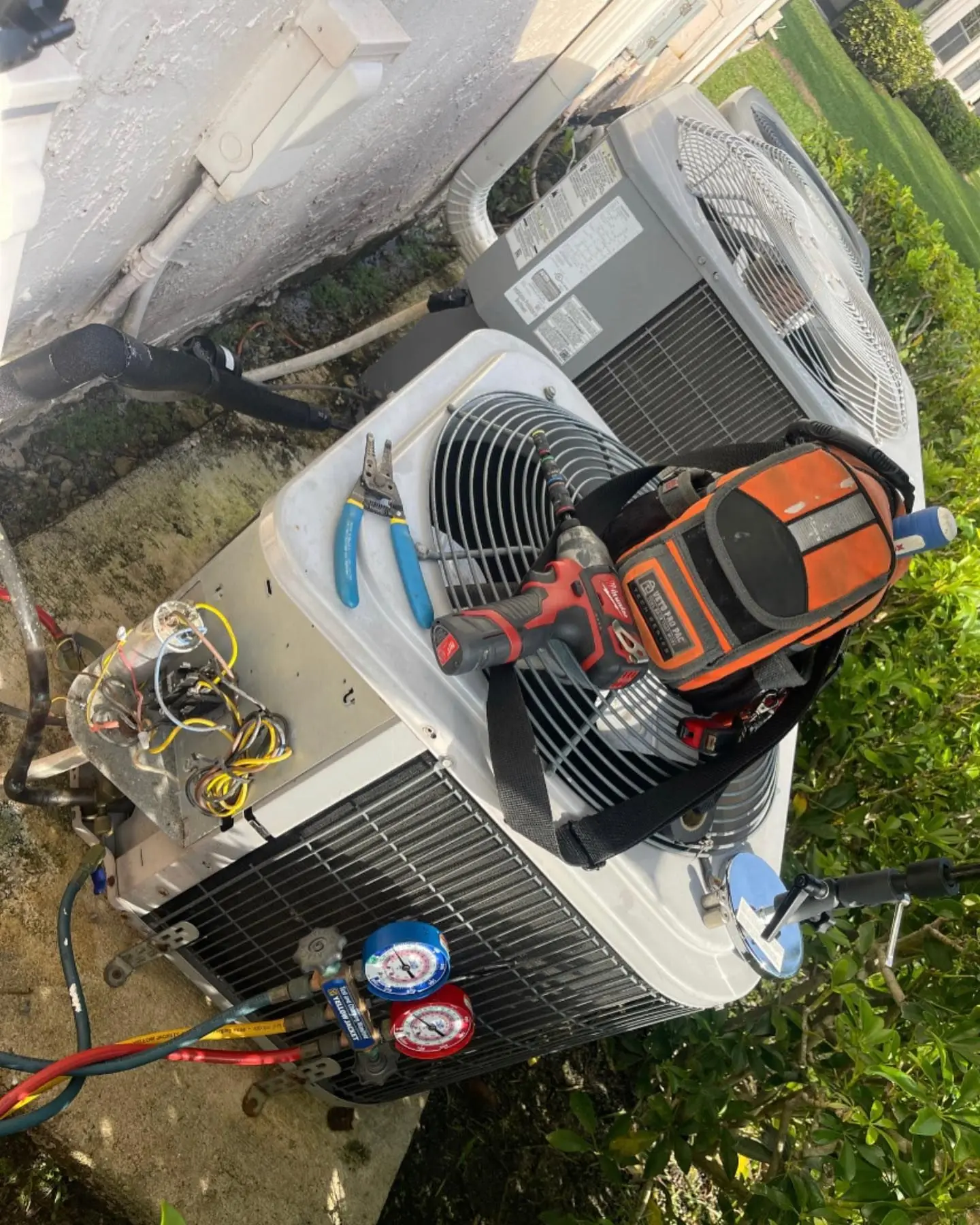
The system is evacuated and proven tight, the charge is set, and temperature split, pressures and amps are recorded.
Inspection
The city's inspector checks the finished installation, including the tie-downs and electrical.
Thinking about replacing your central AC?
Answer a few easy questions and see Premium, Enhanced and Basic ranges in a couple of minutes. It's a planning number, not a quote.
The on-site evaluation for a new system is free.
Sometimes, but usually not. Efficiency ratings are certified for specific indoor and outdoor pairings, and newer outdoor units use refrigerants an older indoor coil wasn't built for. If the indoor half is fairly new and a certified match exists, replacing only the outdoor unit can work; if the system is older or uses R-22, the two halves are normally replaced together.
From a load calculation, not square footage. A proper calculation goes room by room through insulation, windows and which way they face, air leakage and the ductwork, and gives the cooling load in Btu per hour. In South Florida the common mistake is oversizing, which leaves the house cold but damp.
Start with a rough range online. Once we've seen the house, the options we lay out cover both halves of the system and the ductwork connection, so you can compare them side by side.
The on-site evaluation for a new system is free.
Florida license CAC1821225