24/7 AC service

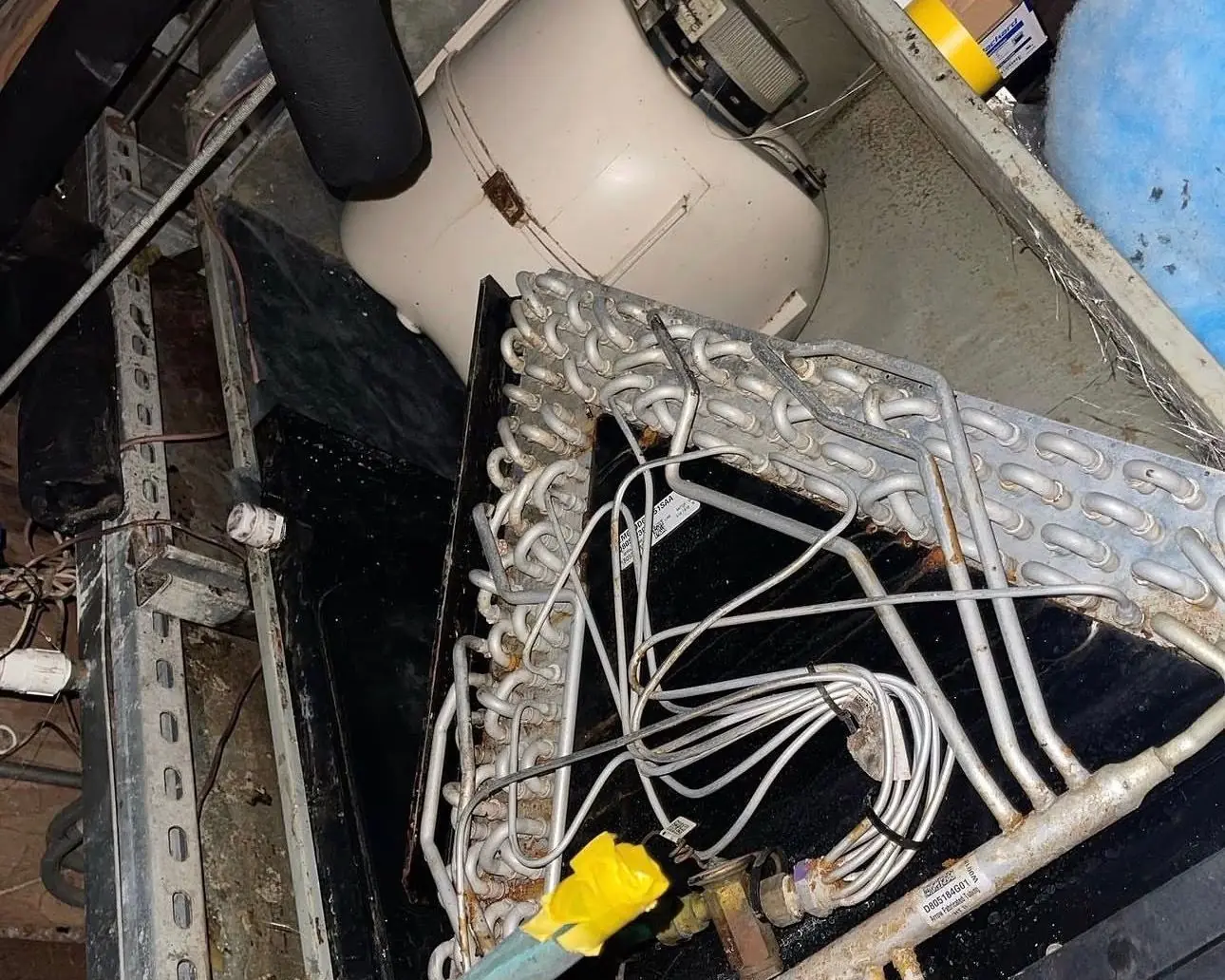
Evaporator coil exposed inside an opened indoor air handler cabinet

Indoor air quality

Indoor air quality starts with humidity, airflow and a clean coil

Most air quality complaints we see in Broward homes trace back to water. The house stays above 60% humidity, the coil stays wet and dirty, or the drain pan holds water. We measure first, find the cause, and only then talk about equipment.

Why air quality here starts with water

Outdoor air in South Florida carries a lot of water for most of the year, and in most homes the air conditioner is the only thing taking it out. As air crosses the cold evaporator coil, moisture condenses, drips into the drain pan and leaves through the drain line. When that works, the house feels comfortable at a higher thermostat setting. When it doesn't, the house feels clammy at 74 degrees and the signs of damp start to show: a musty closet, sweating supply vents, mildew on shoes or a leather couch.

That same water makes the inside of the air handler the wettest place in the house. A coil coated in dust stays wet longer. A pan that doesn't empty holds standing water. A drain line lined with slime backs up. Those are the first places we look, before any add-on comes into the conversation.

Most humidity problems come from how the system runs, not from the weather:

  • An oversized system cools the house quickly and shuts off before the coil has pulled much water out. See short cycling.
  • A fan set to On keeps blowing across the wet coil after cooling stops and puts water back into the house.
  • Low airflow or the wrong blower setting changes how much moisture the coil can remove.
  • Mild months and closed-up homes mean the AC barely runs, so humidity creeps up while the temperature looks fine. See high humidity in the house.

The fix usually starts with the system you already have. Sometimes that is a setting or a repair. Sometimes it is a whole-home dehumidifier, better filtration or a UV lamp at the coil. We explain which one fits and why after the measurements are in.

What we measure before recommending anything

An air quality visit is a diagnostic visit. These readings turn "the air feels heavy" or "it smells musty" into something specific enough to fix.

Indoor humidity and dew point

%RH · °F

Taken in the main living space and in the problem rooms, then compared with outdoors. Federal indoor-air guidance is to keep indoor humidity below 60%. A house that sits above that for long stretches is where musty smells and growth on surfaces start.

Run pattern

minutes on

Cycle length, the thermostat fan setting and how the system is set up. Short cycles cool the air without drying it.

Static pressure and filter drop

in. w.c.

Shows whether the blower is moving the air it should and how much of the resistance is the filter. Airflow decides how much water the coil removes and how good a filter the system can carry.

Coil, drain pan and drain line

We look at the face of the evaporator coil, whether the pan empties, and what is growing in the drain line. A dirty coil, standing water and slime are where musty smells usually start.

Supply vents and the return side

Sweating grilles, a damp ceiling around a vent, and gaps on the return that pull in attic or wall-cavity air. Those point to airflow and duct problems, not to the air itself.

Readings first, recommendations second. If the fix is a setting or a repair to the system you already have, that is what we will tell you.

What we often find in Broward homes

The symptom you notice is rarely the whole story. Here is what usually sits behind the common ones, and which fixes deal with the cause.

Focus on one option
What you noticeWhat's usually behind itWhat fixes the causeWhat only treats the symptom
A clammy house with the AC runningAn oversized or short-cycling system, the fan set to On, or a blower running too fast for this climateCorrecting the fan, blower and charge, a dehumidifier when the AC runs too little, and the right size at replacementSetting the thermostat lower, which cools the house without drying it
A musty smell when the AC startsA dirty, wet coil, a drain pan holding water, or slime building up in the drain lineCleaning the coil and pan and clearing the drain, then a UV lamp at the coil to help keep it cleanScented filters, sprays or a portable purifier near the return
Sweating vents or a damp ceiling around a grilleHumid attic air meeting a cold grille, often with low airflow making the supply air colder than normal, or a boot that has lost its insulationRestoring airflow, repairing the boot or duct run, and bringing indoor humidity downWiping the grille dry or closing the register
Damp closets, mildew on shoes or leatherIndoor humidity above 60% for weeks at a time, and closed spaces with little air movementBringing whole-house humidity down first, then a dehumidifier if the AC can't hold it aloneA moisture absorber in the closet
Dust back on surfaces a few days after cleaningLeaks on the return side pulling in attic air, air slipping around a loose filter, or a filter rated too lowRepairing the return, closing up the filter slot, and a media cabinet that carries a better filter without starving airflowA portable air cleaner in one room
Cooking, pet or stale odorsOdors are gases, not particles, and ordinary filters let them throughCarbon media in a whole-home air cleaner, once moisture has been ruled outFragrance, which adds a smell instead of removing one

What's usually behind it

A clammy house with the AC running
An oversized or short-cycling system, the fan set to On, or a blower running too fast for this climate
A musty smell when the AC starts
A dirty, wet coil, a drain pan holding water, or slime building up in the drain line
Sweating vents or a damp ceiling around a grille
Humid attic air meeting a cold grille, often with low airflow making the supply air colder than normal, or a boot that has lost its insulation
Damp closets, mildew on shoes or leather
Indoor humidity above 60% for weeks at a time, and closed spaces with little air movement
Dust back on surfaces a few days after cleaning
Leaks on the return side pulling in attic air, air slipping around a loose filter, or a filter rated too low
Cooking, pet or stale odors
Odors are gases, not particles, and ordinary filters let them through

What fixes the cause

A clammy house with the AC running
Correcting the fan, blower and charge, a dehumidifier when the AC runs too little, and the right size at replacement
A musty smell when the AC starts
Cleaning the coil and pan and clearing the drain, then a UV lamp at the coil to help keep it clean
Sweating vents or a damp ceiling around a grille
Restoring airflow, repairing the boot or duct run, and bringing indoor humidity down
Damp closets, mildew on shoes or leather
Bringing whole-house humidity down first, then a dehumidifier if the AC can't hold it alone
Dust back on surfaces a few days after cleaning
Repairing the return, closing up the filter slot, and a media cabinet that carries a better filter without starving airflow
Cooking, pet or stale odors
Carbon media in a whole-home air cleaner, once moisture has been ruled out

What only treats the symptom

A clammy house with the AC running
Setting the thermostat lower, which cools the house without drying it
A musty smell when the AC starts
Scented filters, sprays or a portable purifier near the return
Sweating vents or a damp ceiling around a grille
Wiping the grille dry or closing the register
Damp closets, mildew on shoes or leather
A moisture absorber in the closet
Dust back on surfaces a few days after cleaning
A portable air cleaner in one room
Cooking, pet or stale odors
Fragrance, which adds a smell instead of removing one

These are patterns we see on calls, not a diagnosis. Which one applies to your home comes from the readings.

Send a photo before the visit

A picture of a sweating vent, the drain pan or a hygrometer reading helps us plan what to bring and what to check first.

Text a Tech

Text 561-599-1884 with a photo of the unit, the thermostat screen or a fault code, and tell us what the system is doing. It’s a quick way to reach a Service Shield technician. The real diagnosis still happens at the equipment.

Available 24/7 for AC service.

Text 561-599-1884

Air quality services, matched to the cause

Each one solves a specific problem. Pick one to see what it does and what it won't do.

Choose a concern

Humidity control and dehumidification

Fan, blower and charge corrections first, then a whole-home dehumidifier for homes the AC can't keep below 60%. A dehumidifier won't make up for a badly oversized system.

More about humidity control and dehumidification

Filtration

Media cabinets and better filters, matched to what the blower can push air through. They catch dust and particles. They do nothing for humidity and little for odors.

More about filtration

Ultraviolet treatment at the coil

A lamp aimed at the evaporator coil and drain pan, the wettest surfaces in the system, to keep growth from building up there. It helps a clean coil stay clean. It doesn't clean a dirty one.

More about ultraviolet treatment at the coil

Equipment and airflow improvements

Blower set-up, return sizing and duct repairs so air reaches each room and passes through the filter on the way. Variable-speed equipment is worth weighing when a replacement is already planned.

More about equipment and airflow improvements

Drain and condensate upkeep

Maintenance visits flush and treat the drain line and check the condensate system, so slime doesn't build into a clog or a smell.

More about drain and condensate upkeep

Air quality questions

Are ozone-generating air purifiers safe?

Federal indoor-air guidance advises against using devices that intentionally produce ozone in occupied spaces, because ozone irritates the lungs. When comparing air cleaners, check whether a product produces ozone and how its performance was tested.

Where should I start if my house feels stuffy or musty?

Start with humidity. A simple hygrometer shows whether indoor relative humidity is staying above about 60%, which is where musty smells and mold become likely. If it is, the cause is usually the AC's run pattern, sizing or airflow, and fixing that comes before adding products.

Is the house humid, dusty or musty?

Tell us what you're noticing and where. The visit starts with humidity, airflow and the coil, before any equipment comes up.

Florida license CAC1821225

CallText a TechSchedule