24/7 AC service

Ductwork & airflow

Ductwork repair and replacement, from the attic down

Most of your AC system lives where you never look. When a room won't cool, a vent sweats or the system runs all afternoon, the cause is often up in the attic, and that's where we fix it.

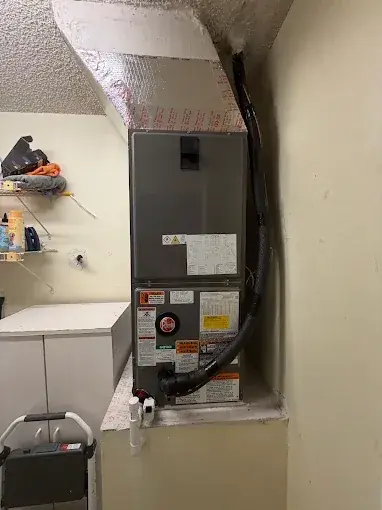
New air handler installed in a utility room, with an insulated plenum above it

What we fix in the duct system

From one crushed run to a full attic of new ductwork, measured before and after.

  • New supply and return runs when the old ones are torn, crushed, sweating or coming apart in more places than one.

  • Crushed or kinked flex, runs pulled off their collars, sagging runs and leaking connections, fixed run by run.

  • Rooms that won't cool, weak registers and too little return air, measured and fixed by resizing or rerouting ducts.

  • Rusted, sweating or leaking supply and return plenums at the air handler, repaired or rebuilt to fit.

  • Boots, registers and grilles

    Sweating or rusted boots, stains around ceiling vents, whistling registers and return grilles too small for the system.

  • Duct sealing

    Leaking joints, collars and boots found by inspection and measurement, then sealed, so cooled air reaches the rooms instead of the attic.

  • Duct cleaning

    For ductwork that is actually dirty, such as after construction, debris or a leaking return pulling in attic dust, with the cause fixed so the dirt doesn't come straight back.

How air moves, and where it goes wrong

The same system, five conditions. Pick one to see what happens to the airflow, what you'd notice, and how hard the blower ends up working.

Animated diagram of air moving from the air handler through attic ductwork to two rooms and backATTICROOM AROOM BAIRHANDLER
Show a duct condition

A healthy duct system

Supply air reaches every room through sealed, supported runs, and enough air returns to the air handler to keep the blower in its comfortable range.

How airflow gets measured

Blower effort

Normal

What you notice

  • Rooms within a few degrees of each other
  • Steady airflow at every register
  • A quiet return grille

Crushed or kinked flex duct

A run pinched under attic storage or bent sharply at a takeoff delivers a fraction of its air. The rest of the house is fine, and one room never catches up.

When one room won't cool

Blower effort

Normal

What you notice

  • One room warmer than the rest
  • Weak airflow at a single register

A run pulled off its collar

Cooled air pours into the attic instead of the room. The room stays warm, the attic gets cold and damp, and the system runs longer to make up for it.

Duct repair

Blower effort

Lower than it should be

What you notice

  • A room with almost no airflow
  • Longer run times and higher bills

Too little return air

The blower can only push out what it can pull back in. A small return grille or a restricted return duct starves the whole system, so it gets louder, weaker and less efficient everywhere.

Airflow and duct design

Blower effort

Working too hard

What you notice

  • Whistling at the return grille
  • Weak airflow at every register
  • Doors that slam or rooms that feel stuffy

A leaking or sweating plenum

The plenum feeds every run. When its seams leak, or it sweats in a humid closet or attic, the whole house loses air and the metal starts to rust.

Plenum repair and replacement

Blower effort

Normal

What you notice

  • Water stains or rust above the air handler
  • A musty smell when the system starts

The parts of a duct system

A typical South Florida layout, with the air handler in a closet or garage and the ducts running through a hot attic.

How a ducted AC system moves airSchematic of a house cross-section: the air handler pushes cooled air up into a supply plenum, through a trunk line and flexible duct runs in the attic to ceiling registers in each room. Air returns through a return grille and return duct back to the air handler.ATTICAIRHANDLER12345
Parts of the diagram

The indoor unit's blower pushes air across the cold coil. Its size sets how much air the ducts must carry.

The box on top of the air handler that feeds every run. Rust, sweating or leaks here affect the whole house.

More on supply plenum

The main duct in the attic. An undersized or leaky trunk starves the far rooms.

Each flex run ends at a boot behind a ceiling register. Crushed, kinked or disconnected flex is one of the most common attic problems, and a boot that isn't sealed and insulated is where vents start to sweat.

More on flex runs, boots and registers

Air has to come back to the air handler through the return grille and duct. Too little return area makes the system loud, weak and inefficient.

More on return path

What a proper airflow diagnosis measures

Static pressure

in. w.c.

How hard the blower is working against the duct system. High readings point to restrictive ducts, filters or returns.

Room-by-room temperature

°F at each register

Shows which runs are under-delivering compared to the rest of the house.

Return capacity

grille and duct size

Too little return area starves the system no matter how good the supply side is.

Condensation points

Where ducts, boots or the plenum are sweating, and whether the cause is missing insulation, an air leak or air that's running too cold.

These are standard airflow measurements, described in general terms. Readings are compared with the equipment's own specifications.

Get a rough number for your ductwork

Answer a few questions about the house and what you're noticing, and see a rough range in a couple of minutes. It's not a quote. The real number comes after someone has been in the attic.

The on-site duct evaluation is free.

What you notice, and what it usually turns out to be

Duct problems rarely announce themselves as duct problems. These are the comfort complaints that usually lead to a look in the attic.

Focus on one option
What you noticeWhat it often turns out to beHow it gets fixed
One room warmer than the restA crushed, kinked or disconnected run to that room, or a run too long or too small for itRepair the run, or resize and reroute it
Weak airflow at every registerToo little return, a restrictive filter setup or an undersized trunk. Sometimes it's the blower or a dirty coil, not the ductsMeasure static pressure first, then fix whatever is restricting the system
Vents sweating or drippingHumid attic air reaching a cold boot through a gap at the ceiling, a boot that lost its insulation, or supply air running very cold because airflow is lowSeal and insulate the boot, replace it if it has rusted, and check the airflow behind it
Stains on the ceiling near a vent or under a runCondensation on an uninsulated boot, duct or plenum, or a run that came loose and is cooling the atticFind where the water forms, then insulate, repair or replace that section
Whistling return or stuffy closed roomsA return grille or duct too small for the system, or no path for air to get out of a closed bedroomEnlarge or add a return, or add a transfer grille or jumper duct
Longer run times and higher bills every summerLeaking or disconnected ducts losing cooled air in the attic, or insulation that has broken downInspect the attic runs, then repair or replace depending on how widespread the damage is

What it often turns out to be

One room warmer than the rest
A crushed, kinked or disconnected run to that room, or a run too long or too small for it
Weak airflow at every register
Too little return, a restrictive filter setup or an undersized trunk. Sometimes it's the blower or a dirty coil, not the ducts
Vents sweating or dripping
Humid attic air reaching a cold boot through a gap at the ceiling, a boot that lost its insulation, or supply air running very cold because airflow is low
Stains on the ceiling near a vent or under a run
Condensation on an uninsulated boot, duct or plenum, or a run that came loose and is cooling the attic
Whistling return or stuffy closed rooms
A return grille or duct too small for the system, or no path for air to get out of a closed bedroom
Longer run times and higher bills every summer
Leaking or disconnected ducts losing cooled air in the attic, or insulation that has broken down

How it gets fixed

One room warmer than the rest
Repair the run, or resize and reroute it
Weak airflow at every register
Measure static pressure first, then fix whatever is restricting the system
Vents sweating or dripping
Seal and insulate the boot, replace it if it has rusted, and check the airflow behind it
Stains on the ceiling near a vent or under a run
Find where the water forms, then insulate, repair or replace that section
Whistling return or stuffy closed rooms
Enlarge or add a return, or add a transfer grille or jumper duct
Longer run times and higher bills every summer
Inspect the attic runs, then repair or replace depending on how widespread the damage is

A starting point, not a diagnosis. Some of these share symptoms with equipment or drain problems, which is why the measuring comes first.

Attic ducts in South Florida heat and humidity

A Broward attic in summer runs far hotter than the rooms below it, and the air up there is humid most of the year. The ductwork sits in that every day, and over time it shows:

  • Sweating. Any cold surface that humid attic air can reach will collect water: a plenum with torn insulation, a boot that has pulled away from the ceiling, a run whose jacket has split. The water drips onto the drywall, stains the ceiling around vents and rusts the metal.
  • Insulation breaking down. Flex duct insulation that has been compressed, torn or soaked stops doing its job. The air inside picks up attic heat before it reaches the room, and the outside of the duct starts to sweat.
  • Connections letting go. Years of heat dry out tape and work fittings loose. A run that slips off its collar dumps cooled air into the attic.
  • Crushed runs. Storage, foot traffic and other trades flatten flex that was laid across walkways or never supported.

Sizing is the other half. Plenty of homes here have ductwork that was undersized from the start, or a return that can't keep up with a newer, larger system. That shows up as far rooms that never get enough air and a system that's louder than it should be.

None of it happens overnight. It shows up as a room that used to be comfortable and now isn't, a vent that drips, a ceiling stain or a system that runs longer every summer.

Ductwork questions

Can ductwork problems raise my power bill?

Yes. Leaky or disconnected ducts dump cooled air into the attic, and restrictive ducts make the blower work harder and the system run longer. The equipment can be fine while the house still costs more to cool.

Is the duct evaluation free?

Yes. The on-site duct evaluation is free. We inspect the duct layout, access and airflow, then tell you whether a repair or a replacement makes sense, with real prices.

If your AC itself is broken and needs a diagnosis, that's a repair visit: Free service call with repair.

What is flex duct, and why does it fail in attics?

Flex duct is a flexible, insulated tube used for the branch runs from the trunk to each room. It works well when it's routed with gentle bends, supported along its length and sealed at both ends. In a hot attic it fails when it's crushed, sags into kinks, or slips off its fittings.

Rooms not cooling evenly?

Tell us which rooms and when it happens. That narrows the search before anyone climbs into the attic.

The on-site duct evaluation is free.

Florida license CAC1821225

CallText a TechEstimate