
Preventive maintenance
AC maintenance that checks what actually fails here
A maintenance visit should be a set of tests and cleanings with readings you can see, not a quick look and a sticker. Here's what ours covers, and why South Florida systems need it more than most.
- Florida-certifiedCAC1821225
- ServingBroward County · 14 cities
- ReviewsRead them on Google
What every visit checks
The same checklist is used on both Protection Plan visits each year.
Maintenance visit report
Each item is tested, cleaned or measured, and the result is explained to you.
- Full system inspection, indoor and outdoorDone
- Electrical component testingDone
- Capacitor and contactor testingDone
- Refrigerant pressure checkDone
- Temperature split testingDone
- Thermostat check and calibrationDone
- Drain line flush and drain treatmentDone
- Condensate system inspection, including the pan and float switchDone
- System performance and safety checksDone
The readings behind "it's running fine"
Each of these is a number, taken on the running system and compared with what the equipment should do.
supply vs. return °F
Shows whether the system is removing the heat it should. A shrinking split is often the first sign of a dirty coil, low charge or weak airflow.
suction / liquid
Confirms the charge is right for the conditions, and catches a slow leak before the system stops cooling.
µF vs. rating
Capacitors weaken gradually in the heat. One drifting below its rating is cheap to replace now and a no-cool call later.
volts / amps
Pitted contacts and loose connections run hot. Measuring under load finds them before they fail.
flow
The drain is flushed and treated, then watched while the system runs to confirm water is actually leaving.
Calibration and settings are checked so the system is answering to the right temperature.
Why the drain line gets special attention
In Broward humidity an AC pulls a lot of water out of the air every day. All of it has to leave by this path.
Why maintenance matters more in South Florida
A system in Broward runs most of the year, often for hours at a time, and it spends that time pulling water out of very humid air. That's hard on the exact parts a maintenance visit focuses on.
- The condensate drain. An air handler here can send gallons of water down the drain on a humid day. The line stays warm and wet, and a slimy biological film builds inside it. A good part of that slime is often Zoogloea, a bacteria that forms a sticky film in wet drain systems, mixed with dust, mold and algae. It isn't the only thing that clogs drains, but it's a big reason the same line keeps clogging. Flushing and treating the drain on every visit keeps it open.
- The coil and drain pan. Dust that gets past the filter sticks to a wet coil and feeds growth. The system runs longer to move the same heat, and the pan underneath rusts or holds standing water.
- Electrical parts. Long runtimes in an outdoor cabinet or a hot attic wear out capacitors and contactors faster. Loose connections run hot. These are inexpensive to catch with a meter and miserable to discover on a July evening.
- Attic equipment. An air handler in a 130°F attic has its drain, float switch and secondary pan above a finished ceiling. When something goes wrong there, it shows up as a stain on the drywall.
- Condensate pumps. Where the water can't drain by gravity, a small pump does the work. Slime reaches the pump too, and a stuck float or a tired motor means overflow.
- Near the coast, salt air settles on outdoor coils and copper joints, and rinsing them is part of keeping corrosion in check.
None of this fails all at once. It drifts, and a scheduled visit is where the drift shows up in the readings before it shows up as a breakdown. How drain lines clog, and what we do about it.
What you can do between visits
Simple, safe habits that keep a system healthy. Anything electrical or refrigerant-related is a technician's job.
Check the filter monthly in summer
Replace it when it looks gray or on the schedule printed on it. A clogged filter starves the coil of air and can freeze it.
Keep the outdoor unit clear
Leave about two feet of open space around the condenser. Trim plants, and never stack things against it or cover it while it runs.
Watch the drain outlet
On a hot day, the drain line outside should drip steadily while the system runs. No water on a humid afternoon can mean a clog.
Notice the small changes
Longer run times, a room that's a little warmer, a new noise. Those are the early signs a maintenance visit is meant to catch.
Membership
Service Shield Protection Plan
- Two full maintenance visits a year, the same complete checklist each time
- Discounted diagnostic fee for members
- Up to 15% off repairs
$299 per year
See what the plan includesOn a maintenance visit
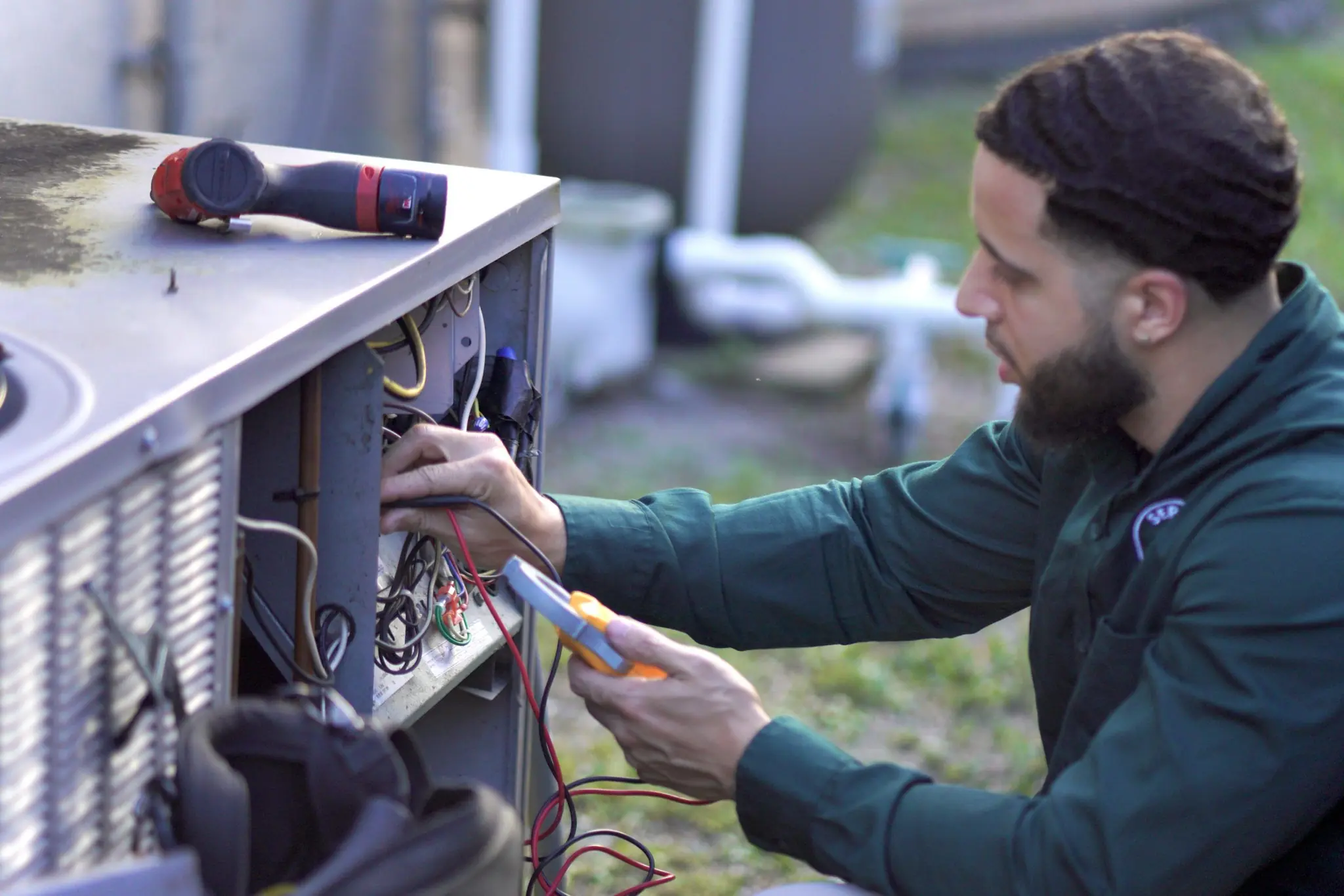
Field noteTesting the wiring and components in the condenser's electrical compartment with the system powered. 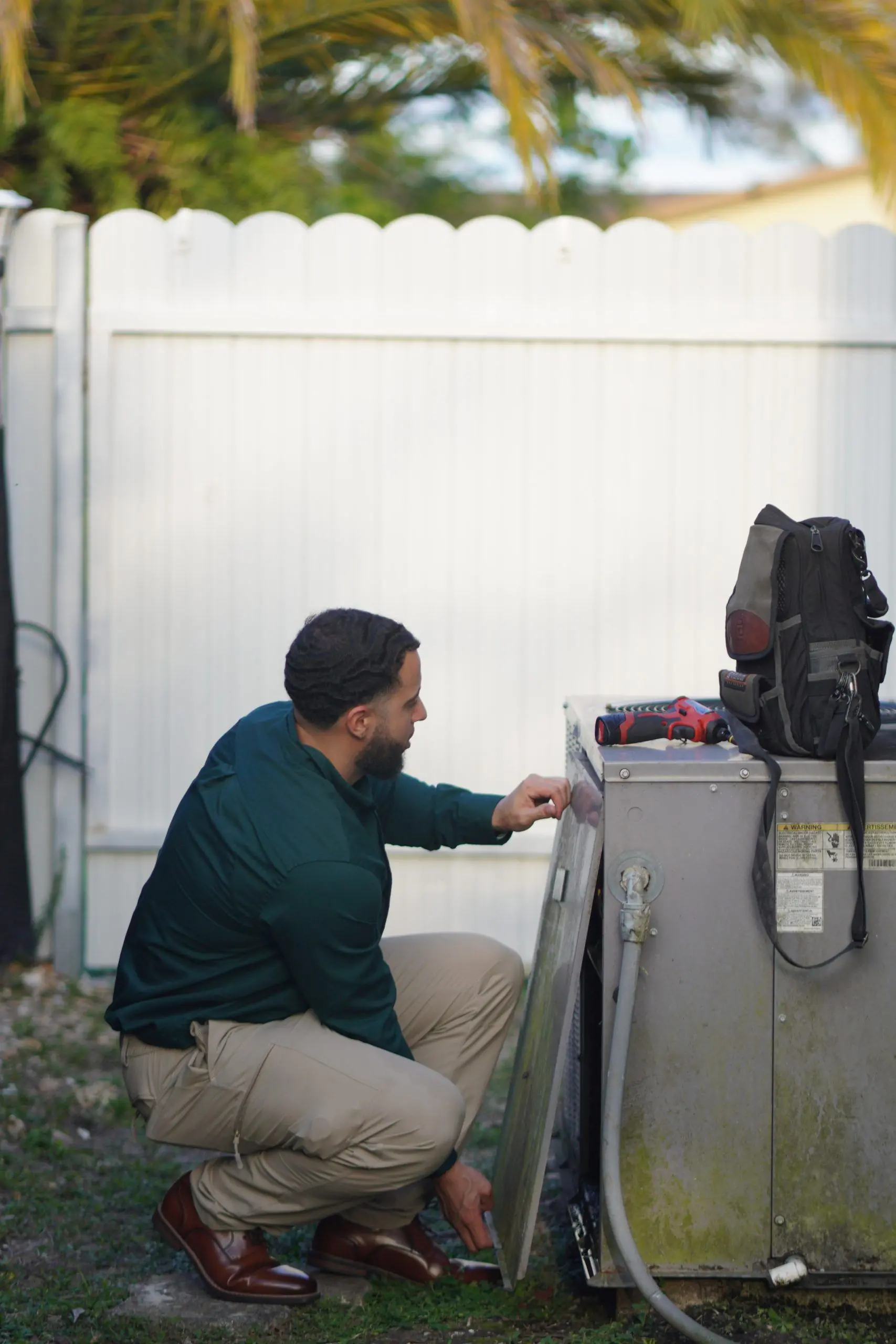
Field noteSide panel off for a look at the compressor compartment, checking connections, debris and any oil that would point to a leak. 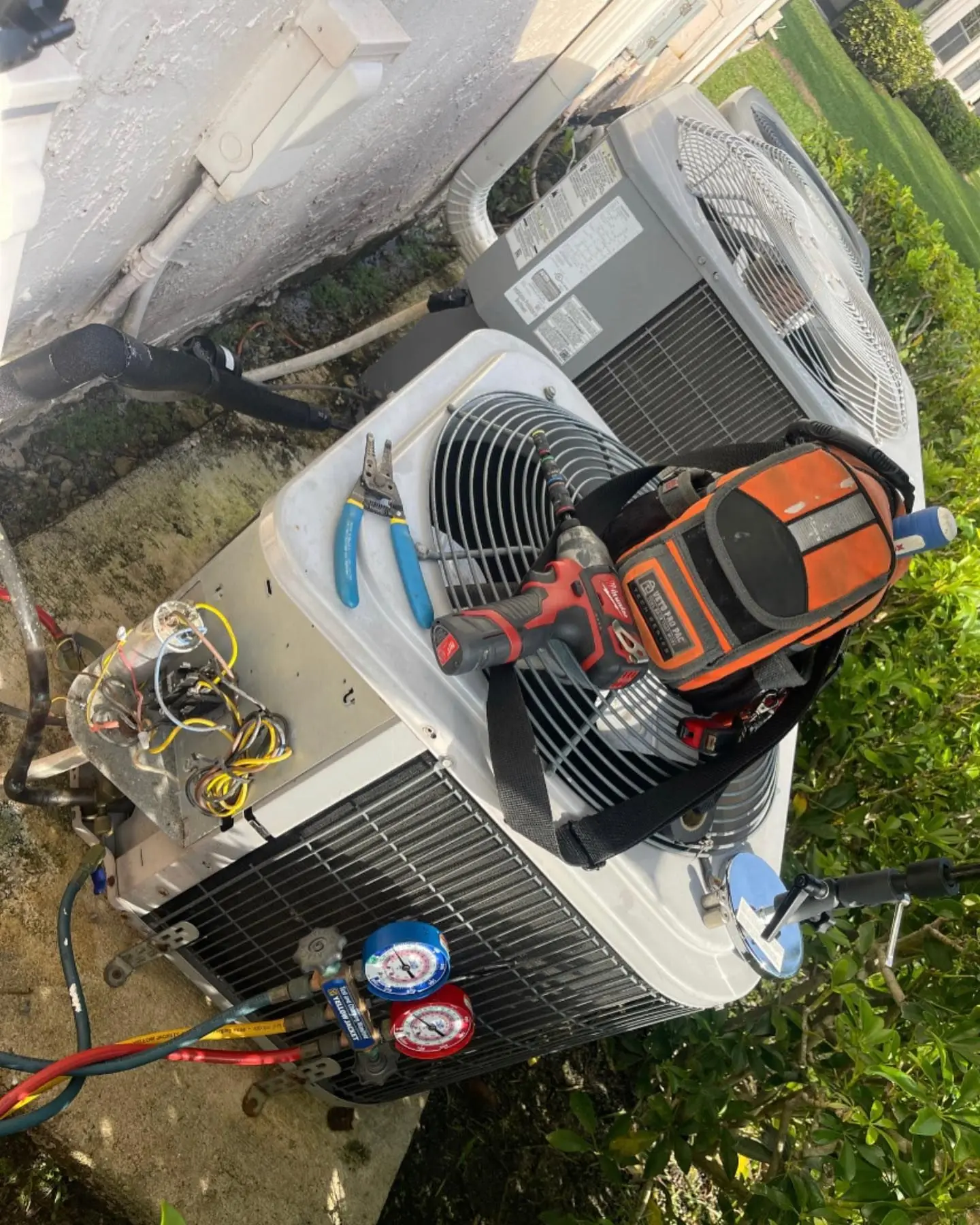
Field noteGauges connected to read refrigerant pressures with the system running.
Maintenance guides
- ChecklistAC Maintenance Checklist for South FloridaWhat AC maintenance should cover in South Florida, where systems run most of the year, from the drain and electrical parts to your part between visits.
- GuideAC Drain Line Clogs: Causes and Safe FixesWhy AC drain lines clog in South Florida, including the Zoogloea slime that grows inside them, what a float switch does, and what is safe to try first.
- ChecklistHurricane Season: Preparing Your ACHow to protect your air conditioner through South Florida hurricane season, from storm prep and power outages to the checks before turning it back on.
Maintenance questions
How often should I change my AC filter?
Check it monthly during the cooling season and replace it when it looks gray or when the interval printed on it is up. In a South Florida home, many 1-inch filters need changing every one to three months. Thicker media filters last longer. A clogged filter starves the coil of air and can freeze it.
How often should an AC get maintenance in South Florida?
Twice a year is a sensible rhythm here, because systems run most of the year and drain lines and coils get dirty faster than in cooler climates. One visit before the heaviest cooling months and one later in the year catches most slow problems early. The Protection Plan is built around two visits a year.
What happens if a maintenance visit finds a problem?
You get the reading or photo that shows it, an explanation of what it means, and your options, which can range from "watch it" to "replace this part now." Nothing is repaired without your approval.
Want maintenance handled on a schedule?
The Protection Plan includes two full maintenance visits a year, priority scheduling and no after-hours fees.
Florida license CAC1821225