
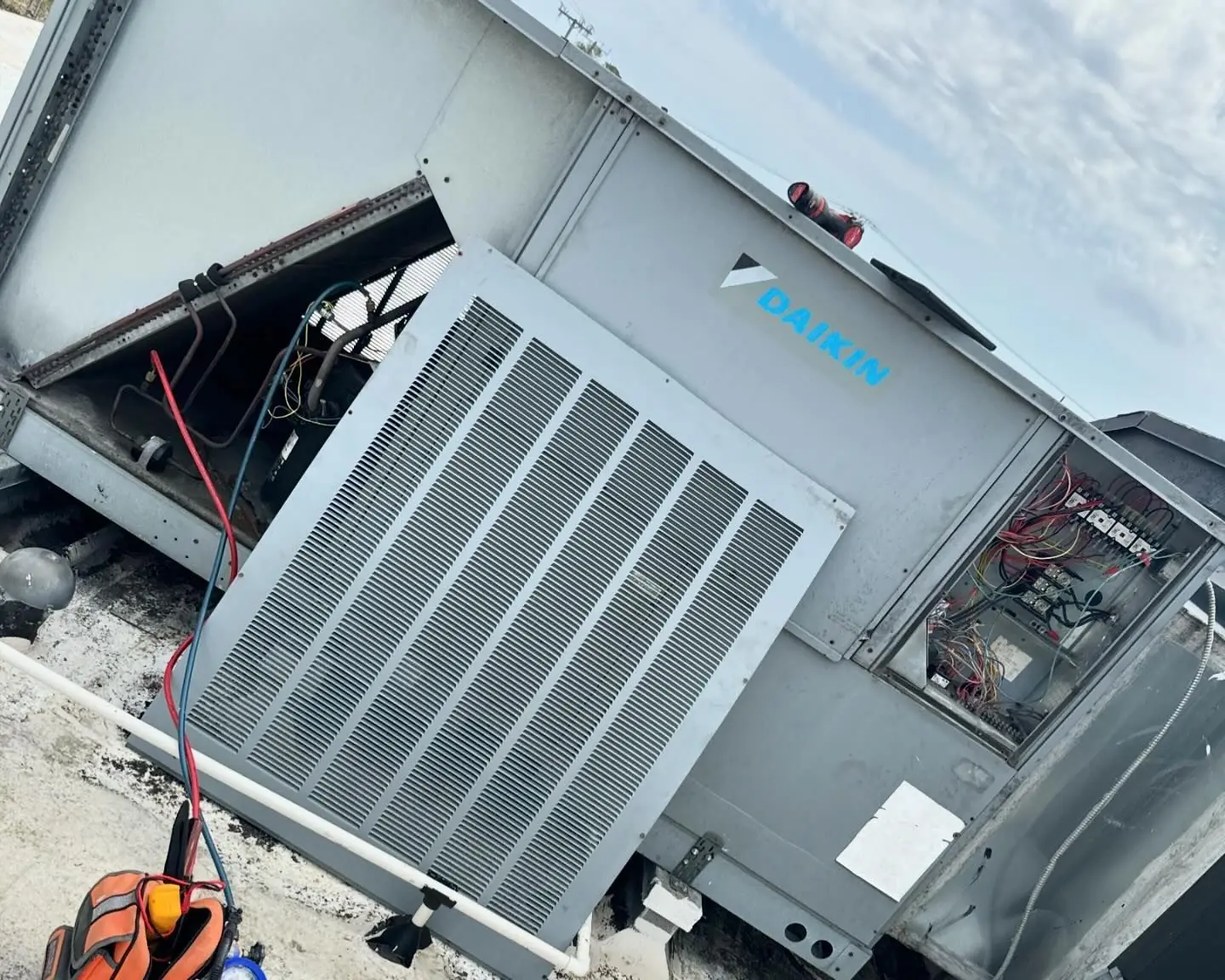
Light commercial · Rooftop units
Rooftop unit service and replacement for commercial buildings
Diagnosis, repair and replacement for packaged rooftop equipment on small commercial buildings, including the roof access, curb details and hurricane anchoring that rooftop work involves.
- Florida-certifiedCAC1821225
- ServingBroward County · 14 cities
- ReviewsRead them on Google
Rooftop units, or RTUs, are packaged air conditioners built for commercial roofs. The compressor, both coils, the blower and the controls sit in one cabinet on a curb or stand, and the supply and return ducts drop straight through the roof into the space below. They are common on offices, storefronts and small commercial buildings because they keep the mechanical equipment out of the space the business uses.
Life on a South Florida roof is hard on them. They sit in full sun for most of the year, they run long hours to keep up with occupied spaces, and every storm season tests how well they're attached. Near the coast, salt air adds corrosion on top of that.
Service and diagnosis
When a rooftop unit stops keeping up, the diagnosis follows the same discipline as any air conditioner, applied to a larger cabinet with more going on: refrigerant pressures, electrical readings on the compressor, motors, capacitors and contactors, airflow across the coil, and the controls that tell the unit when to run. Many newer units also store fault codes or report to a building control system, and that history is often the fastest way to an intermittent problem.
The problems we find most on rooftop units are the ones the location causes:
- Electrical wear. Contactors, capacitors and fan motors working in rooftop heat for years.
- Refrigerant leaks. Often at corroded joints or coils, especially on buildings near salt air.
- Airflow problems. Clogged filters and coils, a worn belt or motor on the blower, and restrictions in the ducts below the roof.
- Drainage. Clogged condensate traps and drains that back water up into the unit or onto the roof.
The difference from a home is access. The work happens on the roof, in the weather, around edges and openings that need care, and that shapes how a service visit is planned.
Replacement
Replacing a rooftop unit is part air conditioning work and part logistics. The new unit has to fit the existing curb or stand, or an adapter has to bridge the difference. It has to match the building's electrical supply, carry the airflow the ducts below were built for, and be lifted onto the roof, usually by crane for larger units and taller buildings. In Broward it also has to be anchored to the structure under the High-Velocity Hurricane Zone rules, and that anchoring is checked at inspection.
Planning matters more on commercial jobs than residential ones. The lift may need a street permit or an early-morning slot, tenants need to know when the space will be without cooling, and the roof around a changed curb has to be sealed properly. Those details are worked out at the site visit, before the replacement is scheduled.
Sometimes the unit doesn't need replacing yet. A failed motor, a leak at an accessible joint or a control fault can be a sensible repair on a unit with life left in it. Sometimes an older unit with a failing compressor and a corroded coil is the better candidate for replacement. We lay out both paths and their trade-offs, and the owner or manager decides.
For general light commercial work, see commercial HVAC. Packaged units on homes and small buildings at ground level are covered under package units.
Rooftop unit work
Diagnosis and repair
Compressors, fan and blower motors, capacitors, contactors, refrigerant leaks and the controls that tell the unit when to run, tested under load.
Controls
Thermostats, control boards and units tied to building controls, checked to confirm the unit is getting the right call before anything is replaced.
Replacement
Full equipment replacement, from the site visit and curb details to the lift, anchoring, startup readings and inspection.
What we check on a rooftop service call
The complaint and the history
What the space below is doing, when it started, and any fault codes or alarms the unit or the building controls have stored.
Electrical under load
Voltage at the disconnect, compressor and motor amps against the nameplate, and the condition of contactors, capacitors and wiring after years in rooftop heat.
Refrigerant circuit
Pressures and line temperatures, and a look at joints and coils for the oil stains and corrosion that mark a leak, especially near salt air.
Airflow
Filters, the evaporator coil, the blower and its belt or motor, and the temperature change across the coil.
Drainage and the cabinet
The condensate trap and drain, the pan, and whether water or roof debris is getting into the cabinet.
Curb and attachment
Gaps at the curb, the condition of the stand or rails, and the hurricane tie-downs.
On the roof
Field clips from Service Shield commercial work.
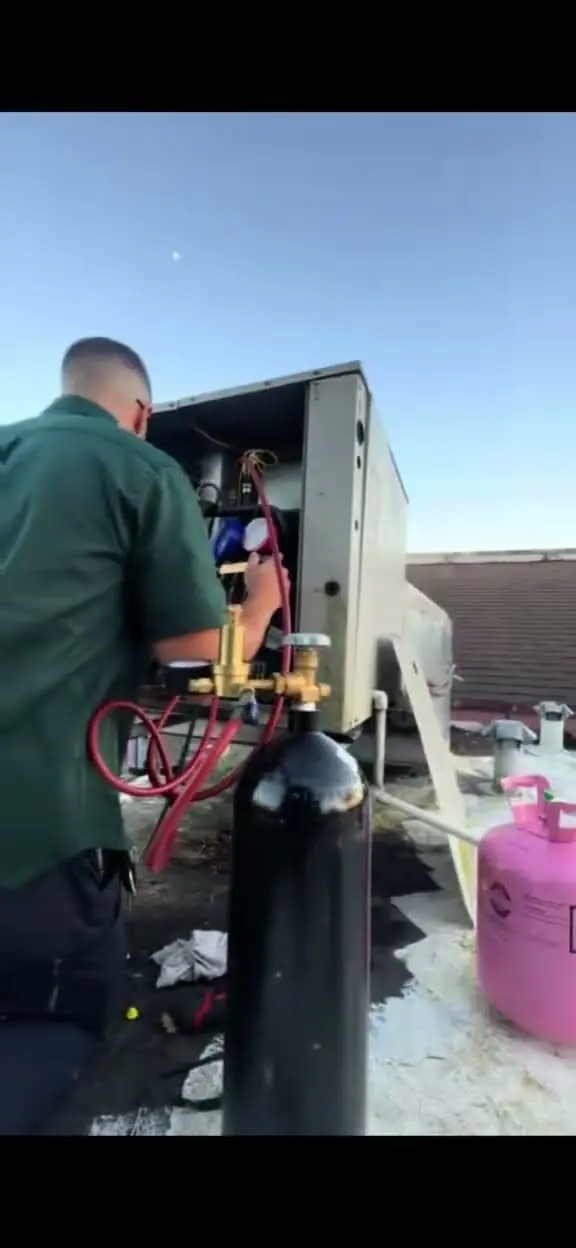
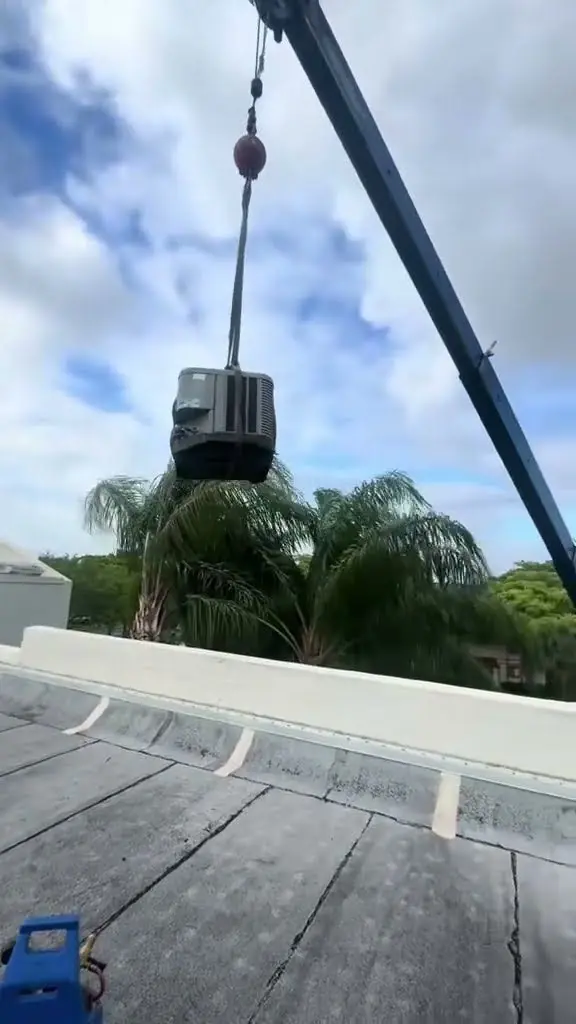
Rooftop equipment in the field
Photos published by Service Shield.
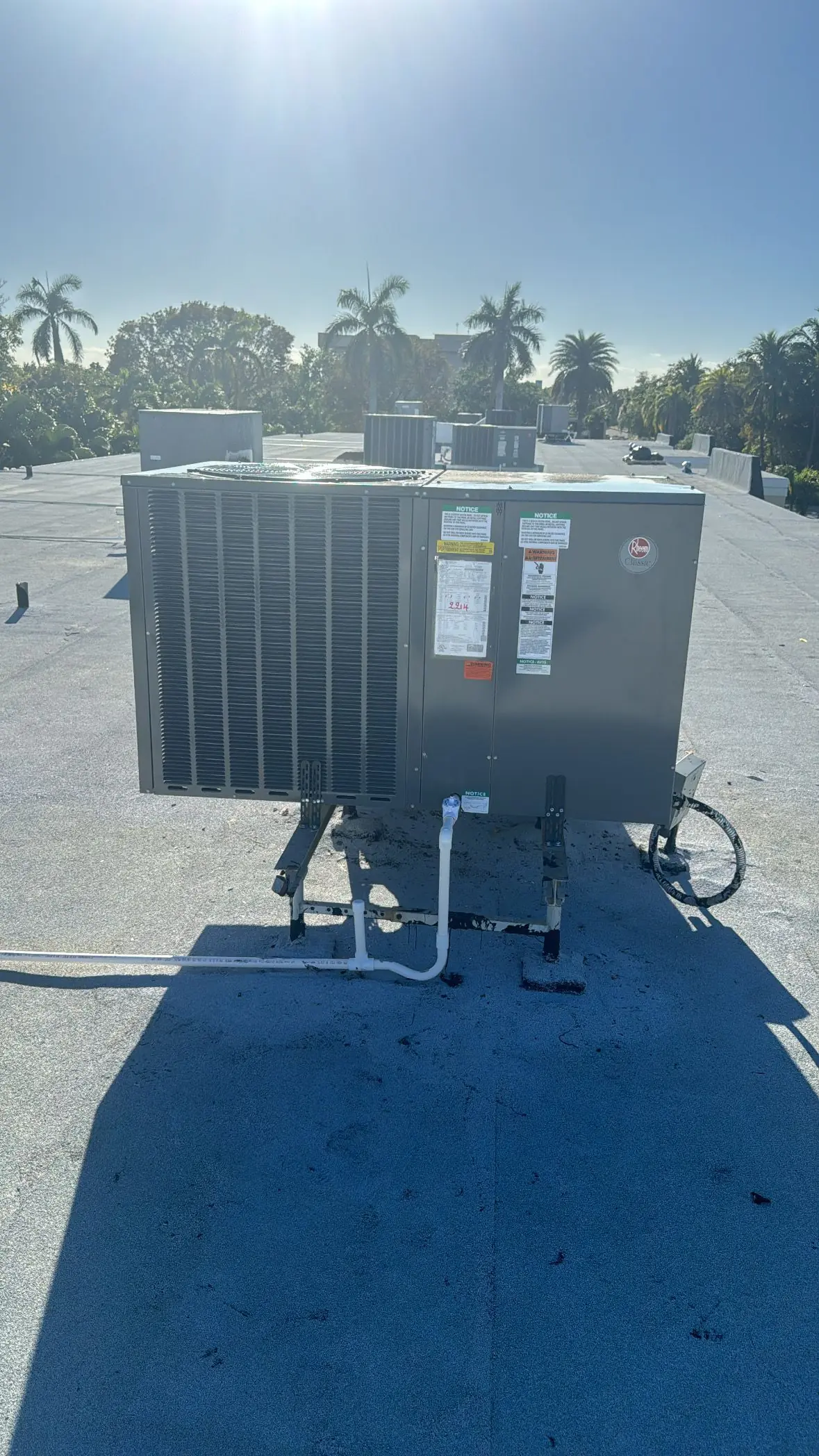
Field noteA packaged unit on a flat roof, with the compressor, coils, blower and controls in one cabinet. 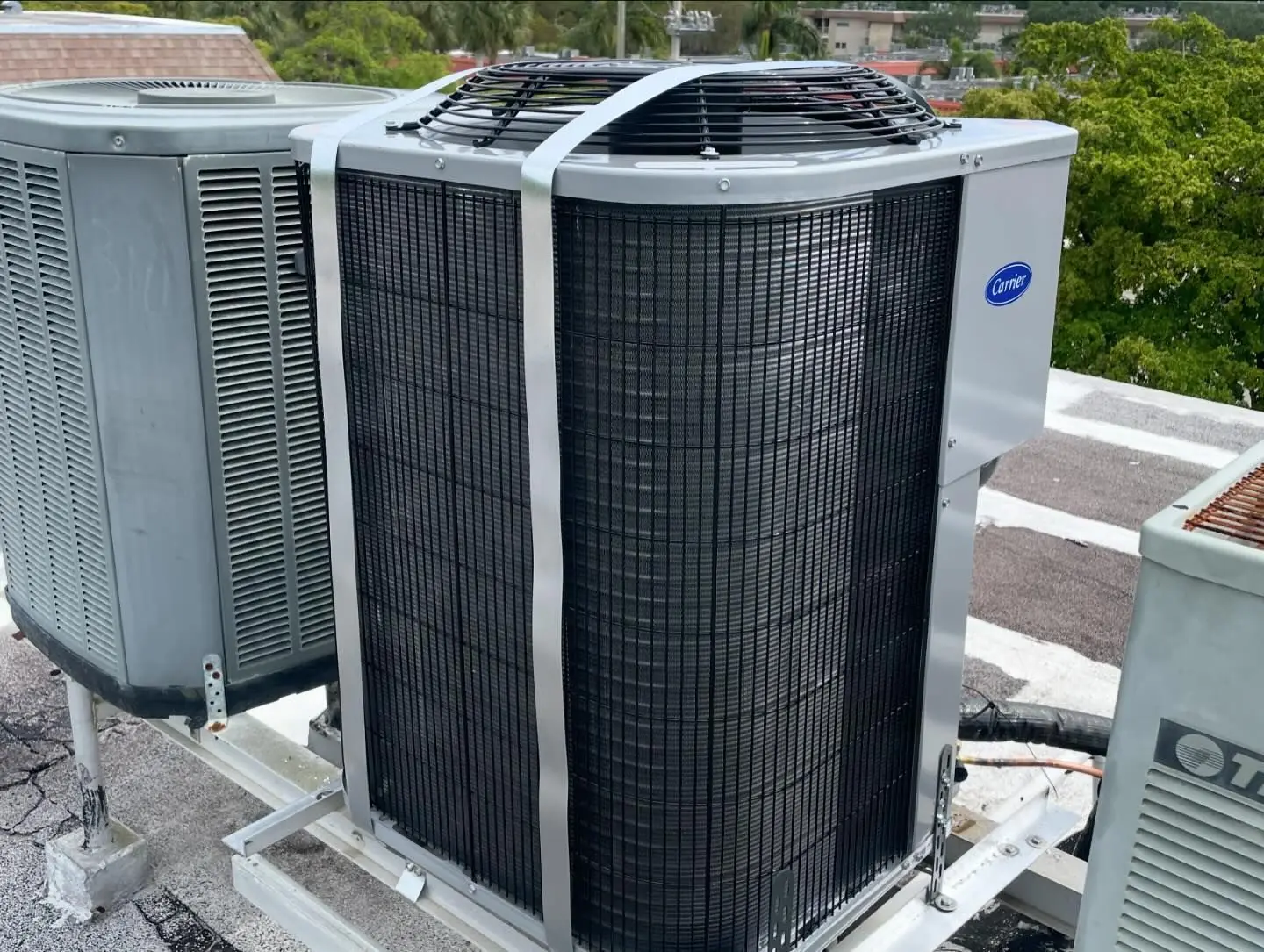
Field noteA condensing unit on a raised rooftop stand, strapped down against hurricane winds. 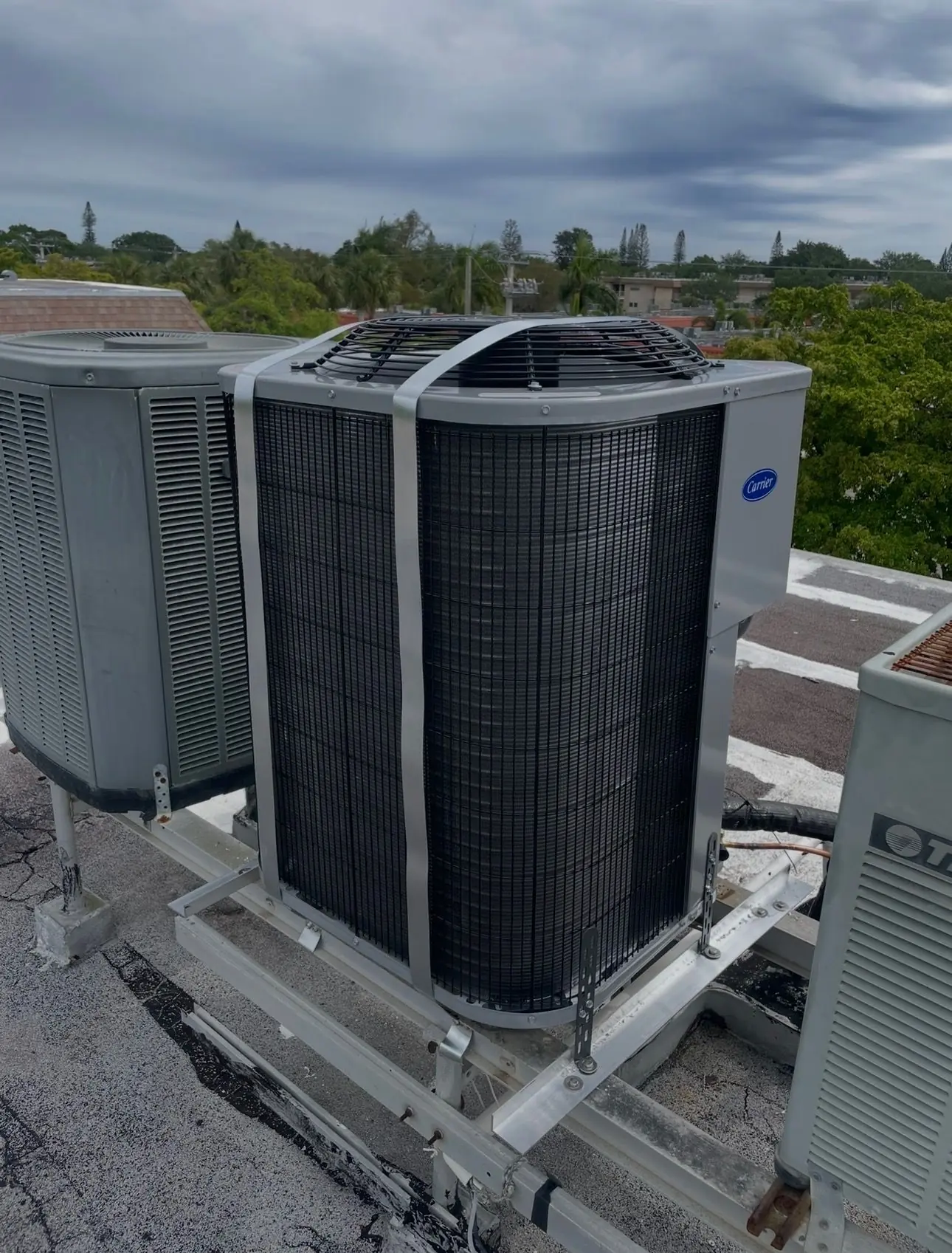
Field noteHurricane straps over a rooftop condenser. In Broward, the anchoring is part of what the inspection checks. 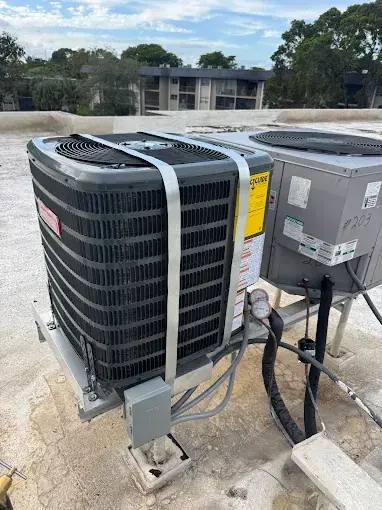
Field noteRooftop condensers on their stands, strapped down. 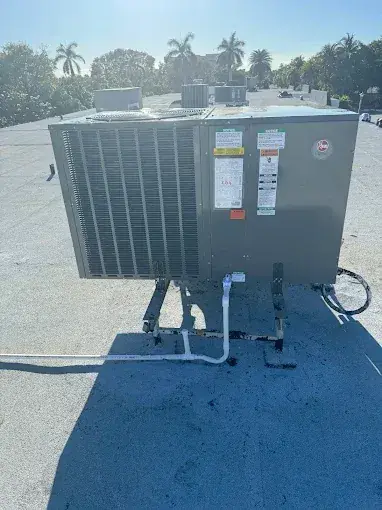
Field noteA new packaged unit set on a flat roof.
How a rooftop replacement comes together
Site visit and roof access
Equipment location, roof access, the condition of the curb or stand, and the electrical and duct connections are documented before anything is priced.
Sizing from the nameplate and the space
The existing unit's nameplate is a starting point, not the answer. The space it serves, how it's used and how many people occupy it are checked too.
Curb or stand
A new unit with a different footprint may need a curb adapter or a modified stand, and the roof around it has to be flashed and sealed.
Lifting and setting
Heavier units and taller buildings usually mean a crane lift, scheduled around the business and the street.
Anchoring, connections and startup
The unit is anchored for the High-Velocity Hurricane Zone, connected, started and checked with readings before the inspection.
Reading a rooftop unit's data plate
- Capacitytons or Btu/h
- Nominal cooling capacity. One ton is 12,000 Btu per hour.
- Efficiency ratingSEER2 or EER/IEER
- Smaller units are generally rated in SEER2, like home equipment. Larger commercial units are rated in EER and IEER. The rating shown depends on the unit's size class.
- Electricalvolts / phase
- Many commercial buildings have three-phase power. The replacement has to match the building's supply.
- MCA / MOCPamps
- Minimum circuit ampacity and maximum overcurrent protection, which set what the wiring and breaker feeding the unit must be sized for.
- Refrigeranttype and charge
- Tells you what the unit uses and how much. Older units may use refrigerants that are no longer used in new equipment.
Hurricane anchoring and the roof
High-Velocity Hurricane Zone anchoring
Broward County is in the Florida Building Code's High-Velocity Hurricane Zone, so rooftop equipment must be secured to resist hurricane-force winds. The anchoring is checked at inspection.
The roof around the unit
When a curb or roof penetration changes, the roofing has to be flashed and sealed to it. That work is coordinated with the building's roofer where needed.
Rooftop unit questions
Does replacing a rooftop unit need a crane?
Usually, for anything beyond the smallest units or the lowest roofs. The weight of the unit, the building's height and how close a truck can get decide it. The lift is planned at the site visit, including any street or property arrangements and a time that works for the business.
Can a new rooftop unit go on the old curb?
Sometimes. If the new unit has the same footprint and duct openings, it can sit on the existing curb after the curb is checked. When the footprint differs, a curb adapter bridges the old curb to the new unit, and the roof around any change has to be flashed and sealed.
A rooftop unit that won't keep up?
Send the address area, a photo of the unit's nameplate if you have one, and what the space is used for.
Florida license CAC1821225