
Where it goes
- Coil-facing lamp
- Inside the air handler, aimed at the evaporator coil and drain pan
- Air-stream lamp
- In the supply or return duct
- Ozone-producing lamp
- Either location
Indoor air quality · UV lights
An ultraviolet lamp inside the air handler can keep the wettest parts of the system cleaner. It isn't a fix for everything in the air, and knowing the difference matters before you buy one.
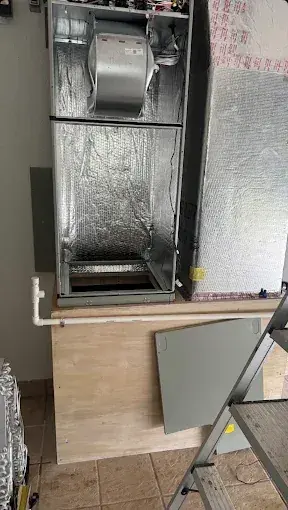
UV lights for home air conditioning systems are lamps installed inside the air handler, usually aimed at the evaporator coil and the drain pan below it. In South Florida those surfaces are cold and wet for most of the year, which is exactly where mold and bacteria like to grow. Ultraviolet light in the UV-C range damages those organisms, so a lamp shining on the coil helps keep a film from building up.
That's the honest case for UV: a cleaner coil and a cleaner pan. A coil coated in growth moves less air and absorbs less heat, and it can be the source of the musty smell some systems give off when they start. That's one of the causes covered under AC smells.
The homes where we see the most coil growth have a few things in common. The system runs long hours, the air handler sits in a warm closet or attic, and the coil has collected dust from a filter that didn't seal. A UV lamp is worth considering there, after the coil has been cleaned and the filter problem fixed.
A UV lamp doesn't clean the air in the house in any broad sense. Air rushes past the lamp in a fraction of a second, which isn't much exposure, and UV does nothing to dust, pollen or pet dander. If those are the problem, better filtration does more.
It also doesn't fix the conditions that cause growth in the first place. A drain line that backs up, a fan left running constantly, or a house that stays too humid will keep feeding the problem. See humidity control. And a coil that's already heavily coated needs a proper cleaning, because a lamp won't strip existing buildup off quickly.
Choose a lamp rated ozone-free, because some lamps produce ozone and EPA advises against adding ozone to indoor air. And plan on replacing the lamp on the manufacturer's schedule. A UV lamp keeps glowing long after its useful output has faded, so a lit bulb isn't proof it's still working.
What it does
What it doesn’t do
| Type | Where it goes | Designed to | Keep in mind |
|---|---|---|---|
| Coil-facing lamp | Inside the air handler, aimed at the evaporator coil and drain pan | Keep those surfaces from growing a biological film | The most common and best-supported use of UV in a home system |
| Air-stream lamp | In the supply or return duct | Treat air as it moves past | At normal airflow the exposure time is very short, so the effect on the moving air is limited |
| Ozone-producing lamp | Either location | Some lamps emit a wavelength that creates ozone | EPA advises against adding ozone to indoor air, so choose lamps rated ozone-free |
Replace the lamp on schedule
A UV lamp's output fades long before it goes dark. Many manufacturers call for replacement about once a year, so follow the rating on the lamp you have.
Keep the glass clean
Dust on the lamp blocks the light it's supposed to deliver, so it gets wiped when the lamp is checked.
Keep maintaining the coil and drain
UV complements cleaning. It doesn't replace it. The coil, pan and drain line still get attention at every maintenance visit.
Follow the lamp's rating; many manufacturers call for replacement about once a year. UV output fades well before the lamp stops glowing, so a lit bulb isn't proof it's still doing its job.
Not much. Air moves past the lamp in a fraction of a second, which is very little exposure. The well-supported benefit of a UV lamp in an air handler is keeping the coil and drain pan, two surfaces that stay wet, from growing a biological film.
Tell us what's prompting it, like a smell at startup or a dirty coil at the last visit. The answer may be a lamp, or it may be something simpler.
Florida license CAC1821225