
Commercial & specialty
Light commercial and specialty HVAC service
Service Shield is a residential-first company. We also take on light commercial service and the specialty equipment that needs careful diagnosis, from rooftop units to water-source heat pumps, VRF systems and controls.
- Florida-certifiedCAC1821225
- ServingBroward County · 14 cities
- ReviewsRead them on Google
Where we fit
Most of Service Shield's work is in homes. Alongside it, we take on light commercial service and specialty equipment where careful diagnosis matters more than the size of the crew. That typically means small offices, retail spaces, restaurants and small multi-tenant buildings, plus select complex systems that need more diagnostic time than a typical call.
Our technicians have worked on water-source heat pumps tied to cooling towers, communicating and inverter systems, Daikin and VRF equipment, and units run by advanced control boards and BACnet-connected controls. That experience is the reason we take on specialty troubleshooting: the calls where a board or a compressor has already been replaced and the unit still isn't right.
We are not a full-scale commercial mechanical contractor. Our commercial work is light commercial: rooftop and package units, split systems, heat pumps and water-source heat pumps, with service and diagnostics, repairs, maintenance and replacement. If a job is outside that, we'll say so up front rather than stretch to fit it.
For rooftop equipment specifically, see rooftop unit service and replacement.
Equipment and work we take on
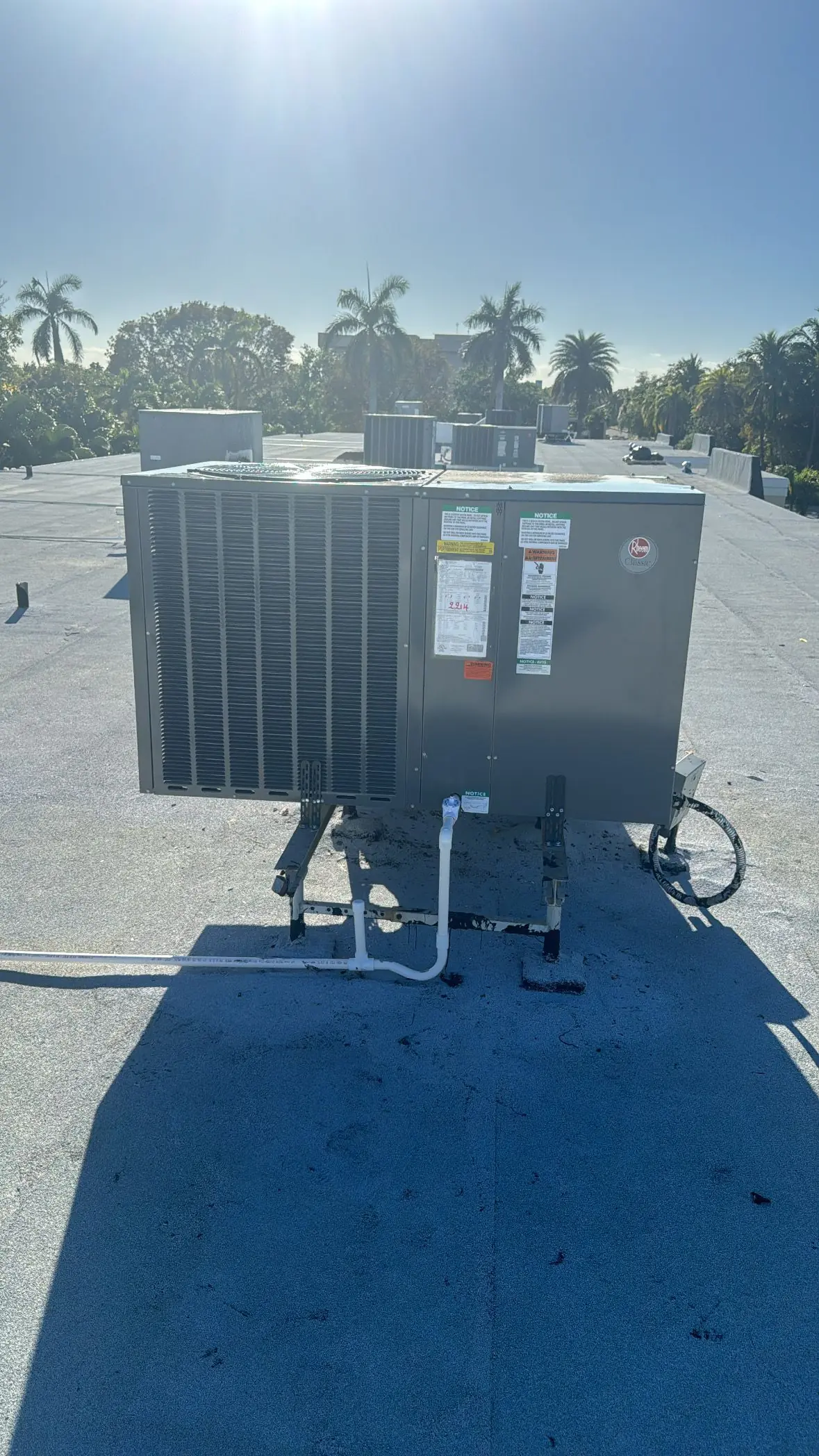
Diagnosis, repair and replacement of packaged equipment on roofs and pads, including the curb, the condensate drain and the hurricane anchoring.
Water-source heat pumps
Heat pumps that trade heat with a building water loop, usually served by a cooling tower. Diagnosis covers the unit's refrigerant circuit and controls and what the loop is delivering to it in flow and temperature.
Communicating, inverter and VRF systems
Variable-speed and communicating equipment, including Daikin and VRF systems, diagnosed through fault history, communication between boards, and meter readings before any board or sensor is replaced.
Control boards and BACnet-connected controls
Advanced control boards and equipment tied to BACnet building controls. Often the first question is whether the unit is getting the call to run at all.
Specialty troubleshooting
The intermittent fault, the repeat failure, the unit where the obvious part was already replaced and the problem is still there.
Light commercial repair and replacement
Split systems, condensers and air handlers in small commercial spaces, with startup readings checked before we leave.
How complex equipment gets diagnosed
Newer commercial and inverter equipment tells you a lot if you know where to look. It also makes it easy to replace an expensive board that was never the problem.
Read the history before touching anything
Stored fault codes, the controller's alarm log and what the occupants noticed and when. An intermittent fault usually leaves a pattern.
Confirm the unit is being told to run
Check the call from the thermostat, the zone controller or the building control system. A unit that never gets the signal isn't a failed unit.
Check communication and sensors
On communicating and VRF systems, the boards talk to each other over a data line. A loose connection, a bad sensor reading or an addressing problem can look exactly like a failed board.
Measure the machine
Refrigerant pressures and temperatures, voltage and amperage, airflow across the coil and, on water-source units, water flow and the temperature change across the unit.
Explain what failed and the options
What we found, with photos where they help, and the realistic paths from repair to replacement, with the trade-offs of each. The property owner or manager decides.
What's inside a rooftop unit
Many small commercial buildings are cooled by packaged units, with the whole system in one cabinet on the roof. Pick a part to see what it does and what usually goes wrong.
On the roof
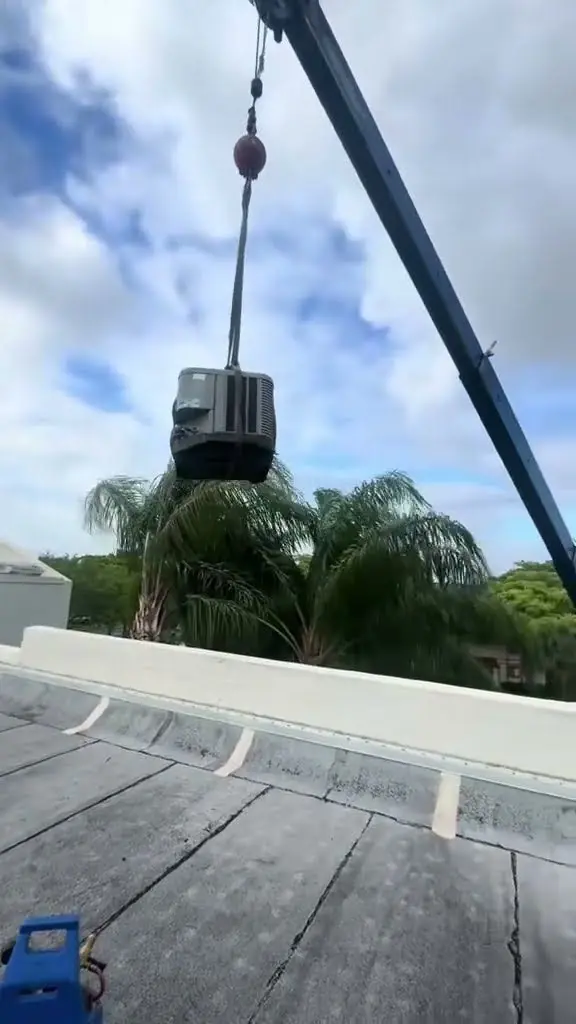
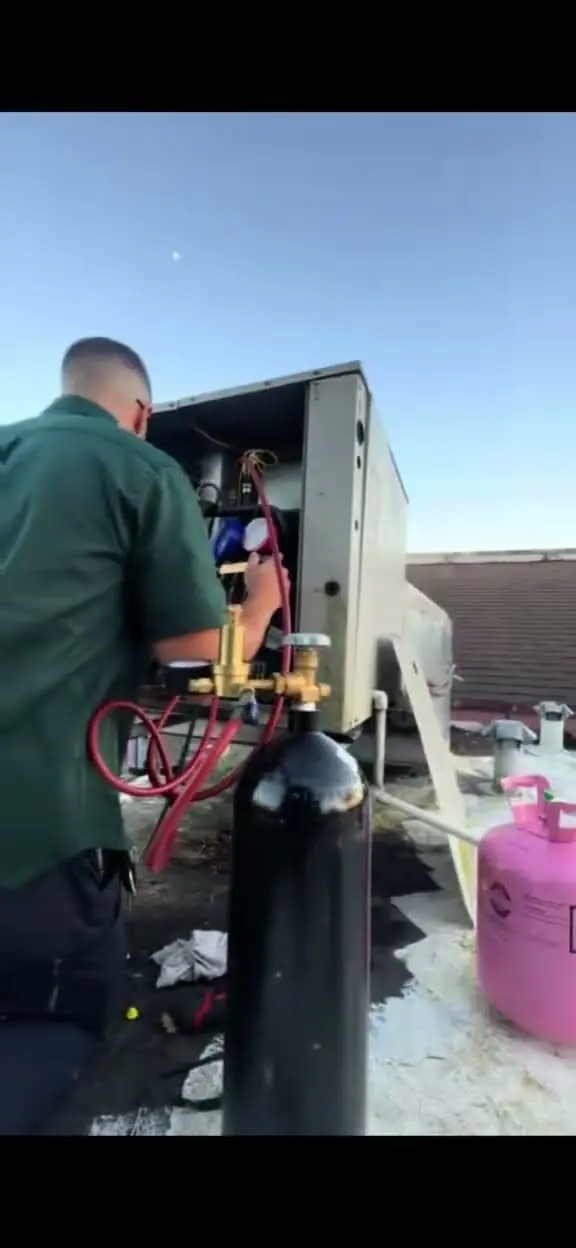
Field clips from Service Shield commercial work.
Equipment in the field
Photos from Service Shield jobs.
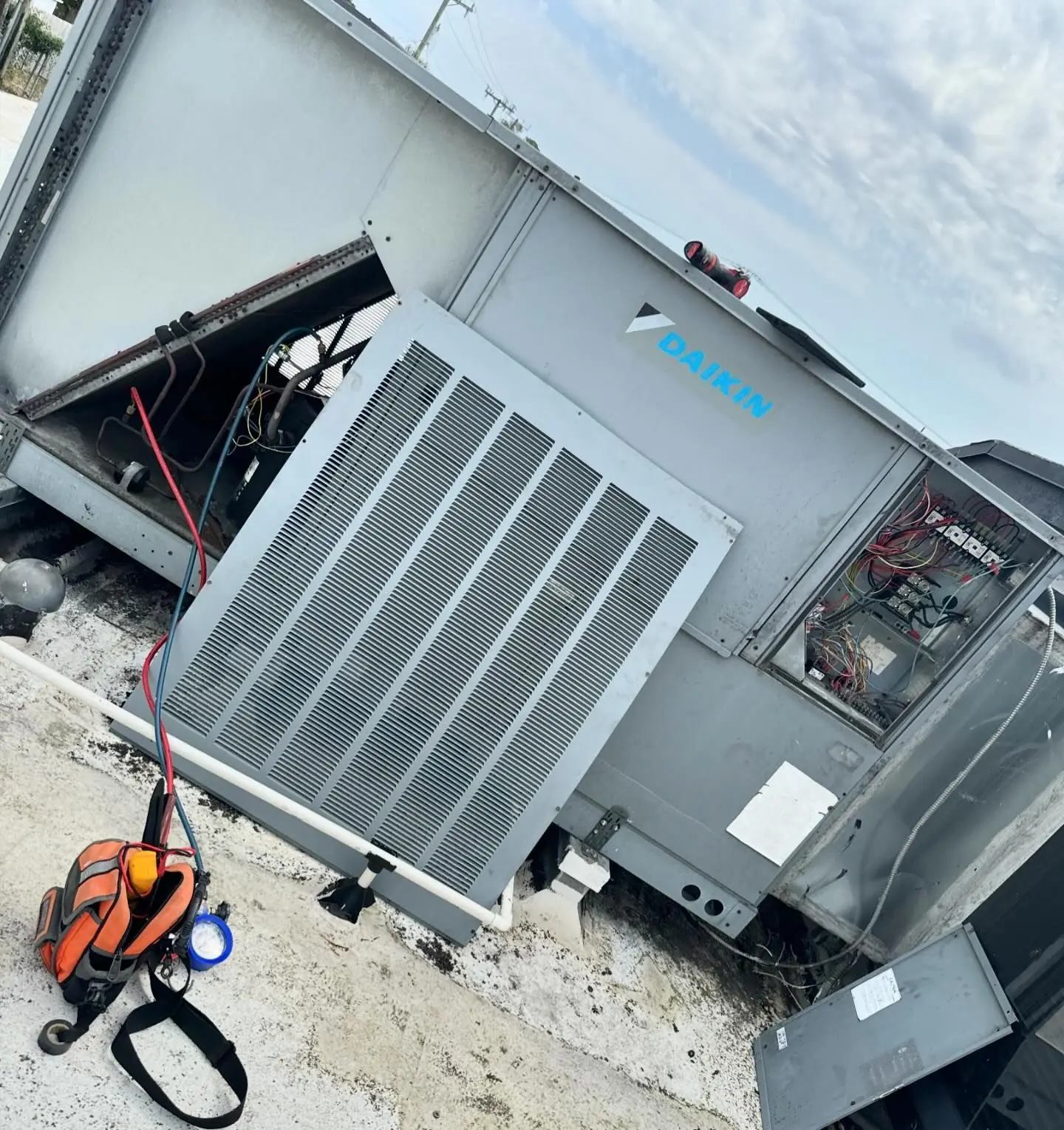
Field noteA Daikin rooftop packaged unit with its panels open and gauges on the refrigerant circuit during diagnosis. 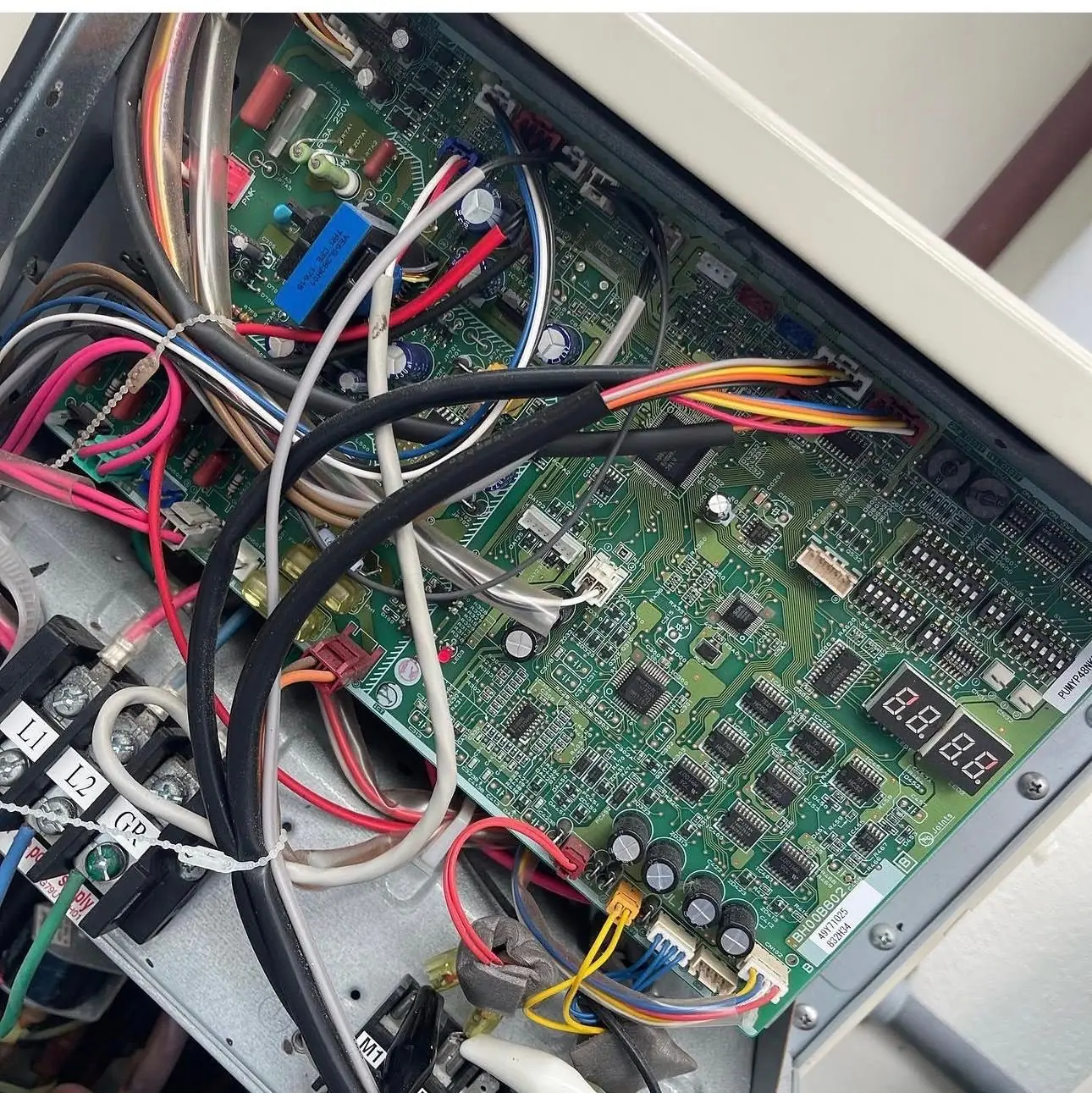
Field noteThe control board in a variable-speed outdoor unit. Its diagnostic display is where troubleshooting on inverter equipment starts, not where it ends. 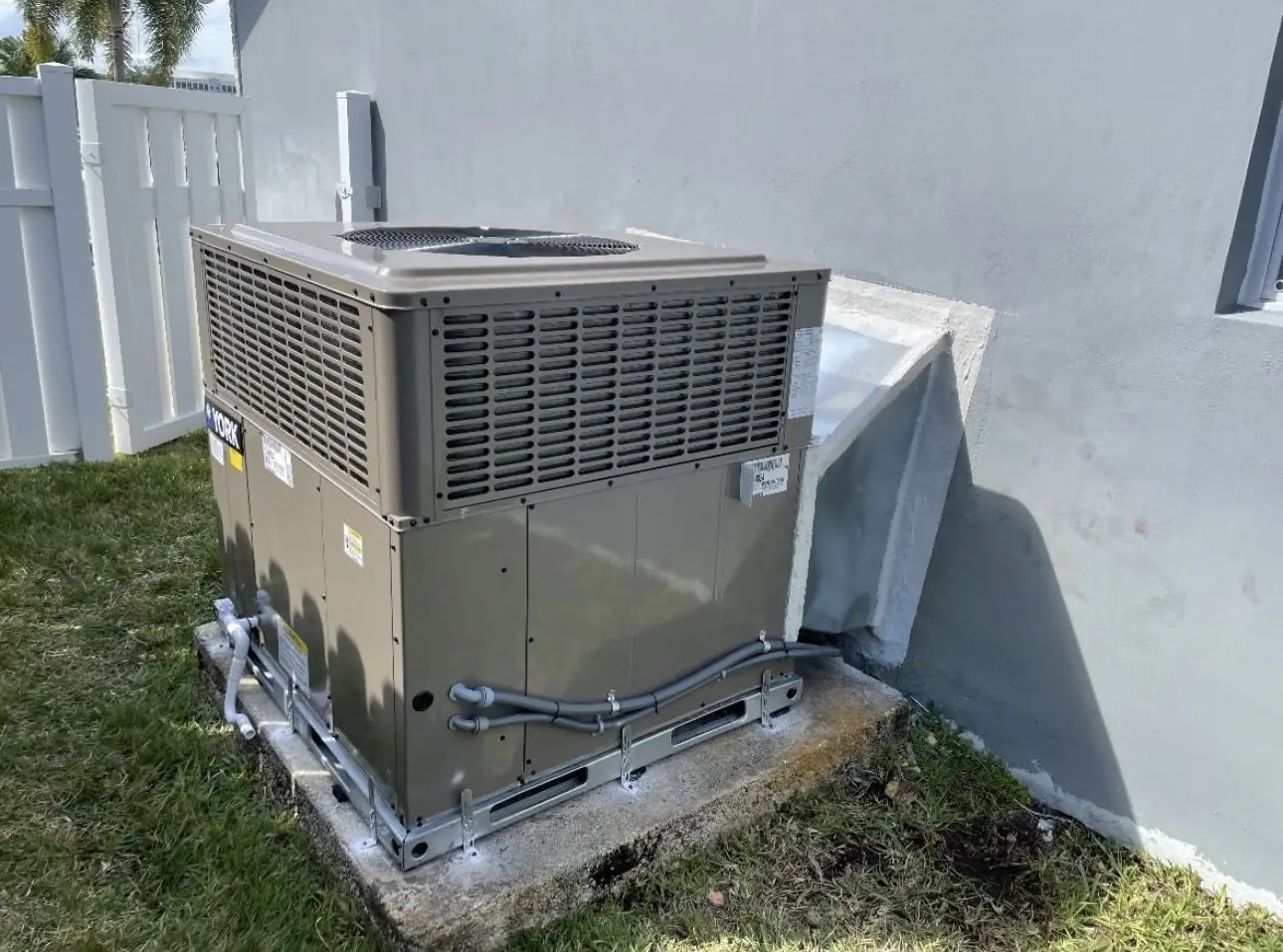
Field noteA packaged unit anchored to its pad with tie-down brackets, as Broward's hurricane-zone rules require. 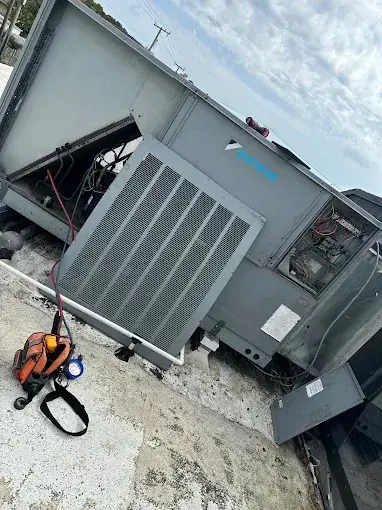
Field noteA rooftop packaged unit opened up on a service call. 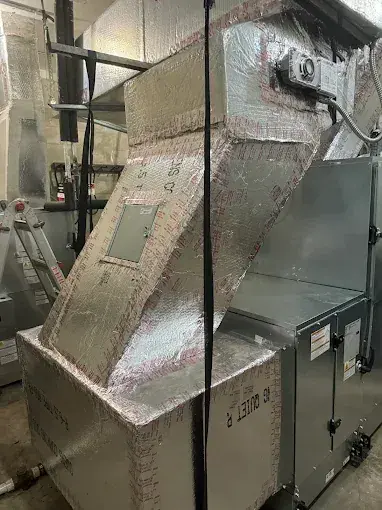
Field noteAn air handler and its insulated supply plenum on a commercial installation.
How a commercial service call works
Tell us what the equipment is doing
Call, text or use the form below. A photo of the unit's nameplate and a note on what the space is used for help us bring the right parts and tools.
Diagnosis on site
Readings and the control side are checked before parts are replaced, so the repair matches the actual fault.
Findings and options
What failed and why, documented with photos where they help, and the repair or replacement paths laid out with their trade-offs.
Access and timing worked out with you
Roof access, shutdowns and notice to tenants are planned with whoever manages the property before the work is scheduled.
Maintenance afterward
The Service Shield Protection Plan is open to light commercial properties, with two visits a year that follow the same full checklist.
Licensing and compliance
- Number
- CAC1821225
- Class
- Certified Air Conditioning Contractor
- Issuer
- Florida Department of Business and Professional Regulation
- Expires
- 2028-08-31
Licensed and insured
If your property or management company needs proof of insurance on file before work starts, ask for it when you request a site visit.
Permits for equipment changeouts
AC changeouts in Broward County are permitted and inspected by the city's building department, including the equipment's hurricane tie-down.
Request a site visit
Commercial questions
Do AC equipment changeouts need a permit in Broward County?
Yes. Replacing AC equipment requires a mechanical permit from the city's building department (or Broward County in unincorporated areas), and the inspection includes how the equipment is anchored under the High-Velocity Hurricane Zone rules.
Managing a property with an AC problem?
Send the address area, a photo of the nameplate if you have one, and what the equipment is doing. We'll tell you plainly whether it's work we should take on.
Florida license CAC1821225