
24/7 AC service

Ductwork · Plenums

Plenum repair and replacement at the air handler

Every cubic foot of air your system moves passes through its plenums. When one rusts, sweats or leaks, the whole house feels it, and the ceiling under it often shows it first.

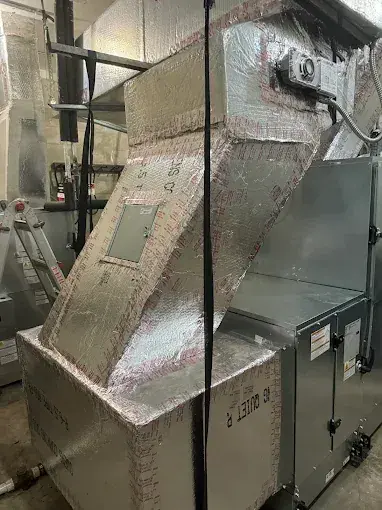
New air handler with an insulated supply plenum and ductwork above it

The plenum is the box that connects the air handler to the ductwork. The supply plenum sits on the outlet side, on top of an upflow air handler in a closet or at the end of a horizontal unit in an attic or garage, and every supply run in the house leaves from it. The return plenum sits on the inlet side and brings air back to the blower. Because they handle all of the system's air, a problem in either one affects every room at once.

In South Florida, most plenum problems come back to water:

  • Sweating. The supply plenum carries the coldest air in the system. If its insulation is torn, missing or wet, or if humid closet or attic air leaks in around it, water condenses on the outside of the metal and drips onto the air handler, its drain pan or the ceiling below.
  • Rust and mold. Months of condensation rust sheet-metal plenums from the outside in and leave the insulation damp enough for mold to grow on it.
  • Leaks. Seams and the joint with the air handler loosen over time. On the supply side that wastes cooling into the closet or attic. On the return side it pulls unconditioned air into the system.

Return-side leaks deserve particular attention. In many older Florida homes, the air handler sits on a platform or stand that doubles as the return plenum, and those enclosures often leak at their joints and penetrations. A return that leaks in a garage can pull garage air into the house, and one that leaks in an attic pulls in hot, humid air that the system then has to cool and dry.

Repair or replace?

When the metal is sound and the problem is torn insulation or a leaking seam, a repair can solve it: new insulation, resealed joints and a corrected connection to the air handler. Replacement is the right answer when the plenum has rusted through, when the insulation is moldy and wet throughout, or when the plenum is too small or poorly laid out for the system and is adding restriction to every run.

Plenum work often goes together with equipment work. A new air handler rarely has the same footprint and outlet as the old one, so the plenum is commonly rebuilt to fit it during an air handler replacement. Doing both together avoids building the connection twice. If the ductwork beyond the plenum is also failing, duct replacement may be the bigger picture.

When the water isn't the plenum

Not every wet spot near the air handler is a sweating plenum. A clogged condensate drain or a cracked drain pan can put water in the same places, and the fix is entirely different; see AC leaking water. An ice-covered coil that thaws can flood the area as well, which points to a frozen coil and an airflow or refrigerant problem behind it.

What a leaking plenum does to the whole house

The plenum feeds every run, so a leak there shows up everywhere. Compare it with a healthy system.

Animated diagram of air moving from the air handler through attic ductwork to two rooms and backATTICROOM AROOM BAIRHANDLER
Show a duct condition

A leaking or sweating plenum

The plenum feeds every run. When its seams leak, or it sweats in a humid closet or attic, the whole house loses air and the metal starts to rust.

Blower effort

Normal

What you notice

  • Water stains or rust above the air handler
  • A musty smell when the system starts

A healthy duct system

Supply air reaches every room through sealed, supported runs, and enough air returns to the air handler to keep the blower in its comfortable range.

How airflow gets measured

Blower effort

Normal

What you notice

  • Rooms within a few degrees of each other
  • Steady airflow at every register
  • A quiet return grille

What gets checked at the plenum

Condensation and rust

Where the water forms tells you whether the cause is missing insulation, an air leak or a drain problem below.

Insulation and vapor barrier

Gaps, tears and wet insulation let humid air reach the cold metal.

Seams and the air handler connection

Leaks at the joints waste cooled air on the supply side and pull in hot, humid air on the return side.

Static pressure

in. w.c.

A plenum that is too small for the system, or crowded with takeoffs, adds restriction for every run.

Drain pan and cabinet below

Water from a sweating plenum often lands on the air handler or its pan, and rust there is part of the same story.

Why plenums sweat in South Florida

Condensation forms whenever humid air touches a surface colder than its dew point. Indoor air in a cooled house is relatively dry, but the air in a garage, a closet next to a bathroom, or a summer attic in Broward often carries a lot of moisture. A supply plenum full of freshly cooled air is cold enough to pull that moisture out of the air around it. Any gap in its insulation, and any leak that lets that air reach the metal, becomes a place where water forms.

That's why a plenum can sweat for years without anyone noticing, and then show up all at once as a rusted cabinet, a ceiling stain or a musty smell when the system starts. The lasting fix addresses both halves: a well-insulated, sealed plenum, and a closet or attic connection that keeps humid air away from it.

Repair or replacement, step by step

  1. Find where the water or air is coming from

    Inspect the insulation, the seams and the joint with the air handler, and rule out a drain pan or line that is the real source of the water.

  2. Explain what we found

    You see the problem, with photos when they help, and the options for a repair or a new plenum before any work starts.

  3. Build the new plenum to the air handler

    When it's being replaced, the plenum is sized to the air handler's outlet and the runs it feeds, then insulated and sealed.

  4. Reconnect the ductwork

    The trunk and runs are reattached, fastened, sealed and supported.

  5. Confirm with the system running

    The surface stays dry under humid conditions, and static pressure is checked against the earlier reading.

Plenum and ductwork, in rough numbers

The ductwork estimator covers plenums, boots and grilles as well as the runs. Answer what you can and see a rough range in a couple of minutes. It's not a quote.

The on-site duct evaluation is free.

Plenum questions

Why is the box on top of my air handler sweating?

That box is the supply plenum, and it carries the coldest air in the system. When its insulation is torn or missing, or humid closet or attic air leaks in around it, moisture condenses on the metal. Left alone, the water rusts the plenum and the air handler below it and can stain the ceiling. The fix is restoring the insulation and sealing the leaks, or replacing the plenum if the metal has rusted through.

Does a new air handler need a new plenum?

Often, yes. A new air handler rarely has exactly the same footprint and outlet as the old one, so the plenum is commonly rebuilt to fit it and reconnected to the existing ductwork. Doing it during the replacement avoids reworking the connection later.

Rust, water or mold above the air handler?

A photo of the plenum and a note on where the water shows up is a good place to start.

Florida license CAC1821225

Text a TechSchedule