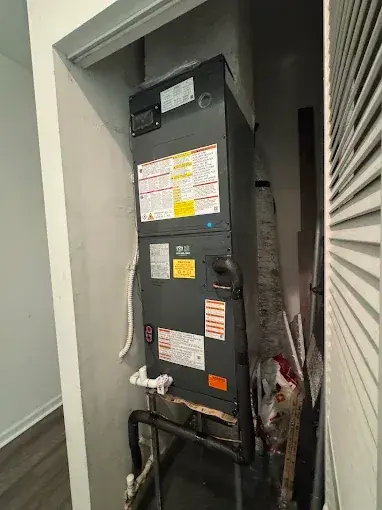
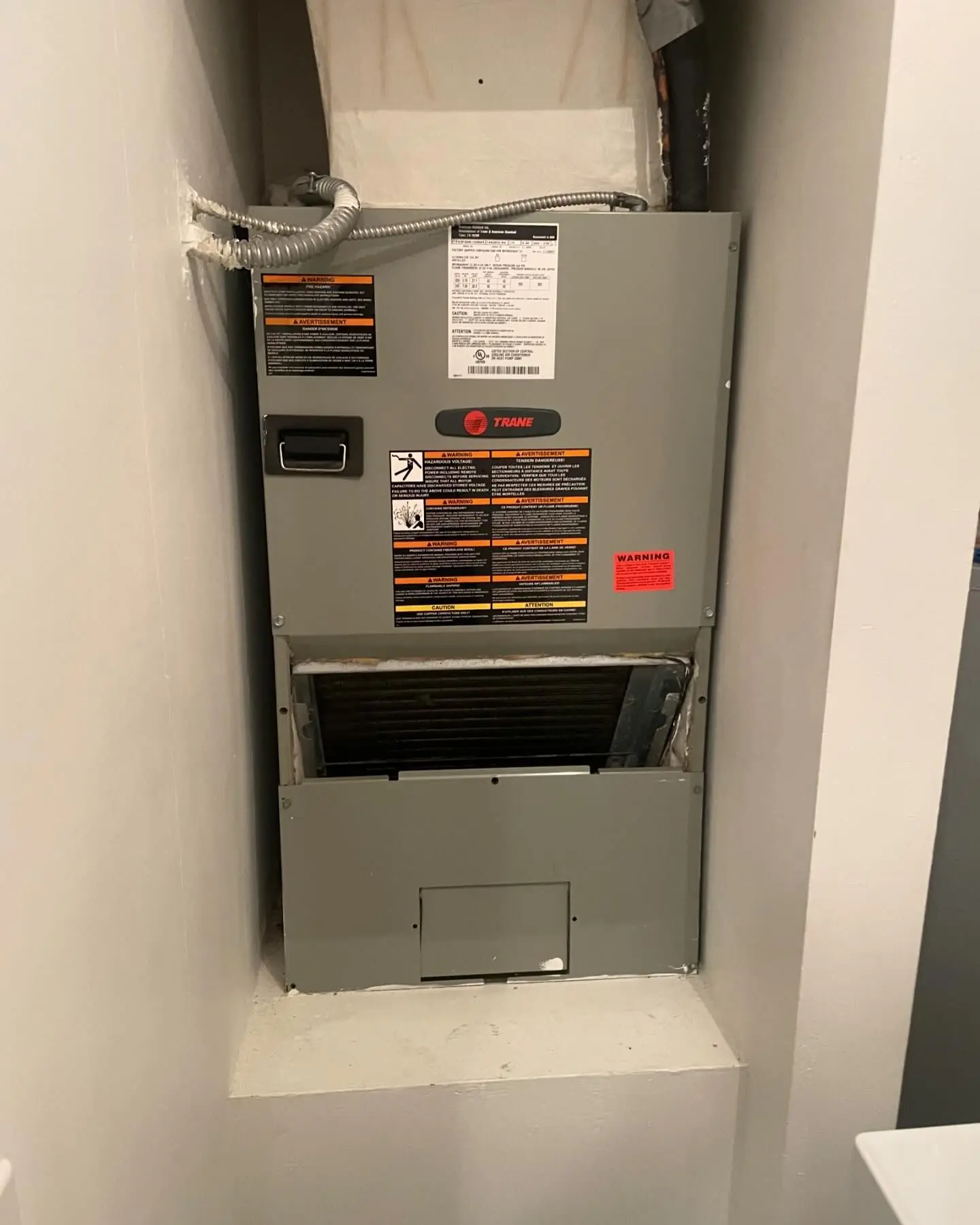
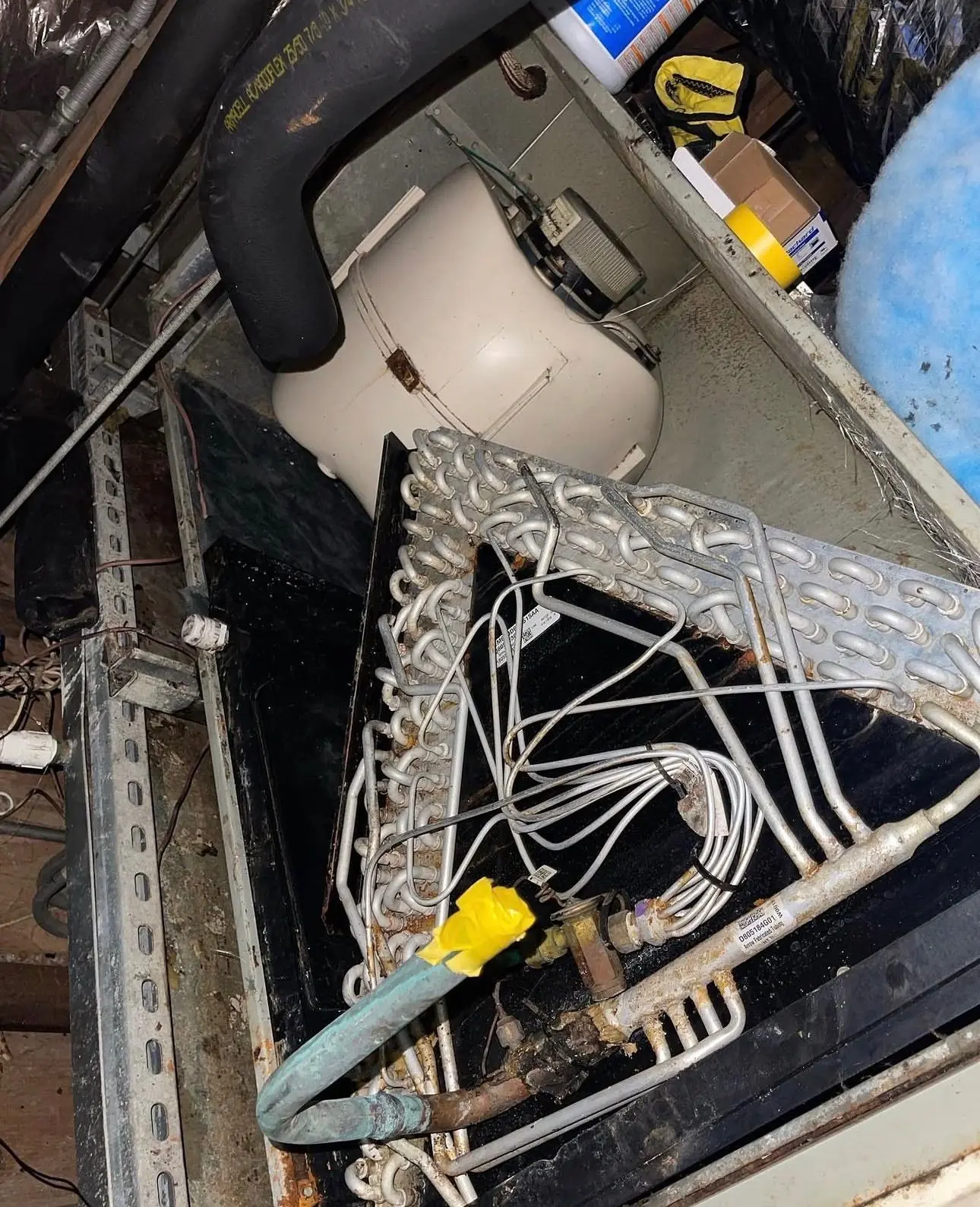
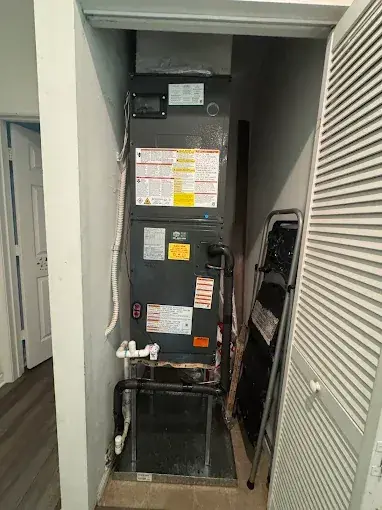
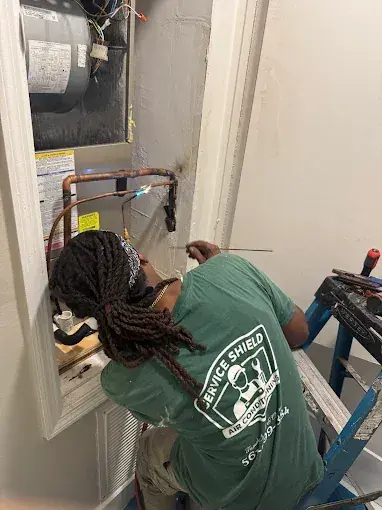
The air handler is the indoor half of a split system. It holds the blower that moves air through the house, the evaporator coil that cools it, and the drain pan that catches the water the coil pulls out of the air. In Broward homes it usually sits in a hall closet, a garage or the attic; in condos it's typically in an interior closet with very little room to spare.
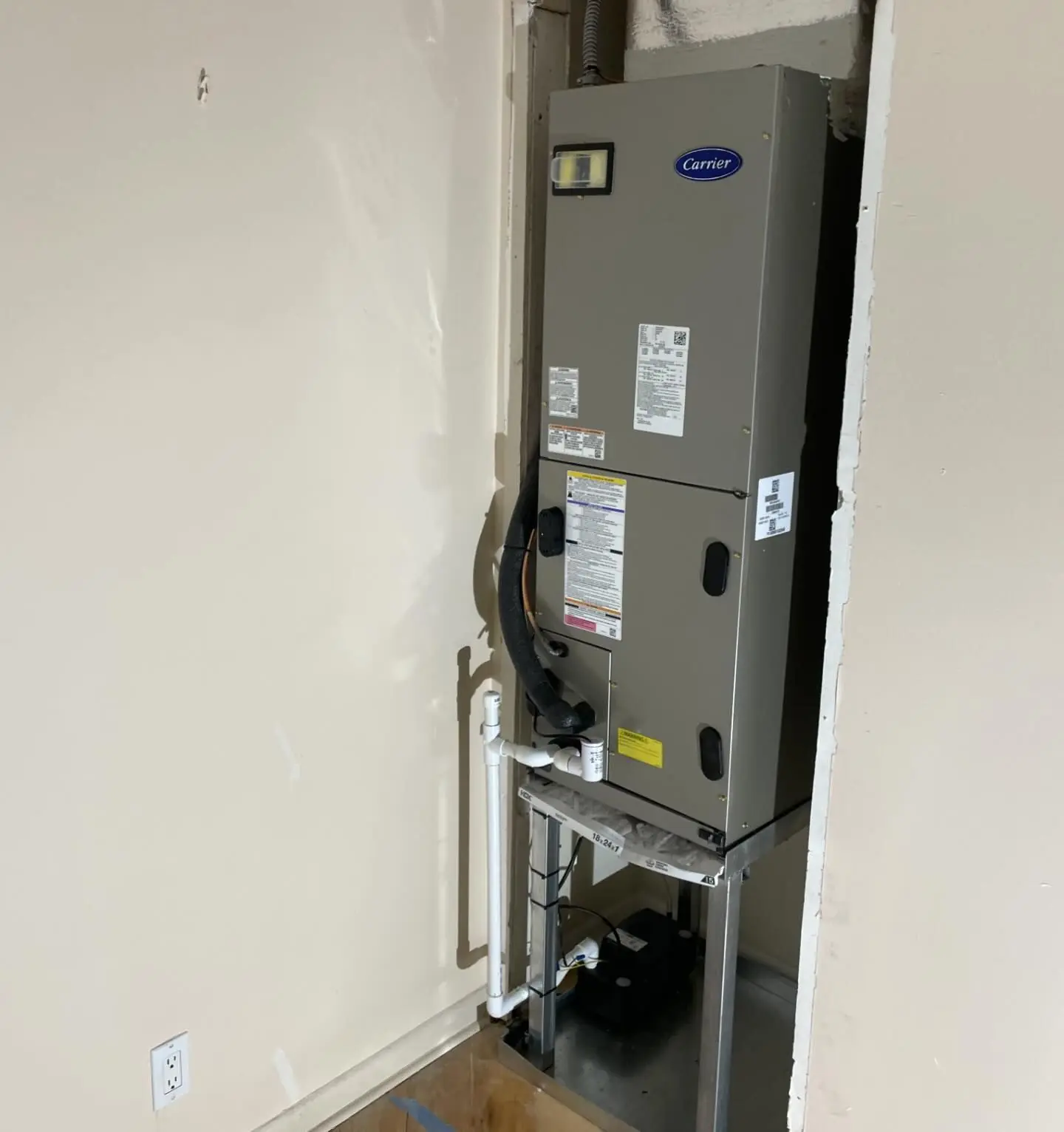
That location shapes the job. A new cabinet has to fit the closet's height and door, leave room to change the filter and open the service panels, and line up with the existing return and supply plenum. In an attic or above a finished ceiling, it also needs a secondary drain pan and a way to shut the system off before an overflow reaches the drywall.
The other half of the question is the outdoor unit. Air handlers and coils are certified as matched pairs with specific condensers, and newer outdoor units use refrigerants such as R-454B or R-32. Indoor equipment built for those refrigerants often includes a refrigerant sensor that has to be wired and tested at installation. So replacing an air handler on its own makes sense when the outdoor unit is healthy and a certified match is available. It makes much less sense when the system is old, uses R-22, or both halves are wearing out together.
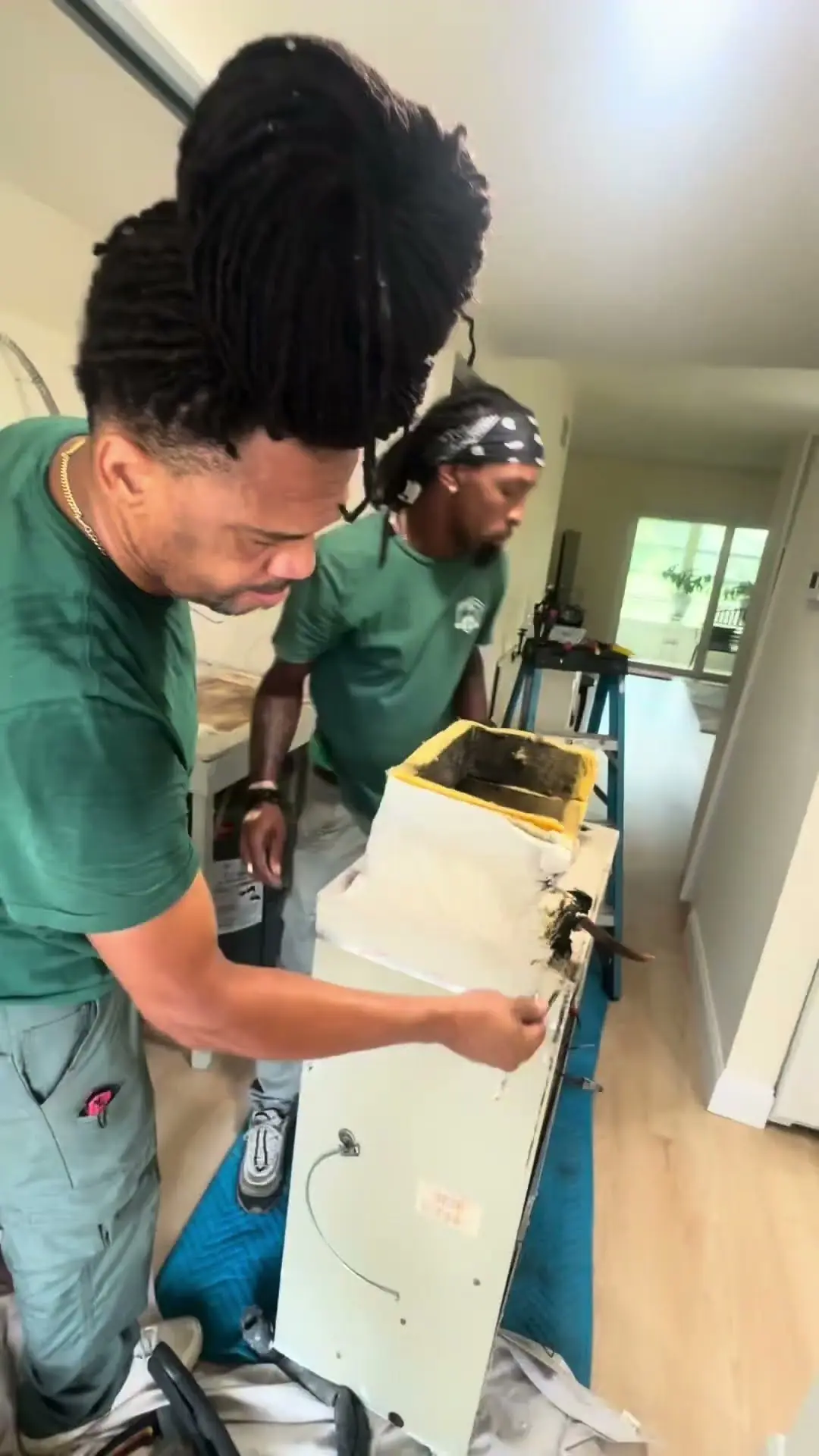
Common reasons an air handler gets replaced: a coil that keeps leaking refrigerant, a drain pan that has rusted through, a cabinet that has corroded or grown mold inside, or a unit that no longer fits the system it's paired with. A blower motor or a control board, on the other hand, is usually a repair.
If the air handler sits on a return platform in a closet, it's worth looking at the platform and plenum while the cabinet is out. Gaps there pull in hot, humid air from walls and attics, which costs efficiency and feeds the moisture problems this climate already causes.