
Schedule soon
AC won't turn on
If nothing happens when the thermostat calls for cooling, start with the thermostat itself and the breakers for both the indoor and outdoor units. If those are fine, the usual causes are a float switch that shut the system off because the drain line is clogged, a blown low-voltage fuse on the air handler's control board, or a failed transformer or board. Anything past the thermostat and a single breaker check needs a technician.
- Florida-certifiedCAC1821225
- ServingBroward County · 14 cities
- ReviewsRead them on Google
Everything that has to say yes before it starts
Cooling only starts when power and a signal get all the way through. Work along this path and the break is usually easy to spot.
Leave it off if…
Turn the system off and call a technician if:
- You see scorched wires or melted insulation, or smell burning at the thermostat, air handler or outdoor disconnect.
- The breaker trips again right after one reset.
- Water is pooled in or around the air handler near its wiring.
Work through these in order
Each one takes a minute. Reset a tripped breaker once, and if it trips again, stop there.
Set the thermostat to Cool, a few degrees below room temperature, and replace its batteries if it has them.
Rules out settings and a dead display.
Check the breakers for the air handler and the outdoor unit, and the switch in the outdoor disconnect box. Reset a tripped breaker once.
A single trip after a storm is common; a repeat trip is a symptom.
Make sure the air handler's access panel is seated and latched.
A loose panel keeps the door safety switch open.
Look for standing water in the drain pan or at the float switch on the drain line.
If water is backed up, the float switch has shut the system off on purpose.
If those didn't bring it back
The causes behind a system that won't start, most common first.
Thermostat off, mis-set or out of power
CommonYou can check thisA thermostat set to Off or Heat, a schedule holding a higher temperature, or dead batteries will keep the system idle. Some thermostats go blank when they lose power from the air handler, which can point to a problem further back.
Float switch tripped by a clogged drain line
CommonYou can check thisAC MaintenanceMany air handlers have a float switch that cuts power to the system when condensate backs up. In South Florida, slime and algae build up inside drain lines, and a clog is one of the most frequent reasons a system goes quiet on a hot day. Clearing the line lets the switch reset.
Tripped breaker or open outdoor disconnect
OccasionalYou can check thisThe air handler and the outdoor unit usually have separate breakers, and the outdoor unit has its own disconnect box. A single trip can follow a storm or power blip; a breaker that trips again is a symptom that needs diagnosis.
Blown control fuse or failed transformer
OccasionalTechnician fixThe thermostat circuit runs on low voltage from a transformer in the air handler, protected by a small fuse on the control board. A pinched thermostat wire or a shorted component blows that fuse. The short has to be found, or the new fuse blows too.
Air handler access panel not fully closed
RareYou can check thisAir handlers have a door safety switch that keeps the blower from running with the panel off. If the panel was removed to change a filter and not seated, the system won't start.
Failed control board
RareTechnician fixOn newer and variable-speed systems the control board coordinates everything. When it fails, nothing runs, though a fault code or a dead status light usually narrows it down. A photo of the code or the light, sent through Text a Tech, gives the technician a head start before the visit.
How the break gets found
A technician follows the same path with a meter instead of guesses.
volts
Checked at the breaker, the outdoor disconnect and the air handler. Power has to arrive at each before anything downstream matters.
24 V
The low-voltage circuit from the air handler's transformer to the thermostat and back. A blank thermostat with power at the air handler points to this circuit.
open / closed
The float switch, the access-panel switch and any pressure switches each have to be closed for the system to run.
A blown fuse means something shorted. The short is found before a new fuse goes in, or the new one blows too.
What our visit looks like
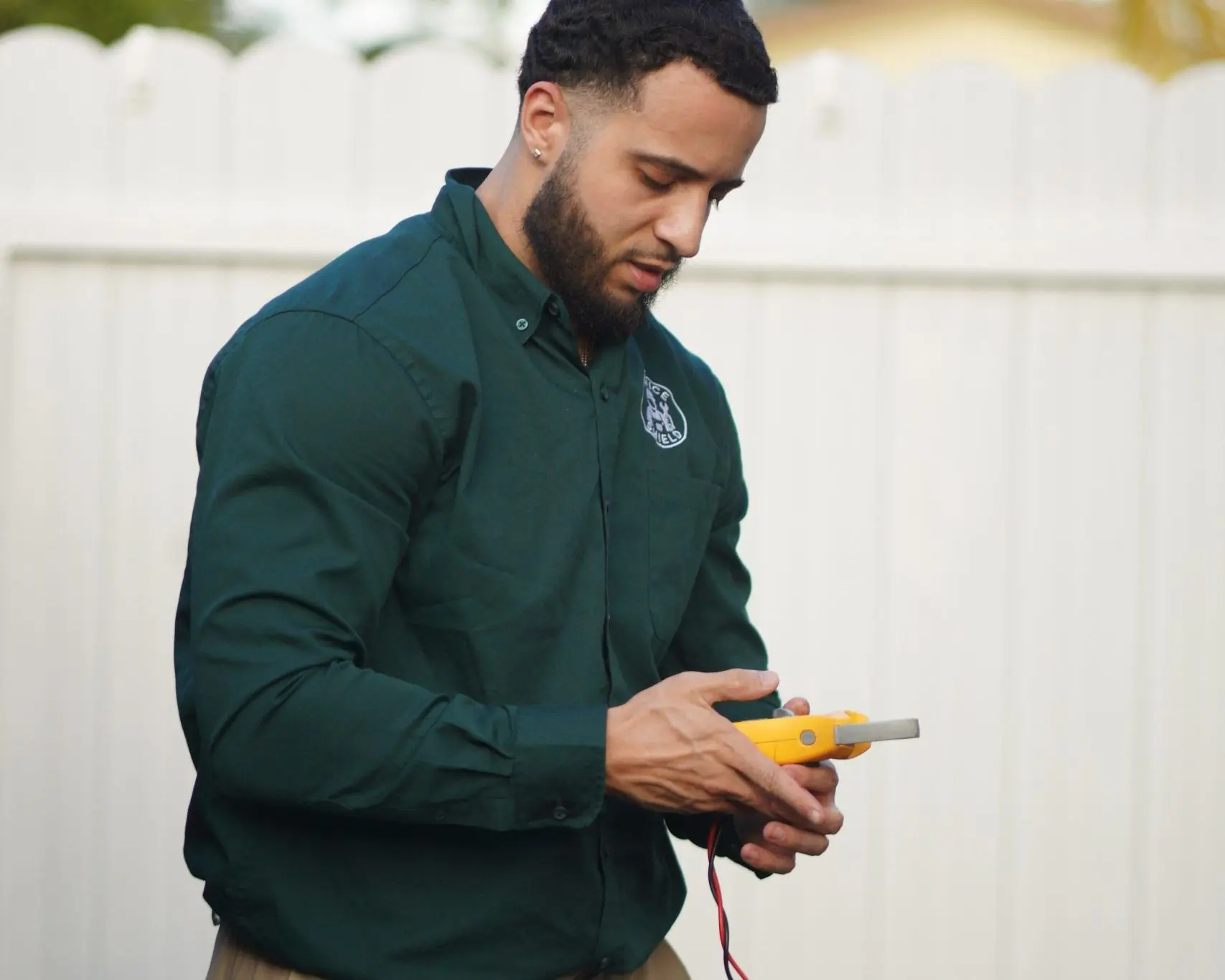
A technician confirms power at each point (the breaker, the disconnect, the air handler's transformer and the thermostat circuit) and follows the low-voltage control circuit until the break is found. If a fuse blew, the short that blew it is located before a new one goes in. Free service call with repair.
Questions
Why would a clogged drain stop my AC from turning on?
Because a float switch is designed to do exactly that. When condensate backs up in the drain line or pan, the switch cuts power to the system so the pan can't overflow into your home. Clear the drain and the switch resets; if it keeps happening, the drain needs a proper look.
Is there a reset button on my air conditioner?
Usually not in the way people expect. Some equipment has a reset on the control board or a float switch that resets itself, but the safe homeowner resets are the thermostat and a single breaker reset. If the system still won't run, something is stopping it on purpose and it needs diagnosing.
Membership
Service Shield Protection Plan
- Two full maintenance visits a year, the same complete checklist each time
- Discounted diagnostic fee for members
- Up to 15% off repairs
$299 per year
See what the plan includesTalk to Service Shield
Florida license CAC1821225