24/7 AC service

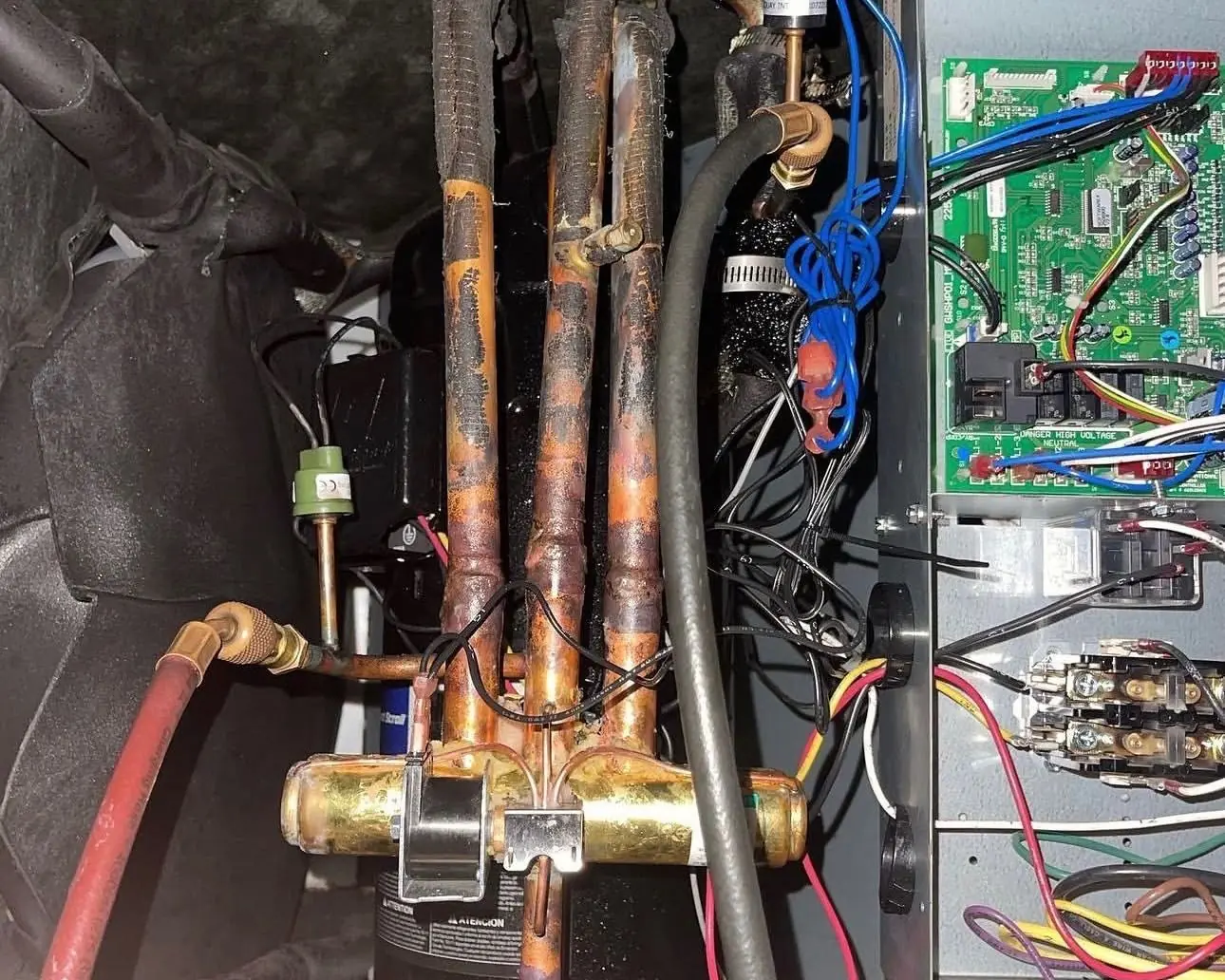
Compressor compartment of an outdoor unit with copper refrigerant piping, a contactor and a control board

Schedule soon

AC turns on and off too often

Short cycling means the system starts and stops every few minutes. It's most often caused by a system that is oversized for the house, a thermostat in the wrong spot or failing, restricted airflow, or a safety switch stopping the system because of a refrigerant, drain or electrical problem. It wastes energy, leaves the house humid and wears the compressor, so it's worth diagnosing soon.

Likely causes, most common first

Pick one to see how likely it is, who can deal with it, and what it means.

Choose a likely cause

Common

Technician fix

System oversized for the house

An oversized system cools the air near the thermostat so quickly that it shuts off before it has run long enough to pull moisture out of the air. It's common when a replacement was chosen by matching the old tonnage instead of calculating the home's load.

AC Installation

Common

You can check this

Restricted airflow tripping a safety

A clogged filter or dirty coil can drive pressures and temperatures out of range, and the system's own safeties shut it off, wait, and try again.

AC Maintenance

Occasional

You can check this

Thermostat location or settings

A thermostat near a supply register, in afternoon sun or next to a kitchen reads the wrong temperature. Some thermostats also have cycle-rate settings that were changed by mistake.

Occasional

Technician fix

Refrigerant charge problem

Too little or too much refrigerant can trip low- or high-pressure switches, which stop the compressor until pressures recover. Low charge means a leak.

Occasional

You can check this

Drain line backing up and resetting

A partly clogged drain can lift a float switch, shut the system off, drain down and let it restart, over and over.

AC Maintenance

Occasional

Technician fix

Electrical or overheating compressor

A failing capacitor or contactor, or a compressor shutting off on its internal overload because it's overheating, also produces short on-off cycles.

What can cut a cycle short

A cycle should end when the house reaches the setpoint. Each of these can end it sooner.

How a split air-conditioning system worksSchematic: inside the house, an air handler with an evaporator coil and blower cools indoor air; a thermostat on the wall controls it; a condensate drain carries water away from the coil. Two copper refrigerant lines, the line set, run through the wall to the outdoor condenser, where the compressor and condenser coil release the heat outside.INSIDEOUTSIDEAIR HANDLERCONDENSER12356
Parts of the diagram

Mounted near a supply vent, a sunny window or a lamp, it reaches the setpoint long before the rest of the house does and shuts the system off early.

More on thermostat

Restricted airflow from a clogged filter or a dirty coil can trip a safety or freeze the coil, stopping the cycle partway.

More on air handler and coil

A float switch that opens as water rises and closes as it drains can start and stop the system over and over.

More on condensate drain

An overheating compressor shuts itself off on its internal overload and restarts once it cools. Repeated, that pattern wears it out.

A charge that's too high or too low can trip the pressure switches some systems use to protect the compressor.

When to stop and call

Turn the system off and call a technician if:

  • The outdoor unit clicks on and off within a minute or two, over and over. Turn cooling off to spare the compressor.
  • The compressor strains, hums or clanks when it tries to start.
  • You smell burning at the outdoor unit or air handler.

Checks you can safely do first

Timing a few cycles, the last step, is the most useful thing you can bring to a service call.

Done all of these and it’s still not right?

That points to a part that needs a technician’s meter, not another reset.

Why a bigger unit isn't better here

In a humid climate an air conditioner has two jobs: lowering the temperature and pulling water out of the air. The second one takes time: water only starts running off the coil once it has been cold for a while, so a system that keeps stopping early cools the air without drying it.

That is why an oversized system so often feels cool and clammy. It reaches the setpoint quickly, shuts off before it has wrung much moisture out, and some of the water on the coil evaporates back into the house before it reaches the drain. ENERGY STAR notes that oversized units "may cycle too frequently, resulting in less comfort and a shortened lifespan," and Florida's extension service advises calculating the cooling load rather than estimating it from square footage.

A system can't be made smaller, but some short cycling can be eased now through airflow, thermostat placement and settings, and the right size can be calculated when it's time to replace it. Our guide to Manual J sizing walks through how that calculation works, and high humidity in the house covers the clammy-house side of the same problem.

What our visit looks like

A technician times the cycles, checks whether a pressure switch, float switch or compressor overload is stopping the system, measures refrigerant charge and airflow, and compares the system's capacity with the home's cooling load. If the system is oversized, the technician explains what can be adjusted now and what to plan for at replacement. Free service call with repair.

Questions

How long should my AC run each cycle?

There's no single number, but on a hot day a properly sized system typically runs long cycles, often well over ten minutes at a time. Cycles of just a few minutes, over and over, are a sign of oversizing or a safety switch stopping the system.

Can an oversized AC be fixed without replacing it?

Sometimes it can be improved. Blower settings, thermostat placement and fixing duct or airflow problems can lengthen cycles and help with humidity. But a system that's far too large for the house can only really be corrected when it's replaced with one sized by a load calculation.

Membership

Service Shield Protection Plan

  • Two full maintenance visits a year, the same complete checklist each time
  • Discounted diagnostic fee for members
  • Up to 15% off repairs

Talk to Service Shield

Florida license CAC1821225

CallText a TechSchedule