
AC Replacement Permits in Broward County
What an AC changeout permit covers in Broward County, from the paperwork and hurricane tie-down to the inspection, emergencies and who issues it.
Key takeaways
- Replacing a central AC or heat pump in Broward is permitted work; only small parts swaps such as a thermostat are exempt.
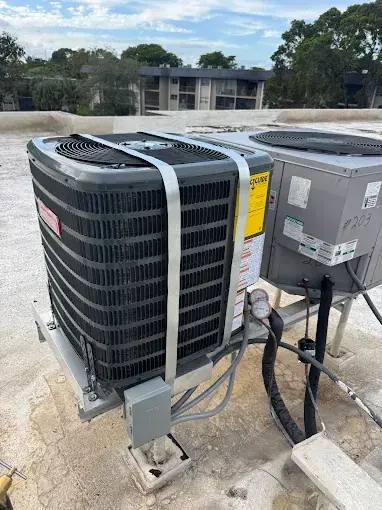
- The permit includes the equipment data, a matched-system certificate and a hurricane tie-down detail, because Broward is in the High-Velocity Hurricane Zone.
- Each city runs its own building department and publishes its own change-out checklist. The requirements are similar but not identical.
- In a true emergency the work can proceed with the permit application filed the next working business day.
The short answer
In Broward County, replacing a central air conditioner or heat pump needs a mechanical permit from your city's building department, and the job isn't finished until the city inspects it. The permit is filed by the licensed contractor doing the work. It covers what's being installed, how the outdoor unit is anchored for hurricane winds, and the paperwork that shows the new equipment meets Florida's efficiency rules.
Why a changeout needs a permit
Florida law makes it unlawful to alter or repair a building's systems without the permit the law requires, and Broward's amendments to the Florida Building Code require a permit to "install, enlarge, alter, repair, remove, convert, or replace" a mechanical system.
The exemptions are narrow. Replacing a part that doesn't change the equipment's approval or make it unsafe, such as a thermostat, doesn't need a permit, and neither does a portable unit that isn't connected to the house's air distribution. A full changeout of the indoor and outdoor equipment isn't on the exempt list.
Florida's permit exemption for small projects on single-family homes doesn't help here either: it specifically excludes mechanical work. In practice, your contractor pulls the permit.
What goes into the application
Broward's amendments list what a mechanical permit submittal has to include, and each city adds its own checklist. For a typical residential AC replacement you can expect:
- The Broward County uniform data form for residential and light-commercial AC replacements, which records the old and new equipment.
- A matched-system certificate (AHRI). Florida's energy code requires a replacement to be a certified indoor-and-outdoor match that meets the minimum efficiency.
- Load information. Broward's submittal list starts with heating and cooling load calculations as required by the energy code (see AC sizing and Manual J).
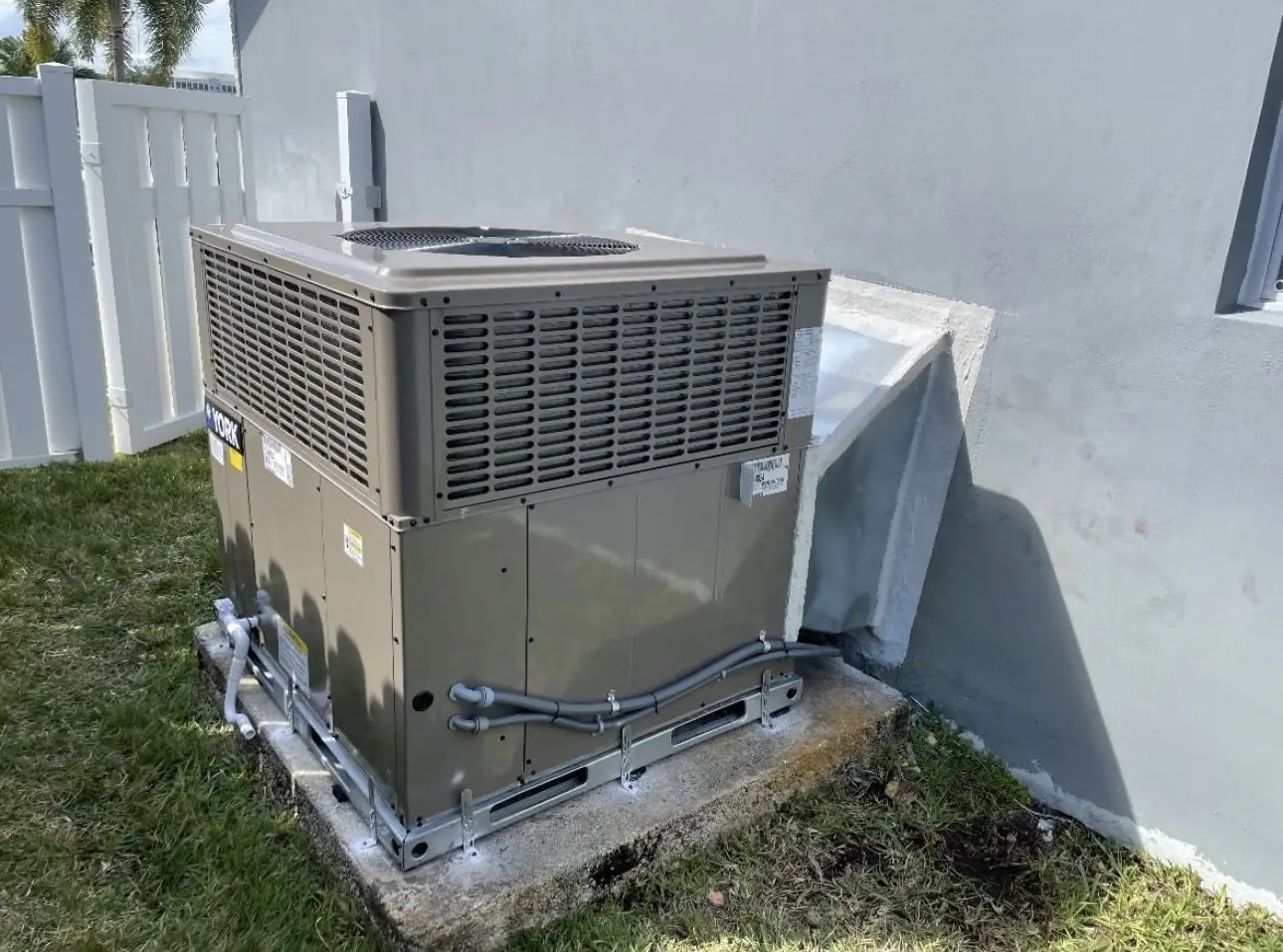
- A tie-down detail for the outdoor unit: a Florida product approval, a Miami-Dade notice of acceptance detail, or signed and sealed engineering.
- Site details where the city asks for them. Some checklists want a survey or setback information for ground units, plus an association approval letter where one is required.
Rooftop equipment adds attachment details that meet High-Velocity Hurricane Zone requirements and a roof-top mounted equipment affidavit.
The hurricane tie-down
The Florida Building Code defines the High-Velocity Hurricane Zone as Broward and Miami-Dade counties. For a typical house in Broward, the design wind speed is 170 mph. The mechanical code requires outdoor equipment to be "designed and installed to resist the wind pressures" the building code sets. Equipment fastened to rated stands, platforms, curbs or slabs in compliance with the code is deemed to comply.
That's why a new condenser in Broward isn't just set on a pad. It's fastened to an approved detail, and at the final inspection the anchoring has to match the product approval or engineering on file.
Other things the inspector looks at
The inspection checks the installation against the permit and the code. Two items that matter to homeowners:
- Condensate overflow protection. Where an overflow from the drain could damage the building, as with an air handler in an attic or above a finished ceiling, the code requires a backup. That can be an auxiliary drain pan, an overflow drain, or a water-level switch that shuts the system off. See AC not draining.
- The equipment matches the paperwork. The units installed are the ones on the permit, as a matched system.
Emergencies, and how long it takes
When a system fails in the middle of summer, waiting days for a permit isn't realistic. Broward's rules allow for that: where equipment replacements and repairs must be performed in an emergency, the permit application is submitted within the next working business day.
For planned replacements, timing has improved. Since July 2026, Florida law requires local governments to approve, approve with conditions or deny a complete mechanical permit application for an existing single-family home within five business days, for smaller jobs under the value limit in the statute, when the applicant uses the local government's plans reviewer. Some cities have faster tracks of their own: Hollywood accepts residential AC replacements through its express permitting service, and Weston handles AC change-outs as quick permits.
Who issues the permit where you live
Each Broward city on this site runs its own building department, so the office, the online portal and the checklist depend on your address. A few examples:
- Fort Lauderdale handles permits through its Building Services and the LauderBuild portal.
- Pompano Beach publishes a detailed AC change-out checklist, including the tie-down and the uniform data form.
- Wilton Manors' checklist asks for setback and landscaping details for ground units and an association approval letter where required.
- Pembroke Pines and Weston contract their building departments to private firms, but the permit is still the city's.
Each city's page on this site names its building department and links to it, and the list below shows all of them in one place. See all service areas.
Why it matters to you
A permit isn't just paperwork for the contractor. It means someone other than the installer looks at the anchoring, the drain protection and the equipment before the job is closed out. Keep the permit number, the final inspection result, the equipment model and serial numbers, and the startup readings together. A warranty claim, an insurance question or the next technician will ask for them.
Who issues the permit in your city
Every city on this site runs its own building department. Two contract the work to a private firm.
The permit is filed by the contractor
The licensed contractor doing the work applies for the mechanical permit and schedules the inspection.
Checklists differ by city
Requirements are similar across Broward, but each building department publishes its own change-out checklist. Check the city's current list before filing.
Tie-down details are part of the submittal
Outdoor and rooftop equipment needs an approved anchoring detail, and the inspector checks the anchoring at final.
- Pembroke Pines
- City of Pembroke Pines Building DepartmentOperated by CGA (Calvin, Giordano & Associates), a SAFEbuilt company
- Weston
- City of Weston Building Code ServicesOperated by C.A.P. Government, Inc.
About this guide
- Written by
- Service Shield Air Conditioning
- Published
- Oct 2026
- Last updated
- Oct 2026
Permit questions
What if my AC fails and has to be replaced right away?
Broward's permit rules allow for emergencies: when equipment replacement has to be done in an emergency, the permit application is submitted within the next working business day. The work is still inspected afterward, including the outdoor unit's hurricane tie-down.
Do I need a permit to replace my AC in Broward County?
Yes. Replacing a central air conditioner or heat pump is mechanical work that needs a permit from your city's building department, followed by an inspection. Small part replacements that don't change the equipment's approval, such as a thermostat, are exempt. The licensed contractor doing the work files the permit.
Sources
- Florida Statutes §553.79: Permits; applications; issuance; inspections
- Florida Statutes §553.792: Building permit application to local government
- Broward County Amendments to the Florida Building Code, Chapter 1 §105 (permits) (Municode)
- Broward County Amendments to the Florida Building Code, Chapter 1 §107 (submittal documents) (Municode)
- Florida Building Code, Building 2023: Chapter 2 definitions (High-Velocity Hurricane Zone) (UpCodes)
- Florida Building Code, Building 2023: §1620 HVHZ wind loads (UpCodes)
- Florida Building Code, Mechanical 2023: §301.15 wind resistance and §307.2.3 condensate protection (UpCodes)
- Florida Building Code, Energy Conservation 2023: R501.7 replacement equipment (UpCodes)
- City of Pompano Beach: Air Conditioner Change Out Checklist
- City of Wilton Manors: A/C change-out checklist
- City of Hollywood: Express Permitting Service
- City of Weston: How to apply for a quick permit
- City of Pembroke Pines: Residential A/C change-out checklist
Replacing a system?
Get a rough range online, and we'll confirm the details on site before quoting.
Florida license CAC1821225